

Last updated: November 15, 2026
Fraxel laser before and after photos can illustrate changes in uneven pigment, scar texture and fine lines, but they cannot predict your result. Explore examples alongside information about our Fraxel laser treatment in Vancouver, Washington.
What should Fraxel laser before and after photos show?
A useful before and after comparison identifies the concern treated and shows the full treated area in both images. A close-up alone cannot show whether a change in one spot extends across the rest of the area.
Which changes in pigmentation, scars, and wrinkles are realistic?
Sun spots may fade, some scar texture may improve, and fine lines may soften, but complete removal is not assured. In before-and-after photos, compare individual spots rather than overall brightness. For scars, assess texture and shadowing as well as color; for fine lines, look for softening rather than disappearance.
Lighting, facial expression, makeup and camera distance can change how skin looks. Match those conditions when comparing images so that a change in the photograph is less likely to be mistaken for a change in the skin.
What does FDA clearance say – and not say – about the results in photos?
The FDA clearance summary for the Fraxel IV SR laser system, K063808 lists indications that include wrinkles around the eyes, acne and surgical scars, certain pigmented lesions and skin resurfacing. This 510(k) clearance means the device was found substantially equivalent to a legally marketed device; it is not FDA approval, a guarantee of a photographic result or clearance of every Fraxel model for the same indications.
When should you take and compare Fraxel photos?
Take a baseline photo before treatment under lighting, angle, expression and makeup conditions you can repeat. Label follow-up images with the treatment stage and time since the session, and keep photos of healing separate from photos used to assess results. Compare results after the skin has healed, then reassess after your planned series; even an early healed image may differ from a later result. After ablative resurfacing, new skin usually covers the area in 7 to 10 days, but full recovery takes at least a month, according to Mayo Clinic’s laser resurfacing guidance. Timing depends on the treatment, and improvement after nonablative resurfacing can develop gradually.
Why can a photo taken soon after treatment be misleading?
Freshly treated skin can look red, swollen or temporarily darker. Peeling can also make texture difficult to judge. An early photo can document recovery, but it should not be presented as a settled result.
How can you compare photos of one session with a full treatment series?
Check whether the “after” image follows one session or a completed series. For optimal resurfacing results, we typically recommend four to five treatments, with the number tailored to your skin and goals. A healed image after one session is an early checkpoint, not a substitute for a photo taken after the planned series. Our guide to laser treatment results and timelines offers more context for interpreting gradual changes.
How does Fraxel laser resurfacing change skin?
Fraxel treatment delivers energy to small zones of skin rather than treating the entire surface uniformly. Skin between the treated zones remains in place, supporting healing while skin renewal and collagen remodeling develop. The effect depends on the device, treatment depth and settings, so a Fraxel photograph needs more context than the brand name alone.
Why does treating only part of the skin affect healing?
Fractional laser skin resurfacing creates microscopic treatment zones with surrounding tissue left untreated. In a first Fraxel session, we can resurface about 20% to 25% of the target skin area. Because untreated skin remains between zones, successive sessions can address more of the area while allowing healing between treatments.
Do different Fraxel wavelengths target different concerns?
Yes. Cleveland Clinic’s description of Fraxel Dual identifies a more superficial 1927 nm wavelength for concerns including sun-related spots, melasma and shallow wrinkles, and a deeper 1550 nm wavelength for concerns including wrinkles and scars. Those wavelengths describe Fraxel Dual, not every Fraxel device or the Fraxel IV SR device cited above.
Who is most likely to see changes in scars, sun spots, or wrinkles?
Selected sun spots, fine lines and some acne or surgical scars are more likely to show improvement than deep folds or substantial sagging. The amount of change still depends on scar depth, the cause of pigmentation, skin tone and treatment settings, so two people with similar concerns may see different results.
Can Fraxel improve facial acne scars or surgical scars?
Fraxel may make some facial acne scars or surgical scars look less conspicuous by improving texture. Photograph scars from the same angle and lighting: side lighting, for example, can reveal depressions that a front-lit image hides. Laser resurfacing for scars aims for improvement, not reliable removal, and a deeper scar may remain visible.
Can Fraxel help age spots, sun damage, or melasma?
Age spots and sun spots may become less noticeable after an appropriate laser treatment. Selected Fraxel treatments may also improve melasma, but melasma typically appears in patches, can recur and may worsen with heat or irritation. A photo showing improvement in an isolated sun spot does not predict how melasma will respond.
Will Fraxel remove deep wrinkles or loose skin?
Fraxel may soften some fine lines and improve rough-looking skin, but deep folds are less likely to disappear. Laser resurfacing cannot fix sagging skin, which is different from improving the skin’s surface. When reading a gallery, separate visible changes in skin quality from changes in facial shape.
How do you prepare for Fraxel laser?
Preparation depends on your skin, the planned laser and how deeply it will treat the area. Sunburned or irritated skin may need to recover before resurfacing.
What should you tell your clinician before treatment?
Describe the concern you want to change and how your skin has reacted to previous procedures or sun exposure. Mention a history of cold sores, unusual pigmentation or difficult healing, along with medications and active skincare products. Bring a representative photo if your concern changes in appearance over time; it can help clarify your goal.
Should you avoid tanning or certain skin products beforehand?
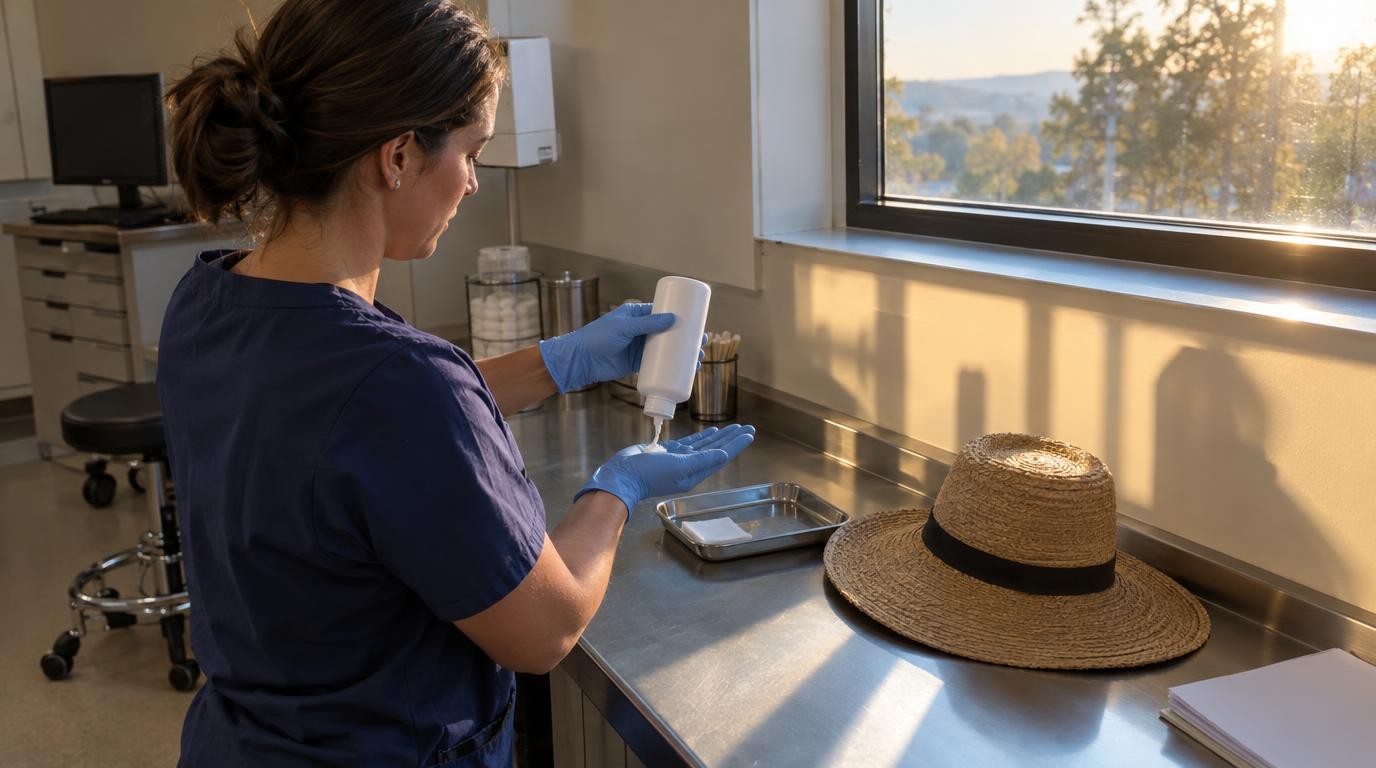
Yes. Cleveland Clinic recommends avoiding sunbathing, tanning beds, waxing, chemical peels and collagen injections for two weeks before laser treatment. Avoid perfumes and other potential irritants on the treatment area before and after treatment. Discuss aspirin, anti-inflammatory medicines and herbal supplements before treatment; do not stop a prescribed medication without discussing it with its prescriber. Follow the preparation instructions we give you for your planned treatment.
What happens during Fraxel treatment and recovery?
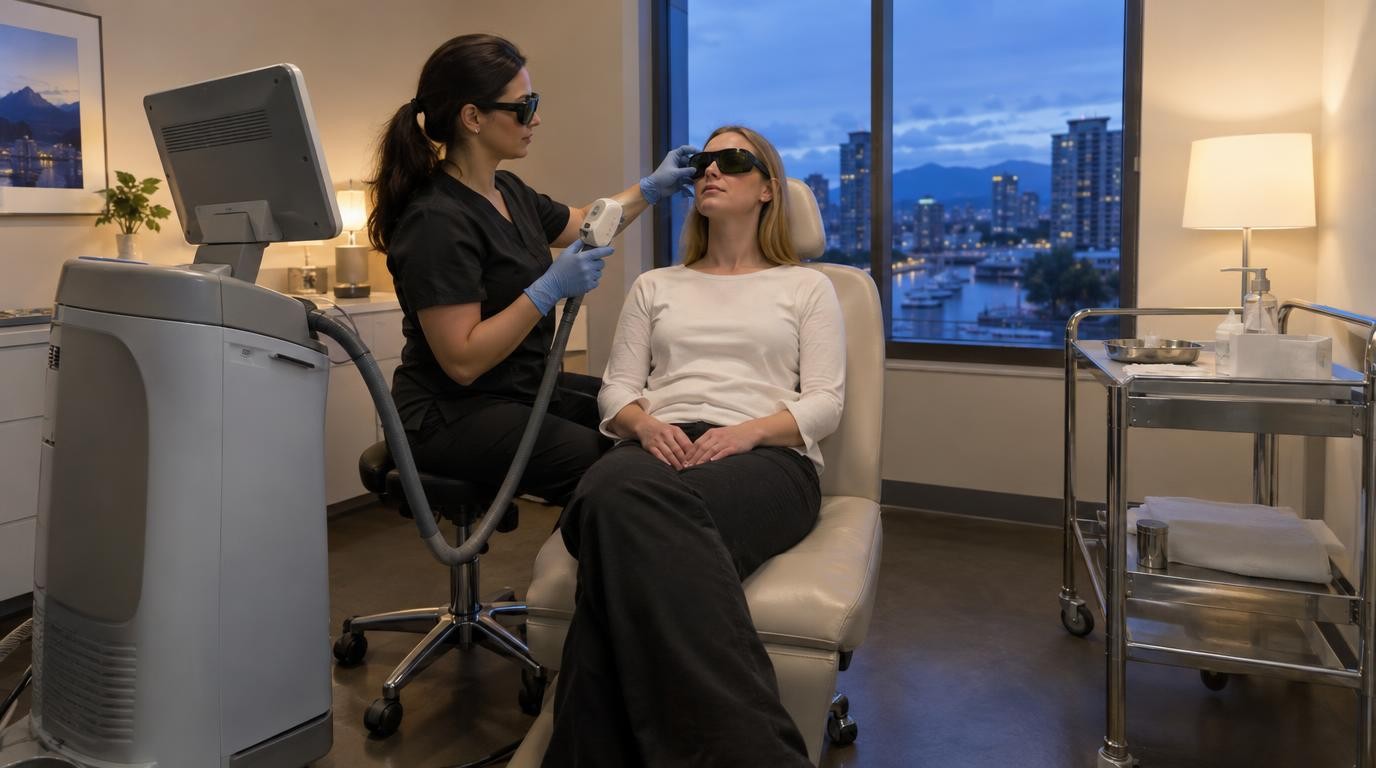
A Fraxel visit generally follows these stages:
- Assess the treatment area and prepare the skin.
- Put appropriate eye protection in place.
- Deliver fractional laser passes to the planned area.
- Review how to care for the treated skin afterward.
Warmth, redness, swelling or peeling may follow. Recovery varies with the device and treatment intensity, so another patient’s photos may not reflect your healing schedule.
What should you expect immediately after a Fraxel session?
The treated area may feel warm and look flushed or swollen. As healing progresses, some skin may feel rough or peel. Protect the area from sun exposure and avoid picking at healing skin. Follow your aftercare plan for cleansing and protecting the area. Call NW Laser if you develop blistering, pus-like drainage or skin that becomes increasingly painful.
How soon can I wear makeup after Fraxel?
After nonablative Fraxel, makeup may be possible once your skin is intact and your treating clinician permits it; some people can resume their usual skin routine right away after nonablative resurfacing. After ablative Fraxel, wait until the treated area has healed and your clinician clears you. Do not cover raw or peeling skin with makeup. The American Society of Plastic Surgeons’ laser resurfacing recovery guidance advises applying makeup once treated areas have healed. No single day is safe for every Fraxel model or treatment intensity.
What are Fraxel’s risks, and who should postpone treatment?
Redness and swelling are common short-term effects after laser resurfacing. Longer-lasting color changes, infection and scarring are less common but possible; their frequency varies with the device, settings and individual healing. Burns or cold-sore reactivation can also occur. Active infection, recent tanning or irritated skin may warrant postponement; melasma and darker skin tones call for particular attention to settings and pigment risk.
Can Fraxel cause dark spots, infection, or scarring?
Yes. Post-treatment darkening or lightening, infection and scarring can occur. A review of wound healing after ablative laser resurfacing identifies persistent redness, pigment changes, acne-like eruptions, dermatitis, infection and scarring, but does not establish a Fraxel-specific complication rate. A retrospective chart review of SmartXide DOT microablative CO2 resurfacing reported 13 complications (1.3%) among 1,081 procedures: 11 cases of prolonged redness and two of post-inflammatory darkening, with no scarring reported. That study examined a different device and cannot predict your risk with Fraxel.
Seek urgent medical care for new vision changes, rapidly worsening pain, spreading redness with fever, or other signs of a serious infection. Discuss your own medical history and the proposed laser treatment with your clinician before proceeding.
Who needs extra caution before treating melasma or darker skin?
People with melasma or a history of post-inflammatory dark spots need an individualized pigment assessment. Darker skin does not automatically rule out laser treatment, but inappropriate settings can increase the risk of unwanted color change. A claim that a device can be used across skin tones is not a promise of equal risk or equal results.
How do Fraxel results compare with CO2 resurfacing or a facelift?
Compare treatments by the concern you want to change and the recovery you can accommodate. Fraxel devices vary: Fraxel Repair is itself a fractional ablative CO2 laser, while a more intensive CO2 treatment may use different settings or a full-field approach. The main distinctions are:
| Option | Primary concern | Recovery and limits |
|---|---|---|
| Fraxel fractional resurfacing | Uneven tone, fine lines and some scars | May require a series; healing depends on the model and settings. |
| More intensive CO2 resurfacing | More pronounced wrinkles or scar texture | May produce a stronger change with more recovery; CO2 treatment can be fractional or full-field. |
| Facelift | Substantial facial sagging | Changes the position of sagging tissue but does not erase sun spots. |
When might a more intensive CO2 resurfacing approach make sense?
Deeper texture or more pronounced wrinkles may prompt a discussion of CO2 laser resurfacing. CO2 treatment can itself be fractional or full-field, so the name alone does not establish downtime. Johns Hopkins Medicine’s explanation of fractional lasers describes how leaving skin between treatment columns untreated may reduce side effects and shorten recovery compared with full-field treatment. For a closer comparison, see our Fraxel versus CO2 laser resurfacing guide and this educational discussion of Fraxel and CO2 recovery and results.
Which is better for me, a CO2 laser resurfacing or a facelift?
The better match depends on whether the photograph you want to change shows primarily skin-surface concerns or substantial sagging. Resurfacing can address texture, lines and some discoloration; a facelift changes the position of sagging tissues but does not erase sun spots. Some people have both concerns, which is why a photo should be assessed feature by feature. For under-eye concerns, read about CO2 laser under eyes and when eyelid surgery may help instead.
Frequently Asked Questions
Is Fraxel the same as a CO2 laser?
Some Fraxel models are CO2 lasers: Fraxel Repair is a fractional ablative CO2 laser, while Fraxel Dual is not and uses two other wavelengths that treat different depths. Ask which model was used when comparing results and recovery times.
Does Pearl laser tighten skin?
Possibly, but tightening cannot be predicted from the Pearl name alone. Some laser resurfacing treatments can modestly firm skin, but they cannot lift substantial sagging. If you are considering Pearl elsewhere, ask the treating clinician which device and settings they use and what change is realistic for you. We can discuss whether Fraxel fits your goals.
When can I return to work after Fraxel?
After nonablative resurfacing, people can typically resume usual activities right away, although redness or swelling may still be visible. After ablative resurfacing, new skin usually covers the treated area in 7 to 10 days, and full recovery takes at least a month, according to Mayo Clinic. Your return to work depends on your treatment, healing and comfort with your appearance during recovery.
How long do Fraxel results last?
Fraxel results are not permanent, although improvements after laser resurfacing may last for years. Skin continues to age, and sun exposure can cause new changes. Daily sun protection helps preserve improvements; whether maintenance treatment is useful depends on the concern treated.
Can I have Fraxel if I get cold sores?
A history of cold sores does not automatically rule out Fraxel, but laser resurfacing can reactivate herpes infections. The American Society for Dermatologic Surgery notes that patients with a herpes history may be prescribed antiviral medication before and after resurfacing. An active cold sore is a reason to postpone treatment until it resolves.
When can I restart retinol after Fraxel?
Wait until the treated skin has healed before restarting retinol, which can irritate healing skin. For Retin-A (tretinoin) or glycolic acid, the American Society of Plastic Surgeons gives a general restart point of around six weeks after laser resurfacing, or as directed by your physician. That timeline is not a universal schedule for every retinol product or Fraxel treatment.
Can Fraxel improve stretch marks?
Fraxel may improve the appearance of some stretch marks, but it cannot reliably erase them. At NW Laser, we offer Fraxel treatment for stretch marks, including those on areas such as the thighs, chest and sides. The likely change depends on the marks and your skin; a consultation can establish a realistic goal before treatment.
How far apart are Fraxel treatments scheduled?
Fractional resurfacing sessions are generally scheduled over weeks or months, rather than on consecutive days. We set the interval for your Fraxel series based on the model, treatment depth, treatment area and how your skin heals.
Where can you review Fraxel results with NW Laser in Vancouver, Washington?
Our Fraxel service page includes a before-and-after gallery. Use the questions below to judge whether an example is relevant to your concern.
What should you ask when looking at a clinic’s Fraxel gallery?
- Does the example show the same concern – scar texture, spots or fine lines – that I want treated?
- Are the lighting, angle, expression and makeup status comparable?
- Which Fraxel model and settings were used, and how many sessions had been completed?
- When was the “after” image taken, and had the skin finished healing?
- What degree of change is realistic for my skin and pigment history?
View our before-and-after gallery on the Fraxel service page linked above. To discuss what those examples might mean for your skin and an individualized plan, contact NW Laser for a Fraxel consultation in Vancouver, Washington.
This information is general and is not medical advice. Talk to a licensed clinician about your own situation before making a treatment decision.
