


Last updated: August 7, 2026
Botox Jawline Contouring Under FDA Review
For the first time, onabotulinumtoxinA (Botox Cosmetic) is one step closer to receiving formal approval for masseter muscle use – the treatment behind one of the most requested jaw slimming and facial contouring results in aesthetic medicine today. The FDA’s acceptance of Allergan’s supplemental Biologics License Application marks a significant development for patients and practitioners across the Portland, Oregon and Vancouver, Washington area who have been watching this indication advance through clinical development.
What Is the FDA News About Botox and Jawline Contouring?
The FDA has accepted a supplemental Biologics License Application from Allergan seeking approval for onabotulinumtoxinA in the masseter muscle for aesthetic facial contouring. This application, if approved, would establish masseter Botox as the fifth approved aesthetic indication for Botox Cosmetic, formalizing what has become one of the most commonly performed off-label neurotoxin treatments nationwide. The acceptance means the FDA has determined the application contains sufficient clinical data to proceed to formal review.
According to a report published in Dermatology Times, the FDA accepted Allergan’s sBLA on August 4, 2026, advancing this potential indication toward regulatory decision. The application seeks approval specifically for masseter muscle injections to achieve jawline slimming and facial contouring, representing a significant expansion of Botox Cosmetic’s approved aesthetic territory.
What Would the FDA Be Approving?
The proposed indication would authorize onabotulinumtoxinA injections directly into the masseter muscle for the purpose of achieving aesthetic facial contouring. This differs from the current approved indications, which target dynamic wrinkles caused by repeated muscle contractions. The masseter indication represents a functional use that reduces muscle bulk rather than simply relaxing wrinkles, reflecting the growing demand for non-surgical facial reshaping treatments.
When Might We Expect a Decision?
While the FDA has not published a specific action date for this application, the agency’s review process for supplemental Biologics License Applications typically spans several months. Patients in the Vancouver area and throughout the Pacific Northwest interested in masseter Botox should continue monitoring FDA announcements while consulting with qualified providers about current treatment options.
How Does Botox Work on the Masseter Muscle for Jaw Slimming?
The masseter is one of the strongest muscles in the human body, responsible for the powerful motions of chewing and clenching. Located at each side of the jaw, this muscle can become enlarged through habitual behaviors such as teeth grinding (bruxism), gum chewing, or simply genetic predisposition. When the masseter muscles are enlarged, they create a wider, more square-shaped lower face that many patients find aesthetically unbalancing.
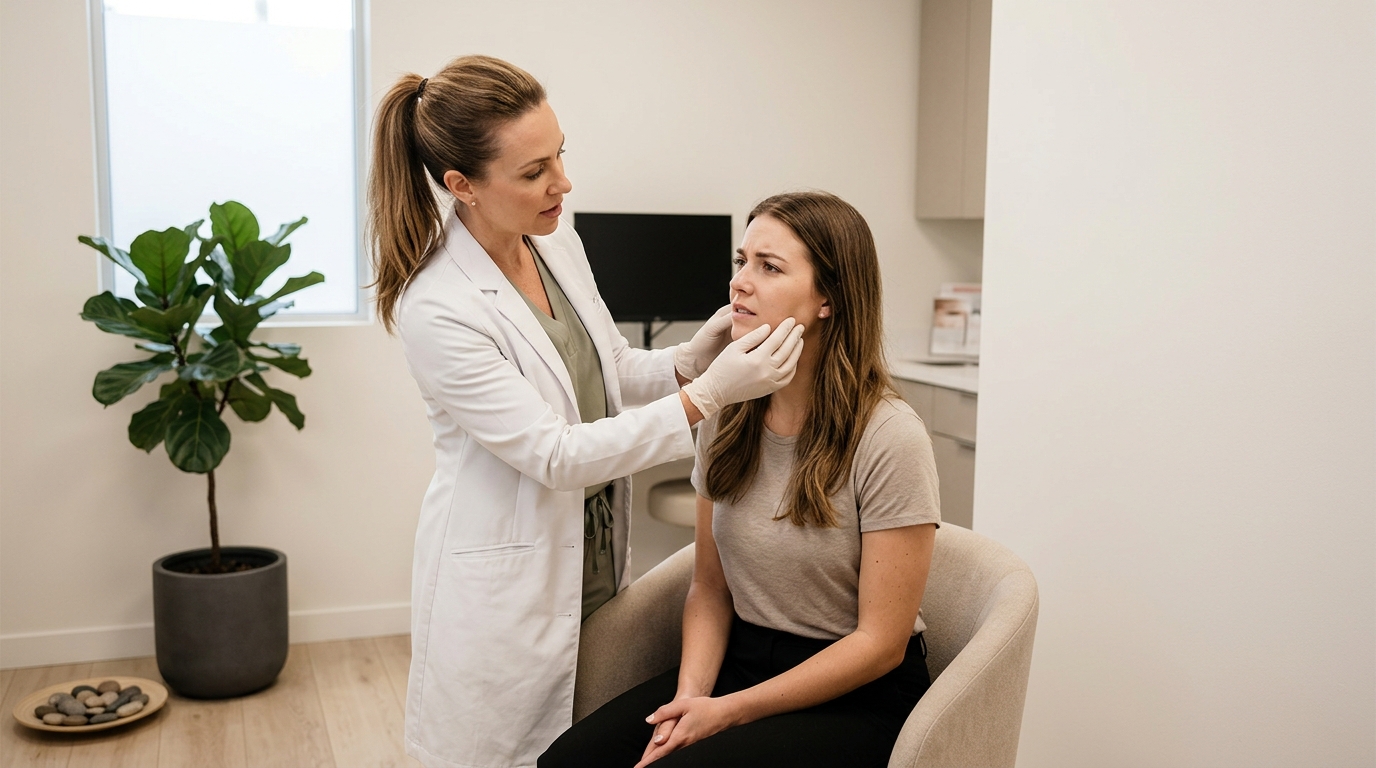
Botox works on the masseter through the same fundamental mechanism used in all approved indications. OnabotulinumtoxinA blocks the release of acetylcholine at the neuromuscular junction, temporarily preventing the muscle from contracting with full force. When injected into an enlarged masseter, the neurotoxin causes the muscle to gradually weaken and decrease in size over several weeks. This reduction in muscle bulk creates a noticeably slimmer jawline and softer facial contours without surgery or implants.
What Is the Masseter Muscle?
The masseter muscle is a thick, rectangular muscle originating from the zygomatic arch and attaching to the lateral surface of the mandibular ramus. It elevates the mandible to close the jaw during chewing. In some individuals, this muscle works overtime due to nighttime teeth grinding, daytime jaw clenching, or simply anatomical variation, resulting in masseter hypertrophy that visibly widens the lower face.
How Does Botox Reduce Masseter Size?
When Botox is injected into the masseter muscle, the neurotoxin binds to nerve terminals and prevents acetylcholine release, causing temporary muscle paralysis. Over the following weeks, the immobilized muscle fibers undergo atrophy – a natural decrease in muscle size due to reduced use. Patients typically see gradual slimming of the jawline beginning around the third week after treatment, with full results visible by week six to eight. The muscle does not disappear entirely; it simply becomes smaller and weaker, maintaining its essential function while creating aesthetic refinement.
What Are the Current FDA-Approved Uses for Botox Cosmetic?
Botox Cosmetic currently holds four FDA-approved aesthetic indications, each targeting a specific anatomical area or treatment concern. Understanding these approved uses provides important context for the significance of a potential fifth indication.
| Approved Indication | Target Area | Primary Benefit |
|---|---|---|
| Glabellar lines | Between eyebrows | Smooth frown lines |
| Lateral canthal lines | Sides of eyes | Reduce crow’s feet |
| Forehead lines | Frontalis muscle | Soften horizontal forehead wrinkles |
| Platysma bands | Neck | Reduce vertical neck bands |
These four indications have established Botox Cosmetic as the most widely recognized and researched aesthetic neurotoxin product in the world. The FDA-approved label provides healthcare providers with clear guidance on dosing, injection technique, and expected outcomes for each area.
How Many Aesthetic Indications Does Botox Have Now?
Botox Cosmetic currently holds four FDA-approved aesthetic indications in the United States. Each indication required separate clinical trial data and regulatory review, demonstrating the extensive research supporting this product’s safety and efficacy profile. The masseter muscle indication would represent the fifth approved aesthetic use if the FDA grants approval following its current review.
What Treatments Are Performed Off-Label?
Despite only four approved aesthetic indications, experienced practitioners routinely perform additional neurotoxin treatments off-label based on clinical evidence and established safety profiles. Common off-label uses include masseter muscle injections for jaw slimming and bruxism, lip flips for upper lip enhancement, gummy smile correction, chin dimpling reduction, bunny line smoothing on the nose, and brow lifting effects. Off-label use is legal and common in medicine when performed by qualified providers with appropriate patient consent.
Why Would FDA Approval for Masseter Botox Matter for Patients?
Formal FDA approval for masseter Botox would represent a meaningful shift in how this treatment is perceived, discussed, and accessed by patients seeking jawline refinement. The distinction between approved and off-label use carries weight in patient decision-making, insurance considerations, and clinical practice standards.
One of the most immediate impacts would be increased treatment accessibility. Patients who have hesitated to pursue masseter Botox due to its off-label status would have greater confidence in discussing this option openly with their providers. Approval would also enable direct marketing of the indication, raising patient awareness about this non-surgical approach to facial contouring.
How Would Approval Change Treatment Accessibility?
FDA approval would legitimize masseter Botox as a recognized aesthetic treatment rather than an experimental or unconventional procedure. This shift would likely increase both patient inquiries and provider willingness to offer the treatment. Approval could also influence insurance coverage decisions, though patients should not assume automatic coverage for purely aesthetic applications.
What Liability Benefits Would Approval Provide?
For practitioners, operating within an FDA-approved indication provides clearer legal and ethical ground than off-label practice. Approved indications carry established standards of care, pre-approved patient materials, and manufacturer support. While off-label use remains legal and common, approved indications reduce the liability considerations practitioners must weigh when treating patients.
What Should Vancouver Area Patients Know About Jaw Slimming Treatments?
Patients in Vancouver, Washington and the surrounding Portland metropolitan area have access to experienced aesthetic practitioners offering masseter Botox treatments. The Pacific Northwest has long been at the forefront of non-surgical aesthetic innovation, and jaw slimming treatments align well with the region’s preference for natural-looking enhancement.

The treatment process begins with a consultation to assess facial structure, masseter muscle development, and patient goals. Practitioners evaluate symmetry, discuss realistic expectations, and review medical history to ensure treatment appropriateness. The actual injection procedure typically takes fifteen to twenty minutes, with patients able to return to normal activities immediately afterward.
How Is Jaw Slimming Botox Performed?
During a masseter Botox session, the practitioner identifies optimal injection points along the masseter muscle, typically placing three to five injections per side depending on muscle size and anatomy. Fine-gauge needles minimize discomfort, and no anesthesia is required. The total dose used for masseter reduction is typically higher than wrinkle treatments, spread across multiple injection sites for even distribution.
What Results Can Patients Expect?
Results from masseter Botox develop gradually over four to eight weeks as the muscle atrophies. Most patients notice their jawline becoming progressively narrower during this period. Clinical experience indicates that visible slimming typically appears around the third week, with optimal results evident by week six to eight. Effects generally last four to six months, after which the muscle gradually returns to its previous size unless treatment is repeated.
Is Botox for Jaw Slimming Safe?
Masseter Botox maintains a strong safety profile consistent with the decades of clinical experience supporting Botox’s other indications. The masseter muscle’s location and function are well-understood, and targeted injections minimize the risk of affecting adjacent muscles responsible for chewing or facial expression.
The most frequently observed side effects are mild and self-resolving. These include temporary tenderness at injection sites, minor swelling, and occasional bruising. Serious adverse events are rare when treatments are administered by qualified practitioners using appropriate technique and dosing.
What Are Common Side Effects?
Common side effects following masseter Botox include mild redness, swelling, or bruising at injection sites that typically resolve within a few days. Some patients report temporary tenderness when chewing hard foods in the first week or two after treatment. These effects are generally mild and do not interfere with daily activities.
Who Should Avoid Masseter Botox?
Individuals with known hypersensitivity to botulinum toxin products should not receive masseter Botox treatments. Patients with neuromuscular disorders such as myasthenia gravis or Lambert-Eaton syndrome should consult extensively with their neurologist before considering any botulinum toxin treatment. Treatment is also not recommended for patients with active infections at injection sites or those who are pregnant or breastfeeding.
What Comes Next for Masseter Botox and Facial Contouring?
The FDA’s acceptance of Allergan’s supplemental Biologics License Application represents a significant milestone in the journey toward formal approval of masseter Botox for aesthetic facial contouring. For patients in the Portland, Oregon and Vancouver, Washington area who have been considering jaw slimming treatments, this development underscores the growing recognition of non-surgical facial contouring as a mainstream aesthetic option.
Until FDA approval is granted, masseter Botox remains available through experienced practitioners as an off-label treatment. Patients interested in exploring jawline refinement are encouraged to schedule a consultation with a qualified provider to discuss their aesthetic goals and develop a personalized treatment plan.
Frequently Asked Questions
What is the FDA news about Botox and jawline contouring?
The FDA has accepted Allergan’s supplemental Biologics License Application seeking approval for onabotulinumtoxinA injections into the masseter muscle for aesthetic facial contouring. This acceptance, announced August 4, 2026, advances the treatment toward formal regulatory review. If approved, masseter Botox would become the fifth FDA-approved aesthetic indication for Botox Cosmetic.
How does Botox work on the masseter muscle for jaw slimming?
Botox binds to nerve terminals in the masseter muscle and blocks acetylcholine release, causing temporary muscle paralysis. Over several weeks, the immobilized muscle fibers undergo atrophy due to reduced use, gradually decreasing in size. This reduction in muscle bulk creates a noticeably slimmer jawline without surgery or implants.
How long does it take to see results from masseter Botox?
Results from masseter Botox develop gradually over four to eight weeks as the muscle atrophies. Most patients notice visible jawline slimming around the third week after treatment, with optimal results typically evident by week six to eight. Effects generally last four to six months before the muscle gradually returns to its previous size.
What results can patients expect from jaw slimming Botox?
Patients can expect a progressively narrower jawline as the masseter muscle decreases in size over several weeks. The treatment creates a slimmer, more refined lower face contour without surgery. Effects last approximately four to six months, after which repeat treatment maintains the results. The masseter muscle retains its essential function while creating aesthetic refinement.
Is Botox for jaw slimming safe?
Masseter Botox maintains a strong safety profile consistent with decades of clinical experience supporting Botox’s other indications. Common side effects include temporary tenderness at injection sites, minor swelling, and occasional bruising that resolve within days. Serious adverse events are rare when treatments are administered by qualified practitioners using appropriate technique and dosing.
What are the current FDA-approved uses for Botox Cosmetic?
Botox Cosmetic currently holds four FDA-approved aesthetic indications: glabellar lines between the eyebrows, lateral canthal lines (crow’s feet), forehead lines, and platysma bands in the neck. Each indication targets specific areas for wrinkle reduction. The masseter muscle indication would represent the fifth approved aesthetic use if the FDA grants approval.
How is jaw slimming Botox performed?
During a masseter Botox session, practitioners identify optimal injection points along the masseter muscle, placing three to five injections per side depending on anatomy. Fine-gauge needles minimize discomfort and no anesthesia is required. The procedure takes fifteen to twenty minutes, with patients returning to normal activities immediately afterward.
Related reading
- Pellevé skin tightening uses radiofrequency energy to contract existing collagen and stimulate new collagen production for non-surgical wrinkle reduction and facial rejuvenation. The treatment addresses sagging skin, wrinkles, crow’s feet, smile line
- Botox vs miraDry for Excessive Sweating: Which Treatment Is Right for You in 2025?
- Botox for Hyperhidrosis: How Neurotoxin Injections Stop Excessive Sweating
