

Last updated: November 11, 2026
Laser skin resurfacing uses controlled light energy to improve selected skin concerns, including uneven texture, spots, and scars. At NW Laser in Vancouver, Washington, our Fraxel laser treatment targets small areas of skin at a time; the right plan depends on your skin, your goals, and the device used.
What Is Laser Skin Resurfacing, and How Does Fraxel Work?
NW Laser offers Fraxel, a fractional treatment that creates microscopic treated zones while leaving surrounding skin untreated. The resulting healing response can improve texture and discoloration without treating the entire skin surface in a single pass.
How does fractional laser treatment affect the skin?
Fractional laser resurfacing distributes energy across many small zones rather than uniformly treating the full surface. The controlled treatment prompts healing and collagen production and remodeling, which can gradually improve the skin’s appearance. Ablative resurfacing removes surface tissue in treated zones; nonablative treatment acts without removing the skin’s top layers. Mayo Clinic notes that both methods can be fractional. “Fractional” describes the treatment pattern, not whether surface skin is removed, so we confirm the specific Fraxel device when discussing effects and recovery.
Does Laser Resurfacing Help With Spots, Scars, and Wrinkles?
Laser resurfacing can improve the appearance of some spots, scars, fine lines, and uneven texture, but results depend on the concern and the treatment selected. At NW Laser, Fraxel is used for skin rejuvenation, discoloration, wrinkles, acne and surgical scars, and selected stretch marks. Improvement does not mean complete scar removal or uniformly clear skin.
Can Fraxel help with facial acne scars and sun spots?
Fraxel can be considered for facial acne scars, age or sun spots, and rough skin. Scar depth and the type of pigmentation affect what change is realistic. Johns Hopkins Medicine identifies scarring, sun damage, uneven texture, and wrinkles among the concerns laser treatments may address; not every laser is suited to every concern.
Is laser resurfacing always appropriate for melasma?
No. Melasma needs individual assessment because laser treatment can aggravate pigmentation in some patients, even though certain laser treatments may be considered for it. At NW Laser, the distinction between a sun spot and melasma matters: the cause of discoloration helps determine whether Fraxel is an appropriate choice and what outcome is reasonable to expect.
Which Laser Is Best for Skin Rejuvenation?
There is no universally best laser for skin rejuvenation. CO2 resurfacing can address deeper wrinkles but carries a risk of lightening treated skin, particularly in darker skin tones. Erbium resurfacing can improve milder wrinkles and is less likely than CO2 to cause that effect; nonablative treatments generally have shorter recovery but more gradual, subtler results. The choice depends on your concern, skin tone, pigmentation history, and acceptable recovery. For Fraxel, the device model, wavelength, and settings affect the treatment and recovery. For delicate under-eye skin, our guide to CO2 laser under eyes explains which concerns resurfacing treats and when surgery may help.
How is Fraxel different from fractional ablative CO2 resurfacing?
Both treatments can use a fractional pattern. Fractional ablative CO2 resurfacing removes microscopic columns of surface skin. Fraxel is a treatment platform with models that may be ablative or nonablative. More intensive ablative treatment can involve a more demanding recovery.
The treatment approach is easier to assess than a brand name alone:
| Question | NW Laser’s Fraxel | Fractional ablative CO2 |
|---|---|---|
| How is skin treated? | Microscopic zones are treated, with surrounding skin left untreated. | Microscopic columns of surface skin are removed, with surrounding skin left intact. |
| What determines intensity and recovery? | The specific model, settings, area, and individual response. | Ablative treatment depth, settings, area, and individual response. |
For a closer look at the distinction, see our Fraxel versus CO2 resurfacing comparison and this educational comparison of Fraxel and CO2 recovery and results.
Who May Be a Good Candidate for Fraxel Treatment?
If you want to improve fine lines, age or sun spots, acne or surgical scars, or selected stretch marks, our Fraxel treatment may be worth discussing. We assess your skin tone and history of pigmentation changes, active acne or infection, recent sun exposure, skin-care products and medications, and the Fraxel device and settings available for your concern. These factors help us decide whether treatment is suitable now, should wait, or is unlikely to meet your goals; the degree of improvement varies.
Can I Do Laser if I Use Tretinoin?
Yes, you may be able to have laser treatment if you use tretinoin; its use alone does not rule you out. Tell us which product you use, how often you apply it, and whether your skin is irritated. Depending on your skin and the planned laser treatment, your clinician may direct you to continue tretinoin beforehand or pause it. An American Society of Plastic Surgeons-hosted surgeon’s article describes tretinoin pretreatment before some laser procedures as helpful; that author’s approach is not a universal instruction. For restarting it, the American Society of Plastic Surgeons gives around six weeks after laser resurfacing or the timing your clinician directs. Neither that estimate nor a pretreatment schedule should be assumed to apply to your Fraxel procedure.
What Happens During a Fraxel Laser Resurfacing Procedure?
How is treatment planned and how is discomfort managed?
- Assess the skin and goal. The treatment-area review helps match the plan to the concern and identify pigmentation or healing issues that need attention.
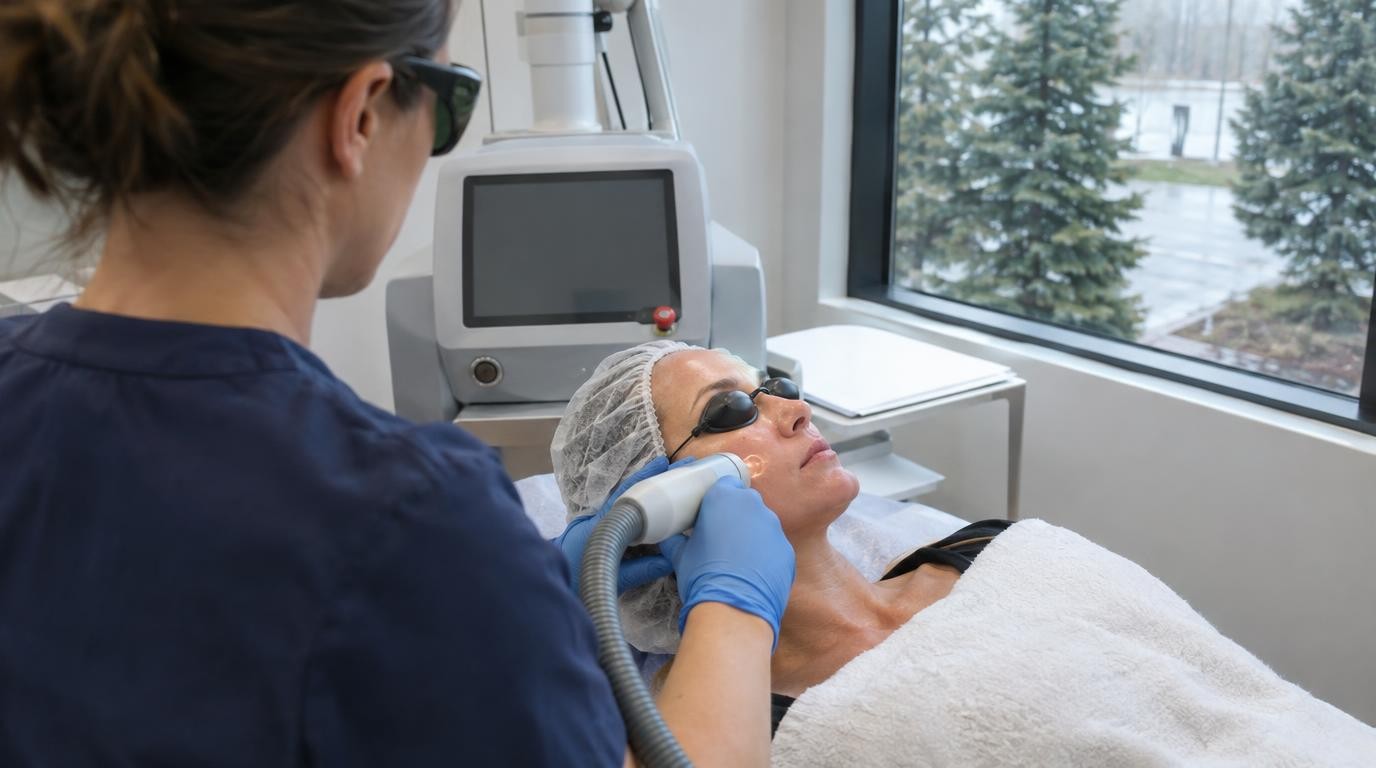
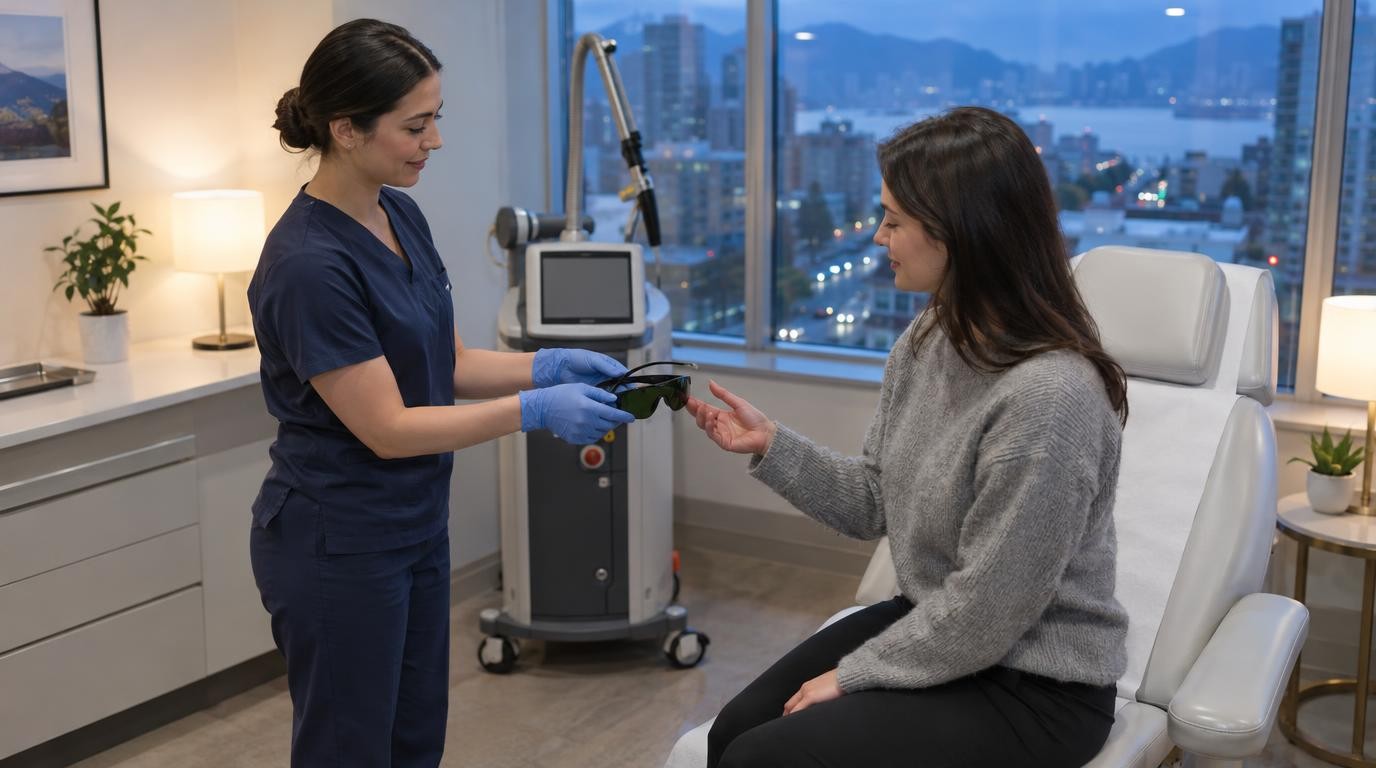
- Prepare and protect. Protective eyewear is used. Numbing the skin is a common way to reduce discomfort; ask our team whether topical numbing or another measure will be used for your plan.
- Treat the area. The handpiece makes fractional passes according to the selected settings; session length varies with the treatment area and plan. Mayo Clinic says ablative laser resurfacing typically takes between 30 minutes and two hours, depending on technique and area. That is a general ablative-resurfacing example, not a promised length for your Fraxel appointment.
- Review aftercare. Instructions explain how to care for the treated skin and which changes warrant a call.
An expert consensus on fractional ablative CO2 laser treatment reports topical anesthetic cream, nerve blocks, and oral pain medicine among comfort approaches used for that procedure. Those are CO2-panel practices, not a standard Fraxel protocol; comfort measures depend on the treatment depth and area.
What Are the Risks of Laser Skin Resurfacing, and Who Should Avoid It?
Possible complications of laser resurfacing include pigment changes, infection, cold-sore reactivation, scarring, acne flares, and milia (small white bumps that can appear during healing). Active infection in the treatment area is a reason to defer treatment pending evaluation. People with a history of pigmentation changes need particular care when weighing a device and settings.
What should I ask about infection screening and preventive medication?
The expert consensus on fractional ablative CO2 facial rejuvenation identifies active facial infection as a treatment concern and describes screening and preventive medication practices used by its panel. Panel members also raised burns, recent sun exposure, and pregnancy or breastfeeding as reasons to consider deferring CO2 treatment. These findings provide useful questions, but they do not make CO2 protocols mandatory for Fraxel.
- How will the treatment area be checked for active infection or irritated skin?
- Does a history of cold sores change the plan, particularly for treatment near the mouth?
- Would preventive antiviral or antibiotic medication be appropriate for my history and the device being used?
- What pigment-change risks apply to my skin tone and pigmentation history?
The American Society of Plastic Surgeons identifies bacterial infection, cold-sore reactivation, and darkening of treated skin as possible complications; lightening of the skin is rarer. For someone with a history of cold sores, antiviral medication before and after treatment near the mouth may prevent reactivation. Antibiotics may be recommended in some circumstances, rather than routinely for everyone. Contact the treatment team promptly for worsening pain, spreading redness, or pus; seek urgent medical care if these occur with fever or you feel seriously unwell. Discuss your individual risks and whether to proceed with your own clinician.
How Long Does It Take to Recover From Laser Skin Resurfacing?
Recovery after Fraxel has no fixed timeline: initial healing, time away from normal activities, and full recovery depend on the device, settings, treated area, and individual response. Temporary redness, swelling, and flaking may occur. The American Society for Dermatologic Surgery gives a general healing range of three to 10 days, depending on resurfacing depth and laser type. Cleveland Clinic describes one full week of recovery for fractional CO2 resurfacing; the American Society of Plastic Surgeons gives generally up to two weeks for CO2 resurfacing. Neither CO2 estimate predicts recovery with our unspecified Fraxel model.
Time away from activities can be shorter than full recovery. For nonablative resurfacing, Mayo Clinic says swelling or color changes may last a few hours and people can usually resume normal activities right away. After ablative resurfacing, Mayo Clinic says new skin usually covers the area in 7 to 10 days, while full recovery takes at least a month. These are general estimates, not a timeline for your Fraxel treatment.
After more intensive or ablative resurfacing, skin may look severely sunburned, become raw, weep clear fluid, blister, or form a crust. The American Society of Plastic Surgeons says treated skin often becomes dry and peels about five days to a week after resurfacing. Clear weeping or crusting can occur during healing; pus, worsening pain, or spreading redness call for the prompt assessment described above.
What aftercare matters while the skin heals?
Use the gentle cleansing and skin-care products specified for your treatment, avoid picking at flaking skin, and protect the area from sun exposure. Keep tretinoin and other potentially irritating active products off raw, healing skin.
For more intensive ablative resurfacing, the American Society of Plastic Surgeons describes clinician-directed cleansing with saline or diluted vinegar solution two to five times a day and applying recommended protective skin care. Mayo Clinic notes that an ointment and sometimes a dressing may be used after ablative treatment. Use sunscreen daily after the skin has healed. These are examples, not instructions for every Fraxel patient. Our guide to facial laser therapy recovery provides additional background, but your treatment-specific aftercare instructions take priority.
When Might Fraxel Results Appear, and How Many Sessions Are Typical?
Changes in texture, discoloration, and scars can develop gradually as skin heals. At NW Laser, we typically recommend 4-5 treatments to reach the planned result. The number of sessions is tailored to the concern and response, not guaranteed to produce complete clearance. Johns Hopkins Medicine says improvements after ablative resurfacing often last for years, but longevity varies with the device, concern, and person. That general finding is not a guarantee about Fraxel results. See what Fraxel laser before and after photos can show about improvement, and why they cannot predict your result.
Does laser resurfacing help after just one treatment?
It can. A first Fraxel treatment can produce visible improvement, but that early change may be subtler than the result sought from a planned series. Acne scars and discoloration can respond differently, and a single session cannot be expected to erase a scar or deliver a predetermined degree of improvement.
What Are the Alternatives to Laser Resurfacing?
For some fine lines or surface-texture concerns, clinician-guided tretinoin, chemical peels, or microdermabrasion may be options. Microneedling or radio-frequency treatment may be worth considering when laser-related pigment changes are a concern. Recovery and likely improvement differ: a less intensive approach may involve less downtime than ablative resurfacing but may not improve deeper wrinkles or scars to the same extent. We offer chemical peels and microneedling, and can help you compare them with Fraxel for your particular concern.
We also offer IPL photofacials for selected color concerns. IPL uses intense pulsed light; it is not laser resurfacing and is not a substitute for resurfacing deeper scars. The right alternative depends on what you want to improve, your skin, and the recovery you can accommodate.
Frequently Asked Questions
Can laser resurfacing tighten loose skin or replace a facelift?
No. Laser resurfacing can improve texture and fine lines and may give a slight lift, but it cannot fix sagging skin, correct significant jowling, or replace a facelift.
Can I get laser resurfacing if I have darker skin?
Yes, darker skin does not automatically rule out laser resurfacing. Some lasers carry a greater risk of discoloration, so your pigmentation history, the device, its settings, and the clinician’s experience with darker skin all matter. Johns Hopkins Medicine identifies nonablative lasers as options for darker skin tones. An article on the American Board of Cosmetic Surgery website notes that erbium resurfacing can sometimes suit lighter-toned skin of color, while people with darker brown or black skin may need to consider nonlaser options such as microneedling. We would assess your individual pigment-change risk before recommending a treatment; suitability for our particular Fraxel device cannot be assumed.
When can I wear makeup after laser resurfacing?
Wait until the treated skin has healed before wearing makeup; do not apply it to raw or oozing skin. The American Society of Plastic Surgeons says makeup can camouflage lingering pinkness after healing.
How long can skin stay pink after laser resurfacing?
Pinkness can outlast the initial healing period. The American Society of Plastic Surgeons says new skin may gradually lighten over two to three months and that pinkness can take up to a year to disappear after laser resurfacing. Those are general possibilities, not a forecast for a particular Fraxel treatment.
Should I wait to get laser resurfacing if I have active acne?
Yes. Cleveland Clinic recommends waiting until active acne is well controlled before pursuing laser resurfacing. Resurfacing acne scars is a different goal from treating an active breakout.
Can Fraxel treat sun spots on my hands or neck?
Potentially, yes. At NW Laser, we offer Fraxel for selected discoloration, including spots on the hands and neck. Whether a particular spot is suitable depends on its cause and your skin’s response to treatment. Not every dark spot will improve with laser treatment, and settings that suit the face may not suit the hands or neck.
What sunscreen should I use after laser resurfacing?
Protect healing skin from direct sun and follow your treatment-specific aftercare instructions about what to apply before it has healed. After healing, use sunscreen daily. For carbon dioxide laser resurfacing, Cleveland Clinic recommends a broad-spectrum facial sunscreen with SPF of at least 30. That SPF recommendation comes from CO2 guidance, not a specific Fraxel aftercare protocol.
What Should You Ask at a Fraxel Consultation in Vancouver, Washington?
Ask which Fraxel device will be used, what concern the treatment is intended to improve, and what recovery and results are realistic for your skin. Bring your skin-care and medication history, including tretinoin use, and mention melasma, prior pigment changes, active infection, or cold sores. A personalized plan should also address comfort and preventive measures.
- Which Fraxel model and treatment approach will you use for my goal?
- How do my skin tone, sun exposure, and melasma history affect the plan?
- Should I change my tretinoin or other active skin-care routine before or after treatment?
- Does my infection or cold-sore history call for screening or preventive medication?
- What discomfort measures, aftercare instructions, recovery expectations, and session plan apply to me?
If you live in or around Vancouver, Washington, contact NW Laser for an individualized Fraxel consultation. Our team can review your goals, explain the device and treatment plan, and help you decide whether the approach fits your skin.
This information is general and is not medical advice. Talk to a licensed clinician about your own situation before making a treatment decision.
