

Last updated: September 5, 2026
This research provides practitioners and patients with evidence-based insights into how this PMMA filler works at the cellular level to stimulate natural collagen production over time.
What Is Bellafill and How Does It Work?
Bellafill is an injectable dermal filler approved by the FDA for the correction of nasolabial folds and certain types of acne scarring. The product contains polymethyl methacrylate microspheres – tiny synthetic particles that act as a scaffold within the skin.

How Does Bellafill Differ From Hyaluronic Acid Fillers?
Unlike hyaluronic acid fillers that provide temporary volume by attracting water molecules, this filler works through a fundamentally different mechanism. Hyaluronic acid fillers are gradually broken down by the body, typically requiring retreatment within 6 to 12 months. The PMMA microspheres remain intact once implanted, creating a permanent support structure that encourages the body to build its own collagen around the particles.
What Makes Bellafill a Regenerative Biomaterial?
The review highlights that the microspheres trigger fibroblast activity, prompting the body to produce new collagen fibers over several months. As the initial bovine collagen carrier is gradually absorbed, newly formed tissue replaces it, creating a framework of the patient’s own collagen. This regenerative process distinguishes the filler from passive filler materials, positioning it as a bioactive implant that remodels tissue rather than simply filling space.
What Does the Scientific Review Reveal About Bellafill?
Authors Li Nan and Fang Xia from The Second Affiliated Hospital of Zhejiang University School of Medicine evaluated preclinical and clinical data to provide practitioners with an updated understanding of this filler’s regenerative potential. The FDA maintains comprehensive documentation on approved dermal fillers.
What Are the Biological Mechanisms Documented in the Study?
The review documented how PMMA microspheres interact with surrounding tissue at the cellular level. Once injected, the microspheres initiate a controlled immune response that attracts fibroblasts to the site. These fibroblasts then synthesize new collagen, with the process continuing over months as tissue gradually remodels around the permanent framework. The authors noted that this mechanism provides both immediate correction from the collagen carrier and long-term improvement from the body’s own regenerative response.
How Does Bellafill Stimulate Long-Term Collagen Production?
According to the researchers, the sustained collagen stimulation occurs because the PMMA microspheres remain unabsorbed by the body, maintaining their structural role indefinitely. Fibroblasts continue to interact with the microsphere surface, producing collagen in a stable, organized pattern. The review noted that this continuous regenerative process allows for natural-feeling results that improve over time rather than degrading, making the treatment particularly suitable for patients seeking durable correction of deep facial lines and contour deficiencies.
Is Bellafill FDA Approved and Safe?
Yes. Bellafill holds FDA approval for the correction of nasolabial folds and for the treatment of certain types of acne scars in adults 21 years and older. The approval process included extensive safety evaluations, and the product has been used in aesthetic practice for over a decade.
What Is Bellafill’s Safety Profile?
The review assessed safety based on clinical trial data and real-world use. Common side effects include temporary swelling, bruising, and redness at the injection site. The bovine collagen component requires a skin test prior to treatment to identify potential allergic reactions. Serious complications such as granulomas or vascular occlusion are rare but possible, emphasizing the importance of treatment by a qualified provider. The review concluded that when administered appropriately, the filler demonstrates an acceptable safety profile for suitable candidates seeking long-lasting correction.
What Areas Can Bellafill Treat?
Bellafill is FDA-approved for nasolabial folds and selected types of acne scarring, but practitioners sometimes use it off-label for other facial areas where durable volume and structural support are desired.
How Effective Is Bellafill for Marionette Lines and Nasolabial Folds?
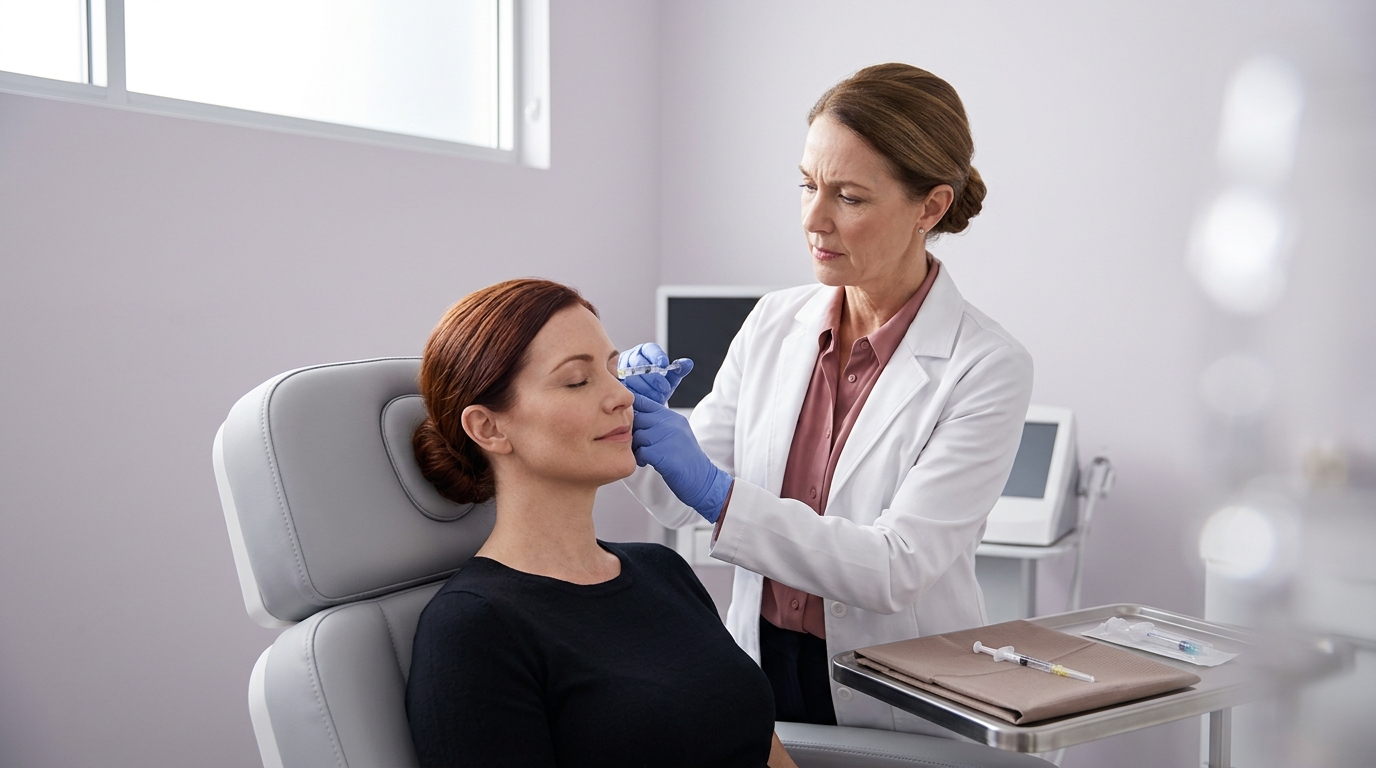
Clinical evidence supports this filler’s effectiveness for deep facial creases including marionette lines and nasolabial folds. The PMMA microspheres provide immediate correction from the collagen carrier while stimulating gradual collagen deposition for results that can persist for years. Patients with moderate to severe folds who desire long-term correction may find the treatment particularly appropriate, as the regenerative mechanism continues to improve tissue quality over time.
Can Bellafill Improve Facial Acne Scars?
The filler is FDA-approved for certain depressed acne scars, including rolling and boxcar types. The injectable lifts scarred tissue while the microspheres encourage collagen remodeling beneath the depression. Patients in Portland, Oregon and surrounding communities seeking improvement in facial acne scars can discuss whether their scar type is appropriate for this treatment during a consultation.
How Long Do Bellafill Results Last?
One of Bellafill’s distinguishing characteristics is its longevity. Unlike temporary fillers that require annual or semi-annual retreatment, the results are designed to endure for years, making it a cost-effective option over the long term for appropriate candidates.
The permanent nature of the PMMA microspheres means that the structural correction does not dissipate. Patients can expect the initial correction to be maintained while potentially continuing to see improvement in skin quality as collagen remodeling progresses. This durability makes Bellafill especially appealing for adults in the Maywood Park and Camas areas who prefer to avoid repeated maintenance appointments.
Risks, Side Effects and Who Is Not a Candidate
Like all injectable treatments, Bellafill carries potential risks and side effects. Common reactions include swelling, bruising, redness, and tenderness at injection sites, typically resolving within days to weeks. Less common complications may include lumpiness, infection, or allergic reaction to the bovine collagen component.
The filler is not appropriate for everyone. Individuals with known allergies to bovine collagen, lidocaine, or polymethyl methacrylate should avoid this treatment. Patients with bleeding disorders, active skin infections, or a history of keloid scarring should discuss their medical history thoroughly with a provider. Pregnant or nursing individuals are typically advised to postpone treatment.
The FDA-approved label includes specific contraindications, and a thorough consultation is essential to determine candidacy. Patients should disclose all medications, supplements, and prior treatments to ensure safe administration.
Is Bellafill Right for You?
For adults seeking long-lasting correction of deep wrinkles, facial hollowing, or certain acne scars, Bellafill offers a scientifically validated option that improves over time through the body’s own collagen-building processes.
Choosing any injectable treatment requires careful consideration of individual goals, anatomy, and medical history. A qualified provider can assess whether the filler aligns with your aesthetic objectives and explain what results you might reasonably expect based on your specific situation.
If you are in the Portland, Oregon or Vancouver, Washington area and interested in learning whether Bellafill could be appropriate for your concerns, schedule a consultation at NW Laser. The experienced team at NW Laser will review your goals, discuss the treatment in detail, and help you determine a well-established approach for achieving natural-looking, lasting rejuvenation. Contact NW Laser today to begin your personalized assessment.
Frequently Asked Questions
What is Bellafill and how does it work?
Bellafill is an FDA-approved injectable dermal filler containing polymethyl methacrylate (PMMA) microspheres that act as a permanent scaffold within the skin. Unlike temporary fillers, it stimulates your body’s own fibroblasts to produce new collagen around the microspheres, creating lasting structural support rather than just filling space. The results improve over time as your natural collagen remodels around the framework.
How long do Bellafill results last?
The filler provides long-lasting correction because the PMMA microspheres remain permanently in place. The initial bovine collagen carrier provides immediate correction, while the body’s own collagen gradually builds around the microspheres over several months. Results are designed to endure for years, making it a cost-effective option compared to temporary fillers requiring annual retreatment.
Is Bellafill FDA approved and safe?
Yes, Bellafill is FDA-approved for correcting nasolabial folds and certain acne scars in adults 21 years and older. Common side effects include temporary swelling, bruising, and redness at injection sites, with serious complications being rare.
How does Bellafill differ from hyaluronic acid fillers?
Bellafill uses PMMA microspheres that remain permanently in the skin, while hyaluronic acid fillers are gradually broken down by the body, typically requiring retreatment every 6 to 12 months. The treatment provides both immediate correction from the collagen carrier and long-term improvement through the body’s own regenerative collagen response.
What areas can Bellafill treat?
Bellafill is FDA-approved for nasolabial folds and certain types of depressed acne scars, including rolling and boxcar types. Practitioners may also use it off-label for other facial areas where durable volume and structural support are desired. The injectable lifts scarred tissue while microspheres encourage collagen remodeling beneath depressions.
What makes Bellafill a regenerative biomaterial?
Bellafill is classified as a regenerative biomaterial because its PMMA microspheres trigger fibroblast activity, prompting the body to produce new collagen fibers over several months. As the initial bovine collagen carrier is gradually absorbed, newly formed tissue replaces it, creating a framework of the patient’s own collagen that remodels tissue rather than simply filling space.
Who is not a candidate for Bellafill?
The filler is not appropriate for individuals with known allergies to bovine collagen, lidocaine, or polymethyl methacrylate. Patients with bleeding disorders, active skin infections, or a history of keloid scarring should discuss their medical history thoroughly with a provider. Pregnant or nursing individuals are typically advised to postpone treatment.
Related reading
- What Does Research Say About Cumulative Benefits of Laser Skin Resurfacing?
- Fat Transfer for Natural Facial Rejuvenation
- Juvederm XC dermal filler injections utilize hyaluronic acid technology
This article is general information and is not medical advice. Talk to a licensed clinician about your own situation before making a treatment decision.
