

Last updated: November 23, 2026
VI Peel is a professionally applied treatment at NW Laser in Vancouver, Washington—not an at-home skincare product or a substitute for daily care. It may be worth considering for acne-related concerns, superficial dark spots, or uneven texture if you can manage the peeling and aftercare. A clinician-guided at-home routine remains important whether or not you have a peel.
What Is a Facial Chemical Peel, and How Does VI Peel Work?
A facial chemical peel applies an acid solution to remove damaged surface layers of skin and encourage a smoother-looking complexion. At NW Laser, our VI Peel chemical peeling treatment uses a combination that includes trichloroacetic acid and salicylic acid. The VI Peel system was initially developed for acne, but suitability depends on the individual concern and skin.
How is a VI peel different from other chemical peels?
VI Peel is a chemical peel, not an alternative to chemical peels. It combines acids, including trichloroacetic acid and salicylic acid, rather than relying on a single peeling agent. According to a review of chemical peels and skin resurfacing, superficial peels affect the epidermis and may help acne or uneven pigmentation; medium-depth peels reach the upper dermis and may help superficial scars or pigmentation; and deep peels reach farther and may be considered for severe sun damage or deep wrinkles. Greater depth generally means longer healing and more potential complications. No peel should be expected to erase deep scars or deep wrinkles. VI Peel’s ingredients alone do not establish a fixed depth, and results from another formulation do not establish VI Peel results. For a superficial concern, a light chemical peel may be another option.
What is the best professional chemical peel?
There is no single best peel for every patient. A superficial peel may suit acne, uneven tone, or dull texture when limited downtime is a priority. Deeper peels may address different concerns but require longer healing and carry greater risks. The best choice depends on your skin, the depth of the concern, and the recovery you can accommodate; VI Peel is one professional option we offer in Vancouver, Washington.
Which Skin Concerns Might a VI Peel Help Address?
VI Peel may help improve acne-related concerns, dark spots, uneven tone, dull or rough skin, and fine lines. The right goal is improvement, not guaranteed clearing. The type and depth of a concern matter: a superficial discoloration and a depressed acne scar may respond differently to the same peel.
Can a facial chemical peel help with acne scars and dark spots?
A chemical peel may improve some sun spots, melasma, or other uneven pigmentation, although results vary. It may also improve the appearance of some superficial acne scars. Deeper scars can require a different approach: the American Society of Plastic Surgeons’ chemical-peel overview says peels cannot remove deep scars.
Which VI Peel is best for hyperpigmentation?
No one VI Peel formulation is best for every type of hyperpigmentation. Sun spots, melasma, and dark marks after acne may respond differently; skin tone and any history of lasting pigment changes also matter when selecting a peel. A more superficial approach may be preferable when the risk of pigment changes is higher, and sun protection remains important afterward.
Can People With Darker Skin Tones Have a Facial Chemical Peel?
People with darker skin tones are not automatically excluded from chemical peels, but peel depth matters. Superficial peels may be options after assessment, while medium or deep peels call for particular caution: EyeWiki’s facial peel guidance notes a greater risk of pigment changes with more invasive peeling in these skin types. A 2026 Cureus scoping review of chemical peels in Fitzpatrick skin types IV-VI examined the available evidence in these groups, not VI Peel specifically.
What Does Recent Research Say About Peel Safety in Fitzpatrick Types IV-VI?
In the Cureus review, superficial glycolic and salicylic acid peels showed promise for acne and pigment concerns, but small studies and limited evidence on deeper peels restrict conclusions about safety. The Cureus reviewers screened 473 studies and included seven that reported outcomes in Fitzpatrick skin types IV-VI.
| Studies in the review | Reported finding |
|---|---|
| Five on acne or acne scarring | All reported positive outcomes with minimal adverse effects. |
| One on lichen planus pigmentosus | Reported significant clinical improvement. |
| One on improper peel use | Documented chemical burns. |
The review’s evidence was limited by small samples and short follow-up, and the reviewers called for standardized protocols. The American Academy of Dermatology’s chemical-peel FAQ warns that without expertise in treating darker skin tones, a peel can cause permanent pigment problems. An individualized assessment is more useful than either a blanket exclusion or a promise that a particular peel is safe for every skin tone.
Who Should Avoid a VI Peel, and What Are Its Risks?
We do not recommend VI Peel during pregnancy or nursing. An active infection or open sore is a reason to postpone a peel, and a previous allergic reaction to a peeling agent needs discussion before treatment. Tell us about your medical history and medications so we can discuss whether a peel is suitable. Expected temporary reactions differ from complications that need prompt assessment.
Who cannot get a chemical peel?
Recent facial surgery or radiation therapy may also mean a peel needs to wait or be reconsidered. Tell us about either before scheduling treatment.
Tell us about current or past oral isotretinoin use; it calls for individualized assessment, not an automatic ban. Also discuss unusual scarring or lasting pigment changes, medications that increase skin sensitivity, psoriasis, atopic dermatitis, connective-tissue disease, diabetes, immune suppression, or a history of poor wound healing. These do not automatically exclude everyone from treatment, but they may change the plan. If you cannot avoid sun exposure while your skin heals, postponing or reconsidering a peel may be safer.
What side effects can a VI peel cause?
Temporary redness and peeling are part of recovery; itching, stinging or burning, and swelling can also occur. NW Laser describes VI Peel side effects as rare but does not provide numerical rates. Blisters, infection, allergic reactions, and lasting skin-color changes are possible complications. The American Society of Plastic Surgeons’ chemical-peel safety guidance describes infection and scarring from chemical peels as very rare, without giving a VI Peel-specific rate; an improperly performed peel can cause permanent scars. Mild tingling during application is different from significant or worsening burning. Tell your provider immediately if you have substantial discomfort. After leaving, contact NW Laser about concerning blisters, increasing redness or swelling, drainage, or pain that worsens rather than settles. Seek urgent medical care for trouble breathing or rapidly developing facial swelling, which can signal a serious allergic reaction.
Can I do a chemical peel at home?
At-home skincare is not the same as a professionally selected and applied VI Peel. Gentle cleansing, moisturizing, and sun protection can support your skin without attempting an in-office peel yourself. The FDA warns against using chemical-peel products without appropriate professional supervision and says it has not approved any chemical-peel products. High-concentration acids sold online or in stores can cause serious burns, infection, color changes, and scars. Acid concentration, the number of applications, and how long a product stays on the skin all affect how deeply it penetrates. Do not attempt a professional-strength peel at home, even if a product is marketed for home use.
To evaluate VI Peel against clinician-guided at-home skincare, compare your goals, the upkeep you can manage, and the risks—not a professional peel with a do-it-yourself version. The American Society of Plastic Surgeons’ at-home skincare guidance emphasizes consistency and professional advice about products. A home routine may suit gradual, ongoing care without planned peel downtime; VI Peel may be worth discussing for a specific superficial concern if you can accommodate recovery. We cannot promise that a peel will outperform an individualized home routine, and you will still need daily care afterward.
| Option | What it involves | What to weigh |
|---|---|---|
| Clinician-guided at-home skincare | Consistent cleansing, moisturizing, and sun protection, with active products selected for your concerns and skin tolerance. | Supports gradual, ongoing care without planned peel downtime. It requires consistency; active products can irritate skin and may aggravate discoloration if they are not well tolerated. |
| Professional VI Peel | Peel solutions applied at NW Laser, followed by instructed solution removal and skin care at home. | May improve a specific superficial concern, but requires aftercare and can cause visible peeling, irritation, or pigment changes. Daily skincare remains necessary. |
How should you evaluate VI Peel for sensitive skin and redness?
VI Peel can temporarily cause redness and stinging; it is not a guaranteed treatment for persistent redness. Skin that is already irritated, sunburned, or inflamed may need to settle before a peel. Tell us about sensitive-skin reactions, current skincare products, and any skin condition that affects healing so we can assess whether peeling or gentler care is appropriate.
What Happens During a VI Peel Appointment?
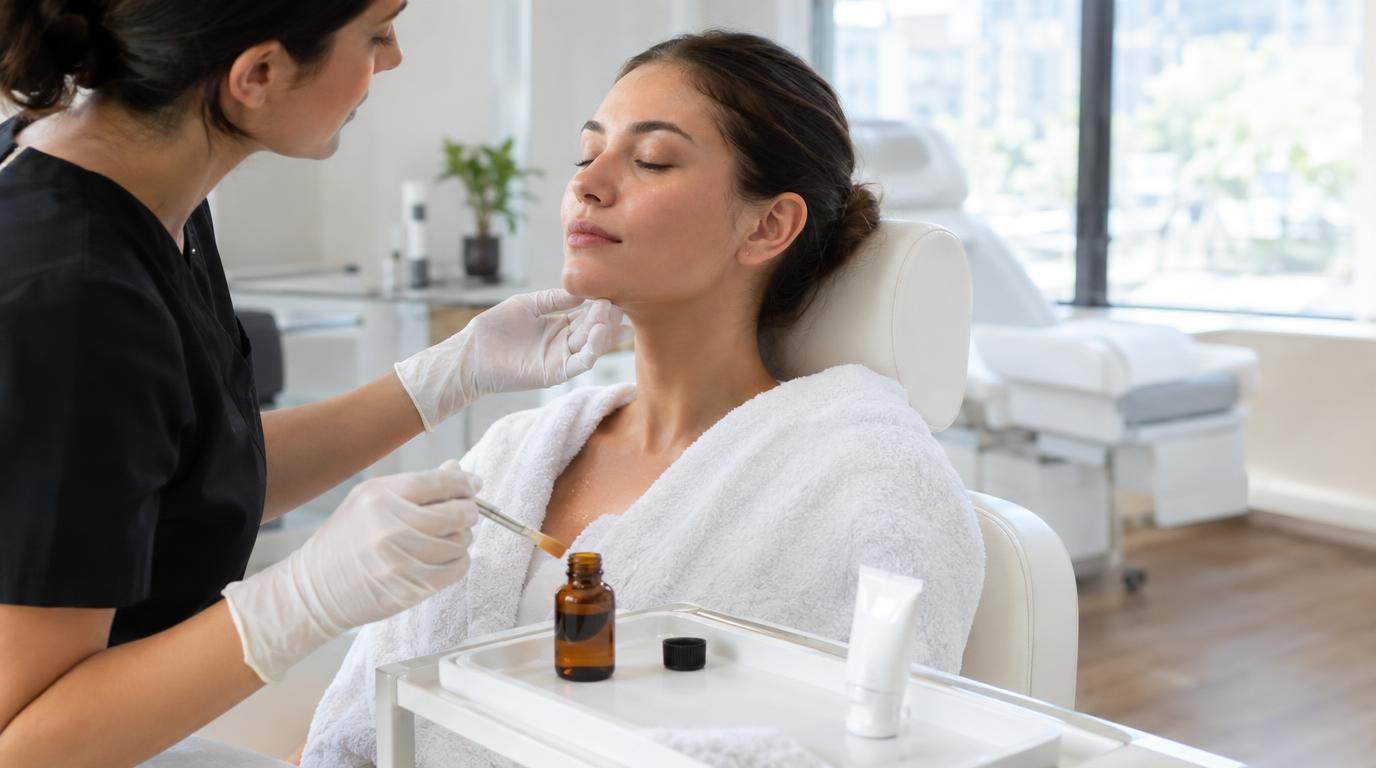
During a VI Peel at NW Laser, the initial solution may tingle, and the subsequent solution may temporarily turn treated skin light white. Peeling continues at home after you leave.
- We cleanse the face to remove surface oil, dirt, and dead skin cells.
- We apply the initial peel layer and then the subsequent solution.
- We apply sunscreen and explain how and when to remove the solution at home.
Is a chemical face peel painful?
Discomfort depends in part on peel depth. A superficial peel may cause warmth or stinging and usually does not require pain relief; medium or deep peels can be more painful and may require pain medication or anesthesia. During our VI Peel, you may feel tingling as the initial solution is applied. Do not assume pronounced burning is necessary: tell us if discomfort is significant so we can assess your skin during treatment.
Can an esthetician do a VI Peel?
It depends on the peel’s depth, the esthetician’s training and supervision, and applicable licensing rules. The American Board of Cosmetic Surgery’s skin-resurfacing guide says a trained, experienced esthetician can apply a light peel under a cosmetic surgeon’s supervision; that does not mean every esthetician can perform every peel. At NW Laser, Dr. Max Grishkevich, MD, offers VI Peel treatments.
How Long Does VI Peel Recovery Take?
At NW Laser, we apply the VI Peel solutions during your visit and give you instructions for removing them at home. The initial application-to-removal process typically takes four to six hours; that is not the length of your office appointment. Visible peeling and flaking can continue for up to one week. Healing skin may look red and feel tight or irritated. You may resume normal activities after leaving, but that does not mean healing is complete. For chemical peels generally, the American Academy of Dermatology lists healing times of 1 to 7 days for a light peel, 7 to 14 days for a medium peel, and 14 to 21 days for a deep peel; these are not VI Peel-specific timelines. Follow your specific VI Peel removal and skin-care instructions throughout the peeling period. See our VI Peel before and after guide for a closer look at visible changes during peeling and recovery.
When Does Peeling Start, and What Should You Do at Home?
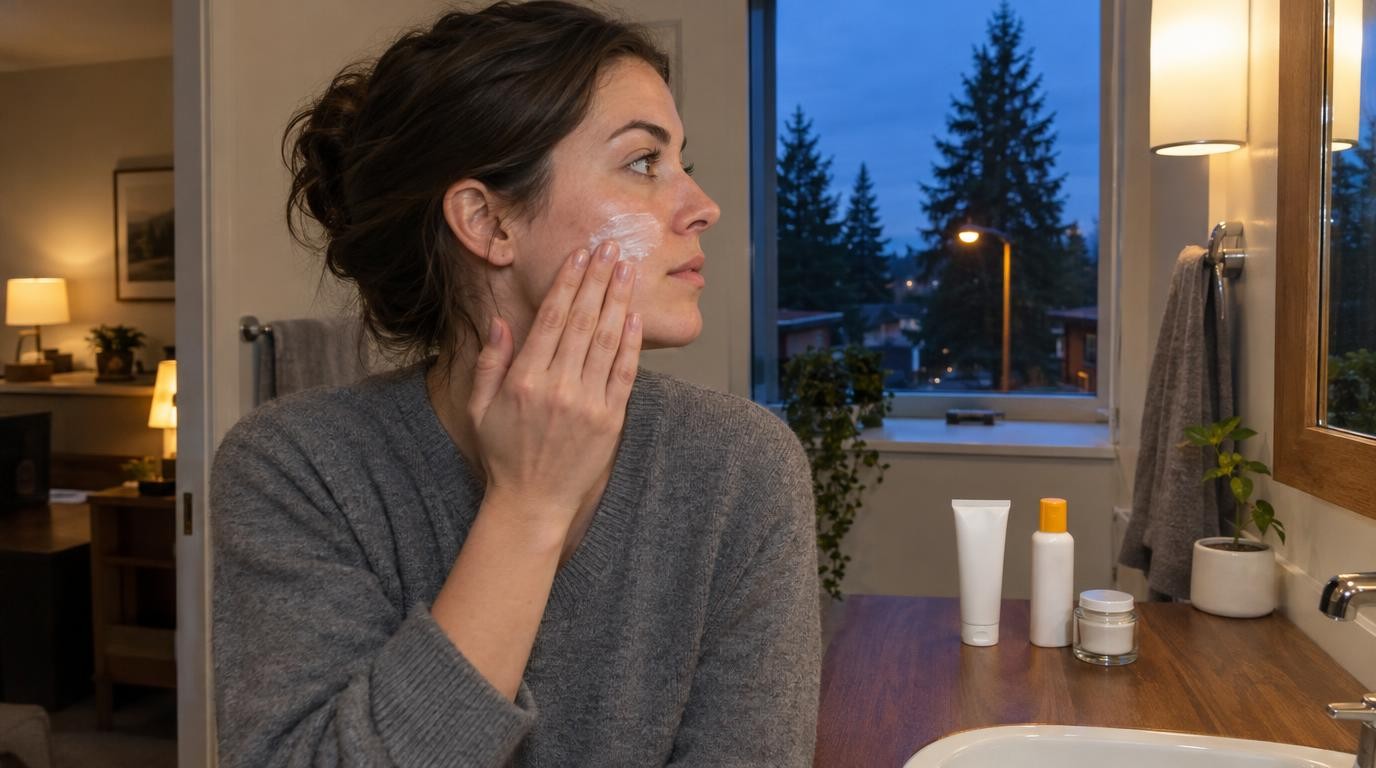
There is no precise start day that applies to everyone. Remove the solution when instructed, let flaking skin shed naturally, and avoid exfoliating or picking. Use the moisturizer we recommend and protect healing skin from sun exposure. For a fuller explanation of the home-care routine, see our chemical peel aftercare guide.
What does the face look like after a VI Peel?
Treated skin may briefly look light white during application. Afterward, your face may look red and feel tight, with dryness and uneven flaking or peeling over the following days. At NW Laser, visible peeling can continue for up to one week; it does not have to occur evenly across your face.
What Results Can You Expect From a Facial Chemical Peel?
A facial chemical peel may improve the appearance of tone, texture, acne-related concerns, or fine lines, but the degree of change varies. Wait until active flaking has settled before assessing early changes. For chemical peels generally, an article on the American Society of Plastic Surgeons website says it can take a few months for skin to fully return to normal and show the complete result; that is not a VI Peel-specific recovery estimate. VI Peel should not be expected to remove deep scars, dark spots, or deep wrinkles completely.
How Many VI Peel Treatments Might Acne Scars Need?
Facial acne scars may require more than one VI Peel treatment at NW Laser. Scar depth and skin response help determine whether repeating a peel makes sense or whether another approach better fits the goal.
Which Is Best, Peel or Laser?
Neither a peel nor a laser is best for every patient. NW Laser offers VI Peel and laser treatments. A peel may suit superficial uneven tone or rough texture; a resurfacing laser may be considered when a scar needs a different approach. Chemical peels do not significantly tighten sagging skin or remove deep scars. Your skin tone, pigment-change risk, the particular peel depth or laser type, and the downtime you can accommodate all affect the choice. The table below highlights practical differences.
| Consideration | VI Peel | Laser skin resurfacing |
|---|---|---|
| Method | A combination of acids exfoliates the skin. | Laser energy uses heat to resurface the skin. |
| Recovery | Visible peeling and flaking can last up to one week at NW Laser. | Downtime varies by laser type and treatment strength; deeper treatments take longer to heal. |
| Potential goals | May improve uneven tone, texture, and fine lines, but does not significantly tighten sagging skin. | Depending on the laser and treatment plan, may improve discoloration, fine lines, or the appearance of some scars. |
Frequently Asked Questions
Should I avoid tanning before a VI Peel?
Yes. Avoid tanning before a VI Peel, and protect freshly peeled skin from the sun while it heals. Sunburned or irritated skin may mean the peel needs to be postponed.
Should I stop using retinol before a VI Peel?
Follow your VI Peel preparation instructions rather than assuming every peel requires the same pause. Retinoids can irritate skin, but some deeper peels use prescription retinoic acid as pretreatment, according to the American Society of Plastic Surgeons’ deep-peel guidance. Do not apply retinol to actively peeling or irritated skin unless your treatment instructions say to do so.
Can I get a VI Peel if I get cold sores?
A history of cold sores does not automatically rule out VI Peel, but a chemical peel can trigger an outbreak. An active cold sore should heal before treatment. Preventive antiviral medication may be prescribed when appropriate; take it as prescribed rather than assuming one start time applies to every peel.
When can I wear makeup after a VI Peel?
Follow your VI Peel aftercare instructions before wearing makeup, and do not apply it to skin that is still irritated or peeling unless your instructions allow it. The article on the American Society of Plastic Surgeons website says makeup can usually be worn the next day after a light peel and after a week following a medium peel; those are not VI Peel-specific timelines.
Can I combine a VI Peel with other cosmetic treatments?
Sometimes. Chemical peels can be combined with other cosmetic procedures, but the appropriate sequence and timing depend on the treatments and how your skin heals. Laser treatment or microneedling should not be scheduled over skin that is still irritated or peeling from a VI Peel.
Are VI Peel results permanent?
No. Aging and new sun exposure can change skin tone and texture after a peel, so how long an improvement lasts varies. Ongoing sun protection helps maintain results. Repeat peels may be considered to maintain improvement, depending on your results and an assessment of your skin. We cannot promise a particular duration of benefit or recommend one VI Peel maintenance interval for everyone.
Can you get a chemical peel with a beard?
Yes, exposed skin can be treated, but a dense beard may prevent a peel from reaching the skin evenly. Hair-covered areas may therefore be left untreated. A peel should not be applied to shaving cuts or irritated skin.
Can I schedule a VI Peel right before a special event?
Allow for visible peeling and flaking, which can continue for up to one week at NW Laser, and some flexibility if your skin takes longer to look settled. If you need to wear makeup or have photos taken, tell us the event date before scheduling so we can discuss whether it makes sense to wait until afterward.
How Can You Decide Whether to Book a VI Peel in Vancouver, Washington?
Before booking a VI Peel, use this checklist to organize questions about your goals, skin history, and aftercare:
- Name your main goal, such as acne, facial acne scars, dark spots, or uneven texture.
- Describe prior reactions to peels and any tendency toward lingering discoloration.
- List the skincare products you use, especially retinoids and exfoliating acids, so they can be included in your treatment plan.
- Make sure you can follow the solution-removal, moisturizing, and sun-protection instructions.
If you are considering a facial chemical peel in Vancouver, Washington, contact NW Laser for a consultation. Our team can review your goals and skin history with you and help you decide whether VI Peel or another clinic-offered treatment is appropriate.
This information is general and is not medical advice. Talk to a licensed clinician about your own situation before making a treatment decision.
About the doctor at NW Laser
Dr. Max Grishkevich, MD – Founder and Medical Director of NW Laser & Skin Care Center; member of the American Academy of Cosmetic Surgery.
