

Last updated: November 14, 2026
Breast augmentation with fat transfer before-and-after photos can show a modest change in fullness or shape, but they cannot predict how your own breasts will look. At NW Laser in Vancouver, Washington, we offer natural breast augmentation and fat transfer as separate services. Ask our team which breast-enhancement options are available for your goals.
What can breast augmentation with fat transfer before-and-after photos show?
Breast fat-transfer photos can illustrate changes in fullness, contour and asymmetry, but a photograph cannot establish a typical outcome for every patient. Starting anatomy and the timing of the after photo matter as much as the visible change. Images also cannot confirm how much fat was placed, how much survived or how the breasts feel.

How should you compare breast fat-transfer before-and-after photos?
Look for consented patient examples with a starting breast size and shape similar to yours. Compare breast asymmetry, posture, camera angle, lighting and clothing, then check when each after photo was taken. An early image may show swelling that will subside; a later image is more useful for judging retained fullness.
The American Society of Plastic Surgeons’ fat-transfer breast augmentation information links to before-and-after photos. Photos from that gallery or another practice belong to those sources, not NW Laser.
How much bigger can breasts get with fat transfer?
Fat transfer generally offers a modest increase in breast fullness rather than a reliably dramatic size change. An article on the American Board of Cosmetic Surgery’s site estimates up to about one cup size from one procedure, while Cleveland Clinic’s fat-transfer breast augmentation guidance describes increases of one or two cup sizes. These are differing estimates, not guarantees; a substantial increase may require further fat-transfer sessions or implants. Available donor fat, breast anatomy and fat survival affect the result. Bra cup labels also vary, so describing the fullness and shape you want is more useful than relying on a cup size alone.
Does the amount of fat injected equal the final size gain?
No. Some transferred fat is reabsorbed, so the amount injected is not the final gain. A surgeon quoted in an article on the American Society of Plastic Surgeons’ site says 30% to 50% resorption is common within the first six months, though individual results vary. The study below used a specialized technique and cannot predict an individual patient’s result.
In a 2025 retrospective study published in the Journal of Clinical Medicine, researchers reviewed 118 women treated with centrifugation-filtration fat processing, platelet-rich plasma and fat enriched with their own adipose-derived stem cells. In the Journal of Clinical Medicine study, 65.8% of indications were primary breast augmentation; other indications included grafting after implant removal, during or after mammoplasty, and alongside implant exchange. The satisfaction and second-procedure figures below cover this mixed cohort, not predicted outcomes for primary, implant-free augmentation:
| Measure | Finding | Source |
|---|---|---|
| Patients reviewed | 118 women | 2025 Journal of Clinical Medicine study |
| Mean purified, enriched fat placed per breast | 192 to 206 cc | 2025 Journal of Clinical Medicine study |
| Patients satisfied or very satisfied | 95.8% | 2025 Journal of Clinical Medicine study |
| Patients requesting a second staged fat-grafting procedure | 6.8% | 2025 Journal of Clinical Medicine study |
The study’s processing and placement methods were specific to its researchers. Its injected-volume figure does not establish a standard amount to place or a final volume gain. If your goal is subtle fullness, our guide to what to expect from breast fat augmentation can help you put that goal into words.
How does fat-transfer breast augmentation work?
Fat-transfer breast augmentation moves a patient’s own fat from a donor area to the breasts. Treatment involves assessing available donor fat and breast goals, removing fat with liposuction, preparing the harvested fat and placing it to add fullness. Unlike implant augmentation, fat transfer does not put an implant in the breast; both the donor area and breasts need to heal.
- Plan the change: The consultation examines breast shape, asymmetry, donor areas and whether a modest increase matches your goals.
- Harvest fat: Liposuction removes fat from an appropriate donor area.
- Prepare and place fat: The harvested fat is prepared and injected into the breasts to build volume and refine contour.
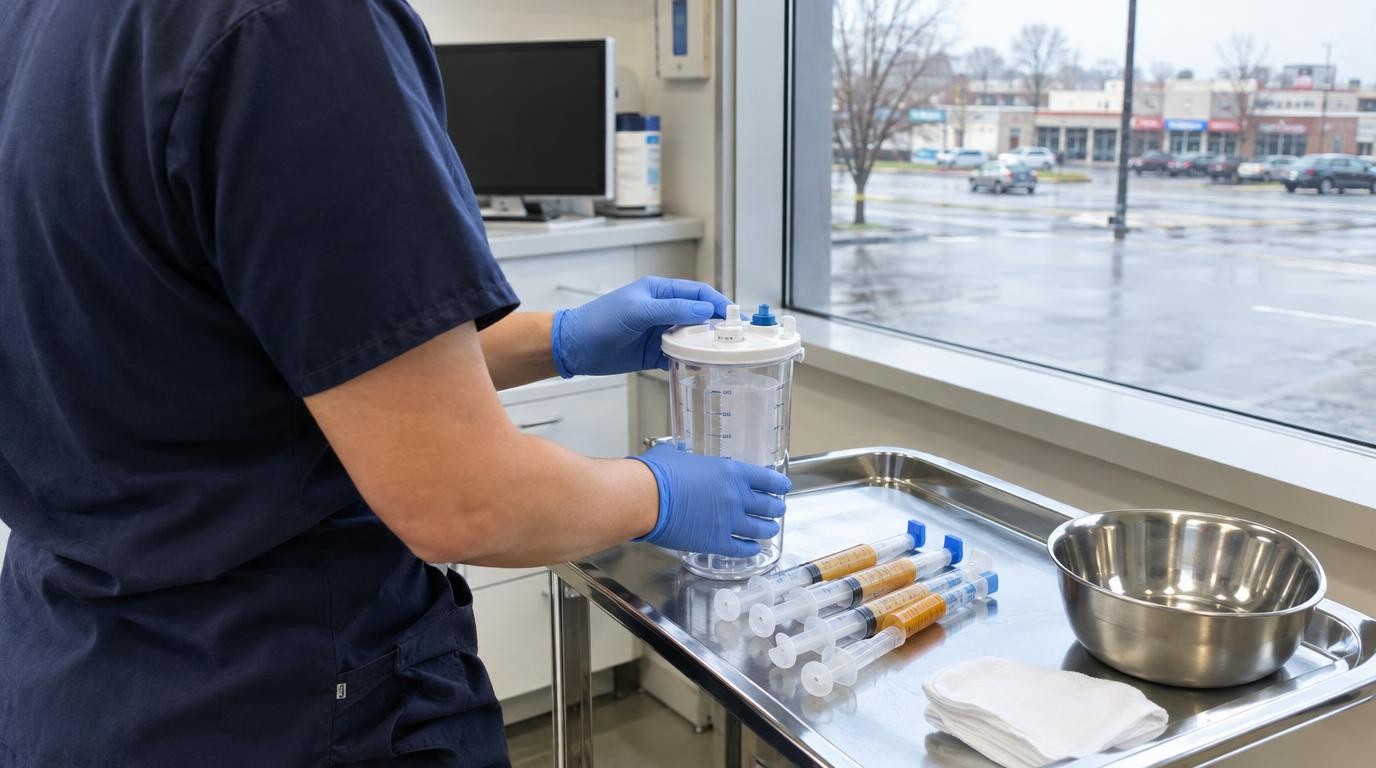
Preparation and placement methods vary between clinicians. A general description of the sequence should not be read as a claim that NW Laser uses a particular device or processing protocol.
Who is a good candidate for natural breast augmentation with fat transfer?
An adult seeking a modest increase may consider fat transfer when there is enough donor fat and the existing breast shape is reasonably close to the desired shape. Small breasts, lost breast volume, a deflated appearance or breast asymmetry may be reasons to explore treatment. Significant sagging or a much larger desired change calls for a discussion of other approaches.
Fat can add fullness to selected areas, but added volume alone does not reliably raise a drooping breast or reposition a downward-facing nipple. A lift may better address meaningful sagging, while implants may offer a greater potential size change. Suitability depends on an individual assessment of anatomy, health and expectations.
What are treatment and recovery like after breast fat transfer?
Breast fat transfer requires recovery at both the breasts and the liposuction donor areas. According to Cleveland Clinic’s fat-transfer breast augmentation guidance, pain, bruising, swelling and discomfort at these sites can last up to three weeks, and swelling may persist for up to six months. The breasts’ immediate appearance includes swelling and placed fat, not just the volume that will ultimately remain.
A chest bandage and surgical bra may be used after treatment. Cleveland Clinic also advises sleeping on your back to keep pressure off the breasts and wearing loose clothing that does not compress them. Recovery experiences differ with the amount of liposuction, the areas treated and individual healing.
When do breast fat-transfer results settle?
Breast fat-transfer results settle as swelling decreases and fat that does not survive is absorbed. Cleveland Clinic says final results can take up to six months to become visible.
How long does fat transfer last in breasts?
Fat that survives the initial healing period can remain in the breasts for life. That applies to surviving fat cells, not all the fat initially injected; later weight changes and aging can still change breast appearance. For more on that distinction, see our guide to how long fat-transfer results last.
What are the downsides of fat transfer breast augmentation?
The main trade-offs are limited size gain, uncertain fat retention and possible asymmetry or another treatment session. Liposuction and breast injections also carry risks, including bleeding, infection, fat necrosis, benign cysts and calcifications. Fat cells may also move out of the breasts to other parts of the body. Breast imaging remains important after grafting, and imaging providers should know about the procedure so they can interpret later findings in context.
Swelling, bruising and soreness are common during recovery, but severe pain, excessive bleeding, swelling or bruising, nausea or vomiting, fever, or yellow discharge should prompt a call to the treating team for urgent guidance. In the Journal of Clinical Medicine study described above, researchers reported an 11.9% complication rate. The Journal of Clinical Medicine study reported harvest-site seromas (fluid collections) in 5.1% of patients and palpable fibrotic areas in 3.4%. Those rates reflect the study’s patients and specialized method, not predicted complication rates for other patients.
Who may need to avoid or postpone breast fat transfer?
Pregnancy or breastfeeding, an active infection, insufficient donor fat or other medical factors may mean postponing treatment or considering a different plan. These circumstances require individual assessment rather than a blanket rule. Discuss your health history, breast-imaging history, risks and alternatives with your own clinician before deciding on surgery.
Is breast augmentation with fat transfer worth it compared with implants?
Fat transfer may be worthwhile if you value modest, implant-free fullness and are comfortable with liposuction at a donor area. Implants can offer a greater potential size change but bring different surgical risks and ongoing implant considerations. Neither approach guarantees a particular look, and fat transfer may not achieve a goal that calls for more substantial enlargement.
Fat transfer avoids implant-rupture checks. Periodic MRI scans are recommended for silicone-gel implants to check for rupture.
Frequently Asked Questions
Will breast fat transfer affect future mammograms?
Yes, fat transfer can create benign cysts, nodules or microcalcifications visible on breast imaging. The American Board of Cosmetic Surgery notes that these findings can sometimes complicate interpretation and prompt further evaluation or a biopsy that proves unnecessary. Cleveland Clinic says mammograms still work well for most people and the procedure does not increase breast cancer risk. Tell your imaging provider about the transfer, and continue recommended breast screening.
How much time should I take off work after breast fat transfer?
Plan for time away from work while both your breasts and liposuction areas heal. Cleveland Clinic advises taking a week off work and physical activities, but your needs may differ based on your job and recovery.
Is breast fat transfer an outpatient procedure, and will I need anesthesia?
Breast fat transfer is generally performed as an outpatient procedure under general anesthesia, according to Cleveland Clinic. Patients typically go home the same day, though they still need to recover from surgery and anesthesia.
Will losing weight make my fat-transfer breast results smaller?
Yes, losing weight can reduce the fullness gained from breast fat transfer. Surviving transferred fat behaves like fat elsewhere in your body, so breast size can change with weight loss, even after healing. Maintaining a stable weight helps preserve the result.
What should I do if I feel a lump after breast fat transfer?
Contact your clinician to have a new or changing breast lump evaluated rather than assuming it is caused by transferred fat. Fat necrosis, cysts or nodules can occur after fat transfer; your clinician can examine the lump and determine whether imaging or a biopsy is needed.
Will the areas used to collect fat look slimmer afterward?
They may look slimmer because liposuction removes fat from the donor areas. Cleveland Clinic identifies areas such as the abdomen, hips, back, legs and arms as potential sources of fat. Which areas are suitable and how noticeable any contour change will be depend on your anatomy and treatment plan.
Can breast fat transfer be combined with a breast lift or implants?
Yes, fat transfer can be combined with a lift or implants in selected cases. A lift addresses breast position while fat adds fullness; surgeons may also use fat alongside implants to refine breast shape, as described in an article on the American Society of Plastic Surgeons’ site.
What should you ask at a Vancouver, Washington consultation?
Bring any photos that illustrate the look you prefer to a Vancouver, Washington consultation, then use the questions below to compare that goal with your anatomy and available donor fat.
- What change in fullness and shape is realistic for my starting breast anatomy?
- Would fat transfer alone address my asymmetry, or should I discuss a lift or implants?
- Which donor areas might be suitable, and what recovery instructions would apply to each area?
- If you have relevant, consented patient examples, when were the after photos taken?
If you are considering natural breast augmentation in Vancouver, Washington, contact NW Laser for a consultation about your desired change, available donor fat and the treatment options that fit your situation.
This information is general and is not medical advice. Talk to a licensed clinician about your own situation before making a treatment decision.
