

Last updated: April 25, 2026
If you have ever wondered what actually happens during a bikini laser hair removal series – from the first pulse to long-term results – this guide covers every stage. Starting treatments this spring means visible hair reduction well before peak swimsuit season in July and August. Below, you will find a session-by-session breakdown grounded in clinical evidence and FDA-recognized standards.
What Is Bikini Laser Hair Removal and How Does It Work?
Bikini laser hair removal uses concentrated light energy to target and damage hair follicles in the bikini area, reducing future hair growth over a series of treatments. The process relies on a principle called selective photothermolysis, where the laser’s wavelength is absorbed by melanin – the pigment in hair – generating heat that disables the follicle while leaving surrounding skin intact.
The key factor driving the treatment timeline is the hair growth cycle. Hair follicles cycle through three phases: anagen (active growth), catagen (transition), and telogen (resting). Laser energy is only effective on follicles in the anagen phase, and only about 20 to 30 percent of follicles are in that phase at any given time. This is why a single session cannot treat all the hair in the bikini area at once.
It is important to note that the FDA approves laser devices for “permanent hair reduction” – not “permanent hair removal.” According to FDA regulatory standards, permanent hair reduction means a long-term, stable decrease in the number of hairs regrowing, measured at 6, 9, and 12 months after completing a treatment series.
What Is the Difference Between Permanent Hair Removal and Permanent Hair Reduction?
The distinction matters for setting realistic expectations. The FDA’s 510(k) clearance documentation defines permanent hair reduction as “the long-term, stable reduction in the number of hairs regrowing when measured at 6, 9, and 12 months after the completion of a treatment regime.” This means the hair count stays consistently lower over time, but it does not guarantee every single follicle is permanently eliminated.
Most patients experience a 70 to 90 percent reduction in hair growth after completing a full series of treatments. However, the bikini area is influenced by hormones, which can reactivate dormant follicles over time. Occasional maintenance sessions – perhaps once or twice a year – may be needed to sustain results, especially in hormone-sensitive zones.
Why Does the Bikini Area Require More Sessions Than Other Body Parts?
Board-certified dermatologists C. Stanley Chan, MD, and Jeffrey S. Dover, MD, have noted in clinical research that “the axilla and bikini areas are more resistant” to laser hair removal than the arms and legs. The bikini zone has denser follicle distribution, more variation in hair growth cycles, and stronger hormonal influence – all of which contribute to the need for additional treatment sessions compared to less resistant body areas.
What Are the Different Bikini Laser Treatment Areas?
Bikini laser hair removal covers three standard treatment zones, each addressing a different amount of hair and skin area. The treatment zone a patient selects affects the session duration, the number of laser passes required, and the overall cost of the series.
The following table outlines the three common options:
| Treatment Zone | Area Covered | Best For |
|---|---|---|
| Bikini Line | Hair along the edges of the underwear line | Patients who want clean edges for swimwear |
| Full Bikini | Sides, top of the pubic area, and inner thigh crease | Patients who want broader reduction beyond the basic line |
| Brazilian | Full front-to-back removal of all hair | Patients who want comprehensive hair removal |
During an initial consultation at NW Laser, a provider will help determine the appropriate treatment zone based on individual goals and anatomy.
How Many Sessions Does Bikini Laser Hair Removal Take?
Bikini laser hair removal typically requires a minimum of four to six sessions spaced four to six weeks apart, with each session reducing active hair by approximately 10 to 25 percent. The American Academy of Dermatology notes that removing unwanted hair can take six sessions or more, and the bikini area often falls on the higher end of that range due to its resistance to treatment.
A realistic total timeline from first session to completion is approximately five to eight months. Starting in April or May of 2026 means three to four sessions would be completed by July or August, with meaningful hair reduction visible during peak swimsuit season.
The following table provides a general session-by-session expectation guide:
| Session | Timing | What to Expect |
|---|---|---|
| Session 1 | Week 0 | Baseline treatment; hair sheds within 1 to 3 weeks |
| Session 2 | Weeks 4 to 6 | Noticeable thinning begins; regrowth is finer |
| Session 3 | Weeks 8 to 12 | Visible patchiness; significant reduction in density |
| Session 4 | Weeks 12 to 18 | Substantial reduction; remaining hair is sparse and fine |
| Sessions 5 to 6+ | Weeks 18 to 30 | Refinement sessions targeting remaining resistant follicles |
What Happens During Each Session?
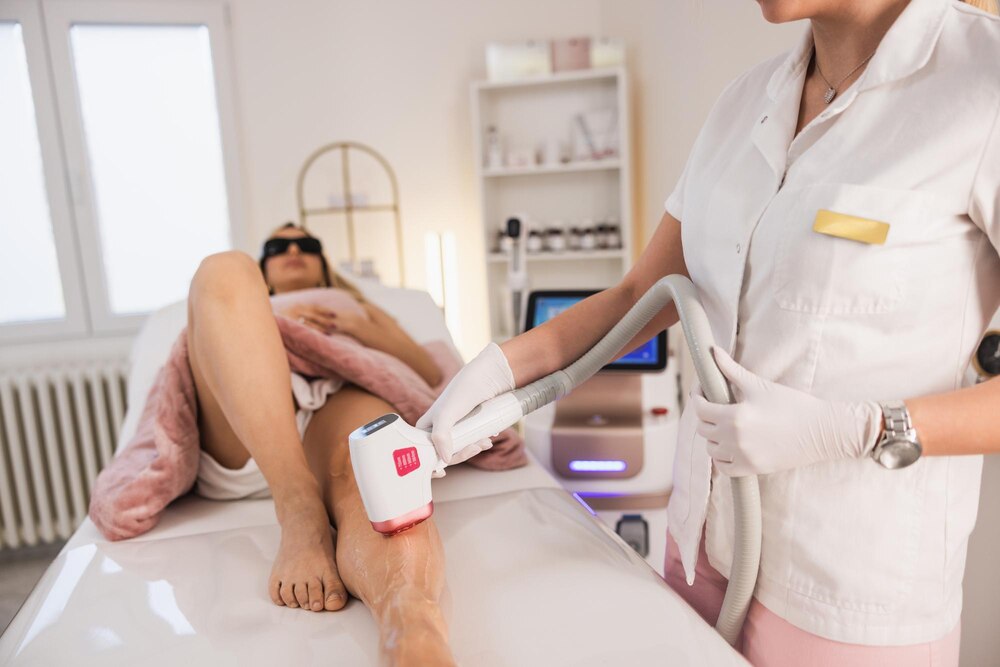
A typical bikini laser appointment lasts 15 to 30 minutes. The session begins with a skin assessment, after which the provider applies protective eyewear and either a cooling gel or activates the laser’s built-in dynamic cooling device. The laser handpiece is then passed over the treatment area in a systematic grid pattern, delivering pulses of light to each section.
The sensation is commonly described as a “rubber band snap” – brief and tolerable for most patients. After the final pass, the provider may apply a soothing gel or cool compress. Patients can typically return to normal activities immediately, though the treated skin may appear slightly pink for a few hours.
When Will You See Results After Starting Treatment?
Hair shedding occurs one to three weeks after each session as treated follicles release the damaged hair shaft. As Chan and Dover note in their clinical research, “Hair reduction is often noticeable even after one treatment but becomes more significant after a series of treatments.” Most patients see meaningful thinning by sessions two and three, with significant reduction becoming apparent after the fourth session.
Final results are assessed at 6, 9, and 12 months after completing the full treatment series, consistent with the FDA’s standard for measuring permanent hair reduction.
Is Bikini Laser Hair Removal Safe for All Skin Types?
Bikini laser hair removal is safe for all skin types – Fitzpatrick types I through VI – when the correct laser wavelength and settings are selected by a qualified provider. A 2019 peer-reviewed safety study on diode laser (805 nm) hair removal across mixed skin types found only short-term side effects such as redness and minor swelling, with no long-term adverse outcomes when proper clinical protocols were followed.
The critical safety variable is matching the laser to the patient’s skin type. Board-certified dermatologists emphasize that consulting with a qualified provider for a personalized Fitzpatrick assessment is essential before beginning any treatment.
What Is the Fitzpatrick Skin Type Scale and Why Does It Matter?
The Fitzpatrick scale, developed in 1972, classifies skin into six types based on how it responds to ultraviolet light exposure – from Type I (very fair, always burns) to Type VI (deeply pigmented, never burns). This classification determines which laser wavelength, pulse duration, and energy level a provider should use.
For lighter skin types (I through III), diode (805 nm) or alexandrite (755 nm) lasers are typically effective. For darker skin types (IV through VI), the Nd:YAG laser (1064 nm) is the standard choice because its longer wavelength bypasses surface melanin and reduces the risk of hyperpigmentation or burns. As Chan and Dover state, “We typically use a 1,064-nm Nd:YAG laser for laser hair removal in more darkly pigmented patients (Fitzpatrick skin types IV through VI).”
What Are the Most Common Side Effects of Bikini Laser Treatment?
The most commonly reported side effects of bikini laser hair removal are short-term and mild. They include erythema (redness), perifollicular edema (minor swelling around individual follicles), and temporary skin sensitivity in the treated area. These effects typically resolve within hours to a few days.
Rare complications such as blistering, scarring, or pigment changes occur primarily when treatments are performed by unqualified providers, when incorrect laser settings are used, or when the patient’s skin type has not been properly assessed. This is one of the key reasons dermatology organizations recommend choosing a medical practice with trained, credentialed staff over retail or non-medical settings.
How Should You Prepare for Bikini Laser Hair Removal?
Proper preparation for bikini laser hair removal involves avoiding sun exposure and tanning for four to six weeks before treatment, discontinuing waxing and plucking (shaving is acceptable), and disclosing any medications that cause photosensitivity. The treatment area should be shaved approximately 24 hours before the appointment to allow the laser to target follicles beneath the skin surface.
A pre-treatment consultation should include a Fitzpatrick skin type assessment, a review of medical history, and a discussion of expected outcomes. The American Academy of Dermatology recommends that patients choose a board-certified provider to perform laser treatments, ensuring both safety and efficacy from the first session.
What Should You Avoid After Each Bikini Laser Session?
For 24 to 48 hours after each session, patients should avoid direct sun exposure, hot baths, saunas, steam rooms, and intense exercise that causes excessive sweating in the treated area. Tight clothing over the bikini zone can cause irritation and should be replaced with loose, breathable fabrics during the initial recovery window.
Between sessions, patients should apply a gentle, fragrance-free moisturizer to the treated area and use broad-spectrum sunscreen on any exposed treated skin. Waxing and plucking must be avoided between sessions because these methods remove the hair root that the laser needs to target. Shaving remains the only acceptable hair removal method during a treatment series.
Does Bikini Laser Hair Removal Hurt?
Bikini laser hair removal produces a brief, tolerable discomfort most often described as a “rubber band snap” against the skin. The bikini zone is more sensitive than areas like the legs or arms due to thinner skin and denser follicle concentration, but modern laser systems are designed to minimize pain throughout the treatment.
Integrated cooling systems – including dynamic cooling devices, contact cooling tips, and cryogen spray – are standard features on professional-grade lasers. These systems cool the skin’s surface before, during, and after each pulse, significantly reducing the heat sensation. Topical numbing cream can also be applied 30 to 45 minutes before the appointment for patients with lower pain tolerance. Most bikini area sessions last only 15 to 30 minutes, so any discomfort is brief.
How Does Bikini Laser Compare to Waxing, Shaving, and Other Methods?
Bikini laser hair removal offers longer-lasting results and fewer skin complications compared to waxing, shaving, depilatory creams, and electrolysis. While each method has a place, laser treatment is the only approach that achieves permanent hair reduction over a defined treatment series, making it the most time-efficient and cost-effective long-term option for the bikini area.
The following table compares the most common bikini-area hair removal methods:
| Method | Duration of Results | Common Drawbacks | Best For |
|---|---|---|---|
| Laser Hair Removal | Permanent reduction (70 to 90%) | Requires multiple sessions; upfront investment | Long-term reduction with minimal maintenance |
| Waxing | 3 to 6 weeks | Painful; ingrown hairs; repeated appointments | Temporary smoothness between laser sessions |
| Shaving | 1 to 3 days | Razor burn; stubble; irritation in bikini area | Quick, low-cost maintenance |
| Depilatory Creams | Up to 2 weeks | Chemical irritation on sensitive skin | Pain-free temporary removal |
| Electrolysis | Permanent (per follicle) | Very slow; treats one follicle at a time | Small areas or individual stubborn hairs |
The global laser hair removal market was valued at approximately $1.13 billion in 2023 and is projected to grow at a CAGR of over 18.4 percent through 2032, reflecting a broad consumer shift toward laser as the preferred long-term solution.
Why Is Spring the Best Time to Start Bikini Laser Treatments?
Spring is the ideal time to begin bikini laser hair removal because starting sessions in April or May of 2026 allows patients to complete three to four treatments before July and August, achieving significant hair reduction during peak swimsuit season. Waiting until summer means there is not enough time to complete a meaningful portion of the treatment series before results are needed.
Spring also offers a practical skin advantage. After fall and winter months with less sun exposure, most patients have lower baseline melanin levels in their skin. This reduces the risk of hyperpigmentation during treatment and allows providers to use optimal laser settings. Patients who start now and maintain consistent four-to-six-week appointment intervals will be well ahead of those who delay until warmer months.
Why Should You Choose a Medical Practice for Bikini Laser Hair Removal?
A medical practice staffed by trained, credentialed professionals provides the safest and most effective environment for bikini laser hair removal. Medical practices use FDA-cleared devices, perform individualized Fitzpatrick skin type assessments, and can manage adverse reactions – capabilities that distinguish them from retail spas and non-medical providers.
The American Academy of Dermatology recommends that patients “choose a board-certified dermatologist to perform laser treatments.” The Laser and Skin Surgery Center of New York reinforces this, stating that “consulting with a board-certified dermatologist for personalized advice is essential before moving forward with professional treatments. What works for some patients may not be suitable for others.”
In 2024, over 3.1 million laser skin treatments were performed in the United States according to the American Society of Plastic Surgeons – a volume that reflects the growing expectation for medical-grade care. At NW Laser, patients benefit from clinical expertise, professional-grade equipment, and individualized treatment protocols. Patient testimonials from NW Laser clients consistently highlight the quality of care and satisfaction with bikini area treatment results.
How Much Does Bikini Laser Hair Removal Typically Cost?
The cost of bikini laser hair removal varies based on the treatment zone selected (bikini line, full bikini, or Brazilian), the total number of sessions required, the geographic region, and the type of provider. Most patients invest in four to six or more sessions to achieve their desired level of hair reduction, and pricing is typically quoted on a per-session basis.
When evaluating cost, it is helpful to consider the long-term comparison. The cumulative expense of waxing appointments every four to six weeks or purchasing razors and shaving products over a lifetime often exceeds the total investment in a laser series that delivers permanent hair reduction. For a personalized cost estimate, NW Laser provides detailed pricing during the initial consultation based on your specific treatment plan.
Frequently Asked Questions About Bikini Laser Hair Removal
Is Bikini Laser Hair Removal Really Permanent?
The FDA classifies laser hair removal as “permanent hair reduction,” defined as a long-term, stable reduction in regrowing hairs measured at 6, 9, and 12 months after completing treatment. Most patients achieve 70 to 90 percent hair reduction. Some maintenance sessions may be needed over time, particularly in the bikini area where hormonal fluctuations can stimulate dormant follicles.
Can You Get Laser Hair Removal on the Bikini Area During Your Period?
Yes, bikini laser treatment can be performed during menstruation, though some patients report increased skin sensitivity at that time. Wearing a tampon or menstrual cup is recommended during the appointment. Provider comfort policies may vary, so it is best to confirm with NW Laser when scheduling.
How Long Should You Wait Between Bikini Laser Sessions?
Sessions are typically spaced four to six weeks apart. This interval allows new hair follicles to enter the anagen (active growth) phase, which is the only phase during which the laser can effectively target and damage the follicle. Adhering to the recommended schedule optimizes results across the full treatment series.
Can Bikini Laser Hair Removal Cause Ingrown Hairs?
Laser treatment actually reduces ingrown hairs over time by permanently disabling the follicles that produce them. Some patients may experience minor ingrown hairs during the shedding phase one to three weeks after a session, but this is temporary and occurs far less frequently than with waxing or shaving.
Is It Safe to Do Laser Hair Removal at Home for the Bikini Area?
At-home laser devices are lower-powered and FDA-cleared for consumer use, but they are significantly less effective than professional-grade systems – especially for the bikini area’s coarse, dense hair. At-home devices also lack the ability to calibrate settings based on Fitzpatrick skin type. Both the American Academy of Dermatology and the American Society for Laser Medicine and Surgery recommend professional treatment for safety and optimal results.
What Skin Types Are Best Suited for Bikini Laser Treatment?
All Fitzpatrick skin types (I through VI) can be safely treated when the correct laser wavelength is selected by a qualified provider. Lighter skin types typically respond well to diode or alexandrite lasers, while darker skin types require the Nd:YAG (1064 nm) laser to minimize the risk of pigment complications. A professional skin type assessment before treatment is essential for safe, effective outcomes.
What Is the Next Step to Start Your Bikini Laser Hair Removal?
Bikini laser hair removal is a safe, FDA-recognized procedure for permanent hair reduction that delivers lasting results through a series of carefully timed sessions. Starting this spring gives you the best opportunity to see significant hair reduction before summer 2026 arrives.
The most important first step is a personalized consultation where a provider assesses your skin type, discusses your goals, selects the appropriate laser technology, and builds a treatment timeline tailored to your needs. Every patient’s skin and hair are different, and an individualized plan ensures both safety and the best possible outcome.
To begin your bikini laser hair removal journey, schedule a consultation at NW Laser. Our clinical team will answer your questions, evaluate your candidacy, and recommend a treatment plan designed for your skin type and timeline.
Frequently Asked Questions
How many sessions does bikini laser hair removal take?
Bikini laser hair removal typically requires a minimum of four to six sessions spaced four to six weeks apart. The bikini area often falls on the higher end of that range because it is more resistant to treatment than other body parts. A realistic total timeline from first session to completion is approximately five to eight months, with each session reducing active hair by roughly 10 to 25 percent.
Is bikini laser hair removal permanent?
The FDA classifies laser hair removal as permanent hair reduction, not permanent hair removal. This means a long-term, stable decrease in the number of regrowing hairs measured at 6, 9, and 12 months after completing the treatment series. Most patients achieve 70 to 90 percent hair reduction, though occasional maintenance sessions may be needed because hormonal fluctuations can reactivate dormant follicles in the bikini area.
Does bikini laser hair removal hurt?
Bikini laser hair removal produces a brief discomfort commonly described as a rubber band snap against the skin. The bikini zone is more sensitive than the legs or arms due to thinner skin and denser follicles. Modern professional lasers use integrated cooling systems to minimize the sensation, and topical numbing cream can be applied 30 to 45 minutes before the appointment. Most bikini sessions last only 15 to 30 minutes.
Is bikini laser hair removal safe for dark skin tones?
Bikini laser hair removal is safe for all Fitzpatrick skin types – including darker skin tones classified as types IV through VI – when a qualified provider selects the correct laser wavelength. Darker skin types are typically treated with the Nd:YAG laser at 1064 nm because its longer wavelength bypasses surface melanin, reducing the risk of hyperpigmentation or burns. A professional Fitzpatrick skin type assessment before treatment is essential for safe outcomes.
How is bikini laser hair removal different from waxing?
Bikini laser hair removal achieves permanent hair reduction of 70 to 90 percent over a series of sessions, while waxing provides temporary smoothness lasting only three to six weeks before regrowth returns. Waxing is also associated with pain, ingrown hairs, and the need for repeated appointments. Laser treatment actually reduces ingrown hairs over time by permanently disabling the follicles that produce them, making it the more effective long-term solution.
When is the best time to start bikini laser hair removal?
Spring is the ideal time to start bikini laser hair removal. Beginning sessions in April or May allows patients to complete three to four treatments before July and August, achieving visible hair reduction during peak swimsuit season. Spring also offers a skin advantage – after fall and winter months with less sun exposure, most patients have lower baseline melanin levels, which reduces the risk of hyperpigmentation and allows providers to use optimal laser settings.
What should you avoid before and after bikini laser sessions?
Before treatment, patients should avoid sun exposure and tanning for four to six weeks, stop waxing and plucking, and shave the treatment area approximately 24 hours before the appointment. After each session, patients should avoid direct sun exposure, hot baths, saunas, and tight clothing for 24 to 48 hours. Shaving is the only acceptable hair removal method between sessions because waxing and plucking remove the hair root the laser needs to target.
