


Last updated: November 12, 2026
Lipo gynecomastia can reduce an enlarged chest when excess fat is the main cause, but liposuction alone does not reliably remove dense breast gland tissue or substantial loose skin. At NW Laser in Vancouver, Washington, our gynecomastia surgery and male breast reduction service begins with assessing what is causing the fullness so the treatment fits the tissue involved.
What is lipo gynecomastia, and can it remove gland tissue?
“Lipo gynecomastia” is an informal term for using liposuction to reduce fatty fullness in an enlarged male chest. Liposuction targets fat; glandular tissue or substantial loose skin may require surgical excision instead.
What is the difference between gynecomastia and pseudogynecomastia?
Gynecomastia refers to enlarged breast gland tissue, while pseudogynecomastia refers to fullness caused primarily by fat. Both can contribute to the same chest shape, so appearance alone does not establish which tissue is present. The American Society of Plastic Surgeons’ procedure guidance explains that liposuction alone may be used when excess fatty tissue is the primary cause, whereas glandular tissue or excess skin may call for excision.
Reducing fat beneath skin that has lost elasticity may leave looseness behind. For more on chest changes after substantial weight loss, see chest contouring after weight loss.
How can you tell chest fat from gynecomastia or a lipoma?
A separate lump differs from chest-wide fatty fullness, but neither its location nor its feel establishes a diagnosis. A new, one-sided, firm, or growing lump warrants a breast examination to check for causes other than gynecomastia.
What are the symptoms of breast lipoma in males?
A breast-area lipoma may feel like a soft, movable lump under the skin, while glandular gynecomastia is more often centered beneath the nipple. These descriptions cannot establish what a lump is. An article on the American Society of Plastic Surgeons’ site emphasizes a breast examination to confirm gynecomastia and assess for possible male breast cancer.
Medication use and hormonal changes can also contribute to breast enlargement. Identifying a possible medical cause matters before treating the chest as a cosmetic fat deposit.
When is Smartlipo appropriate for an enlarged male chest?
At NW Laser, we consider laser-assisted Smartlipo for unwanted chest fat after identifying what is causing the enlargement. If medication use or a hormonal condition may be contributing, that cause needs evaluation rather than fat removal alone.
Can exercise replace liposuction for chest fat?
Exercise may help reduce overall body fat and is one option we discuss for unwanted fat deposits. It cannot selectively remove fat from the chest, however, and it does not remove gland tissue.
For a broader comparison of approaches to localized fat, see surgical and non-surgical body-contouring options.
What are the surgical options for removing male breasts?
Male breast reduction can use liposuction to remove fat, direct excision to remove gland tissue or excess skin, or both techniques. When stretched skin causes substantial sagging, surgery may also involve removing skin or repositioning the nipple and areola. The American Board of Cosmetic Surgery describes liposuction incisions along the edge of the areola or in an armpit, while excision incisions may be placed around the areola or in a natural chest crease. Placement and scar length depend on the technique and the amount of tissue or skin removed.

The tissue being treated determines what each approach can accomplish:
| Main finding | Approach a surgical assessment may consider | Important limit |
|---|---|---|
| Predominantly excess fat | Liposuction | Does not reliably remove dense gland tissue |
| Glandular tissue | Direct excision | Fat may also need contouring |
| Fat and gland tissue, sometimes with excess skin | Combined liposuction and excision, with skin removal when needed | Incisions and scars depend on the tissue removed |
When might liposuction and gland excision be combined?
A combination may make sense when liposuction removes surrounding fat but firm tissue beneath the nipple would remain. In a 2026 Frontiers in Surgery retrospective series, 177 patients underwent liposuction plus gland removal through a small incision around the areola; the reported median operating time was 89.7 minutes. Every patient in that series had both procedures, so it did not compare the combination with liposuction alone.
What happens during Smartlipo treatment at NW Laser?
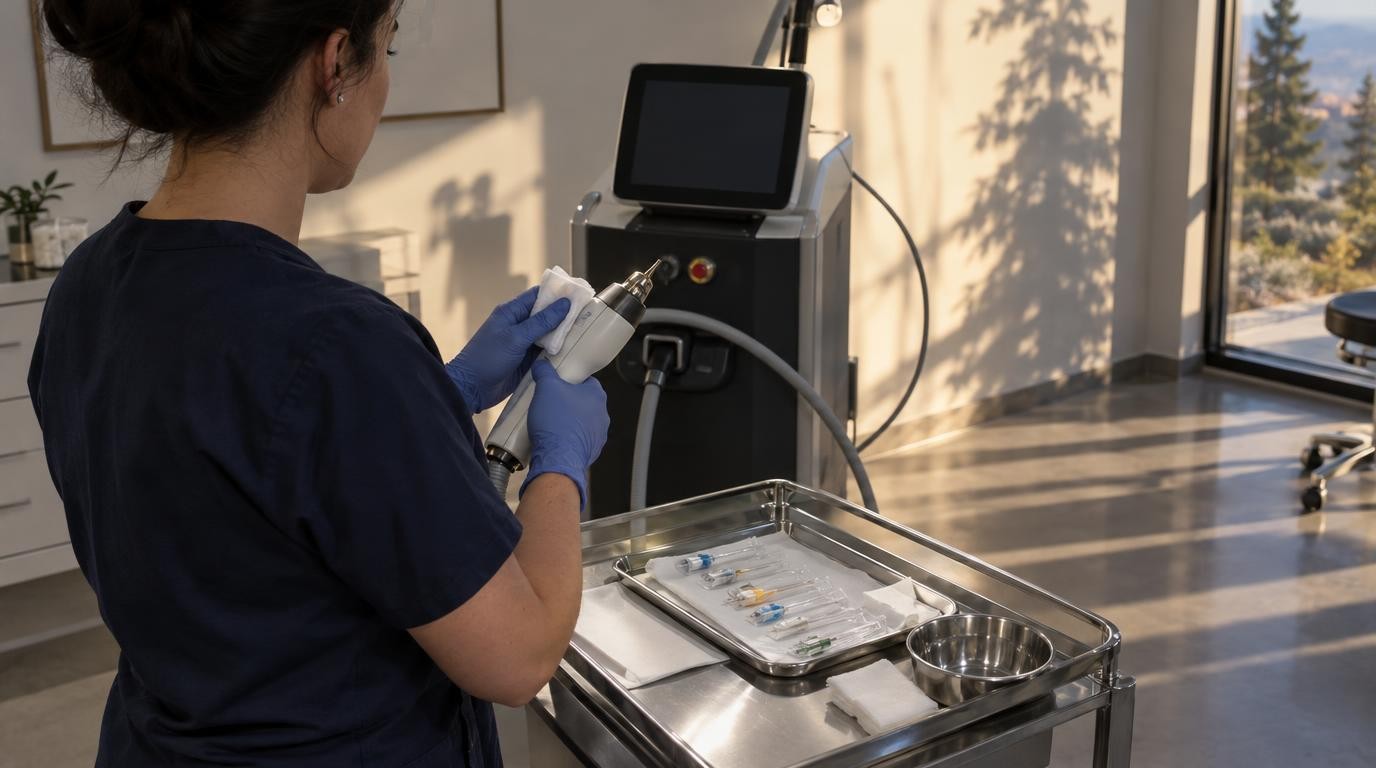
In chest liposuction, a thin tube called a cannula passes through small incisions to loosen and suction out fat. Smartlipo is our laser-assisted body-sculpting option for suitable unwanted fat deposits; the treatment plan depends on the tissue causing the fullness.
How long does a Smartlipo appointment take?
At NW Laser, Smartlipo treatment can take up to 3 hours.
How painful is breast liposuction?
Anesthesia is used during chest liposuction. The American Board of Cosmetic Surgery says gynecomastia liposuction typically uses local anesthesia with sedation or general anesthesia. Soreness afterward varies with the extent of treatment: the Board describes postoperative pain as usually minimal and says many patients find over-the-counter pain relief sufficient, while Cleveland Clinic’s patient guidance says people may feel very sore for the first few days after gynecomastia surgery, with discomfort usually improving within about a week. Recovery after liposuction alone may differ from recovery after gland excision. Ask your treating clinician which pain relief is appropriate for you.
When can you resume daily activities after Smartlipo?
After our Smartlipo treatment, some patients may resume ordinary daily activities as soon as the next day. That does not mean bruising and swelling have resolved: the American Society of Plastic Surgeons says to expect both for at least two weeks after liposuction or gynecomastia surgery. This is general guidance, not an NW Laser-specific Smartlipo estimate.
Strenuous exercise and physical work may require a longer break. Cleveland Clinic advises people recovering from gynecomastia surgery to avoid heavy lifting or carrying and reaching their arms overhead while healing. Follow your treating clinician’s activity instructions. The American Board of Cosmetic Surgery estimates full recovery from male breast reduction at four to six weeks, separate from returning to work. Recovery varies by patient and procedure; that estimate is not a Smartlipo-only timetable.
What results and scars should you expect from liposuction versus excision?
Liposuction can reduce fatty chest fullness, while excision can remove gland tissue or excess skin. Skin elasticity also affects the final contour. Liposuction generally uses small incisions; removing gland tissue or substantial loose skin may require larger ones. Scars can fade over time but do not disappear completely.
In the 177-patient 2026 Frontiers in Surgery retrospective series, mean satisfaction was 8.8 out of 10 after combined liposuction and gland excision. The authors described minimal visible scarring but noted wrinkling or folding around the nipple and areola in some patients with more severe enlargement. Those findings cannot predict an individual result from Smartlipo alone.
What are the risks of chest liposuction, and who should wait?
Chest liposuction can involve bruising, swelling, bleeding, infection, fluid collections, contour irregularity, and altered sensation. Male breast reduction, particularly when excision is involved, also carries risks such as visible scarring, nipple-skin loss or inversion, loose skin, and asymmetry. Blood clots or persistent pain can occur, and another operation is sometimes needed to address a complication or improve the result. Risks depend on the procedure; liposuction alone may also leave gland tissue or loose skin behind. People with an unexplained lump, a possible hormonal or medication-related cause, or a condition affecting procedural safety should have an appropriate evaluation before elective contouring.
The 2026 Frontiers in Surgery retrospective series of 177 patients reported seroma, a fluid collection, in 15 patients, hematoma in 3, infection in 3, and temporary skin-sensation changes in 4. All patients had liposuction with gland excision; these are not complication rates for Smartlipo alone.
Discuss your health history, medications, expected side effects, and procedure-specific risks with your own clinician. After surgery, call your treating team promptly if an incision bleeds, drains pus, or opens; if you have severe pain or swelling; or if you develop fever with redness and swelling near the incision. Seek immediate medical help for shortness of breath, chest pain, or heart palpitations.
Frequently Asked Questions
Can photos tell whether a celebrity has gynecomastia?
No. We cannot confirm someone’s medical history from photos or rumors. A breast examination is needed to determine whether chest enlargement is gynecomastia and assess for other causes.
Can male breast reduction fix puffy nipples?
Yes. Liposuction may help when fat causes the projection, while glandular tissue beneath the nipple may require excision. Excision can also be used to reduce an enlarged areola or reposition the nipple when needed.
What kind of anesthesia is used for male breast reduction?
For procedures involving gland excision, the American Society of Plastic Surgeons lists intravenous sedation and general anesthesia as options. Your surgical team will recommend an approach based on your procedure and health.
Will I need a compression vest after chest liposuction?
If you are given a compression garment, wear it as directed. The American Board of Cosmetic Surgery says it can support comfort and healing after male breast reduction.
How long does it take to see the final results of gynecomastia surgery?
Cleveland Clinic says results may not be visible for about three to six months after gynecomastia surgery as swelling subsides and the chest heals. Timing after Smartlipo alone may differ.
Can male breast enlargement return after surgery?
Yes. Male breast reduction results are typically long-lasting, but weight gain or certain medications can change chest fullness again, according to the American Board of Cosmetic Surgery.
Can I go home the same day after gynecomastia surgery?
Usually, yes. Cleveland Clinic describes gynecomastia surgery as typically outpatient, meaning you go home the same day, and advises arranging someone to drive you home.
When can I exercise after male breast reduction?
It depends on the procedure and how you heal. An article on the American Society of Plastic Surgeons’ site says return to exercise and work after liposuction alone is typically less than one week; surgical removal of breast tissue may require two to four weeks of healing before routine activities are tolerable. Those are general estimates, not a timetable for every patient.
How can you choose a chest treatment in Vancouver, Washington?
At NW Laser in Vancouver, Washington, contact us for a consultation to discuss the cause of your chest fullness and whether Smartlipo fits your needs.
This information is general and is not medical advice. Talk to a licensed clinician about your own situation before making a treatment decision.
