

Last updated: November 10, 2026
Mole removal with laser treatment may be an option for a mole that has been assessed as benign, but it is not the right method for every lesion. A changing or otherwise concerning mole needs medical evaluation before cosmetic removal, and laser treatment can leave deeper mole cells behind. At NW Laser, our mole and skin-tag removal service is available in Vancouver, Washington; the method recommended for a particular mole is determined at consultation.
Can you use a laser to remove a mole?
Laser treatment can remove some moles that a clinician has assessed as benign, but it should not replace evaluation of a suspicious lesion. Focused light energy treats cells in the targeted area. Because laser treatment destroys rather than preserves tissue, deeper mole cells may remain and a specimen may not be available for examination.
MedlinePlus guidance on skin lesion removal includes moles among the lesions that laser excision can remove. That does not mean a laser is the preferred choice for every mole. Cleveland Clinic’s mole removal guidance cautions that laser treatment is not usually recommended because it leaves no sample to study and moles are more likely to recur after laser or other destructive treatments. The important first step in cosmetic mole removal is deciding what the spot is and whether preserving tissue matters.
Which moles might be suited to laser treatment?
A mole assessed as benign may be considered for laser treatment, but its size and visible color alone cannot show whether treatment will remove all its cells. A large, thick, or deep mole is less likely to be completely treated at the surface. Suitability depends on an examination, not appearance alone.
A clinician also needs to establish whether the spot is actually a mole. A nevus is a mole; other common growths can look similar to someone considering removal but call for different decisions.
Are raised or deep moles good candidates for a laser?
Raised or deep moles may contain cells below the area a laser visibly clears. The spot could remain or return even if its surface looks improved. When complete removal or examination of the tissue is important, a clinician may favor a method that removes and preserves the mole.
Are skin tags and seborrheic keratoses the same as moles?
No. A skin tag is a growth attached to the skin, often by a stalk. A seborrheic keratosis is a different type of skin growth, not a nevus. A health check before skin-tag removal can help clarify what a growth is when its identity is uncertain.
When should a mole be checked before cosmetic removal?
A new, changing, bleeding, itchy, or otherwise concerning mole should be medically assessed before cosmetic removal. The assessment helps determine whether tissue needs to be preserved for microscopic examination. Laser treatment destroys the treated tissue, so a clinician may recommend removal that provides a specimen or arrange further medical evaluation instead.

The American Academy of Dermatology’s guidance on mole diagnosis and treatment explains that tissue removed by surgical excision is examined under a microscope, and tissue removed by surgical shave is examined in most cases. Cosmetic improvement should not take priority over finding out what a concerning spot is. For a fuller distinction, see our guide to medical versus cosmetic mole removal.
What changes in a mole should prompt medical evaluation?
Have a clinician assess a mole that changes in color or shape, starts itching or bleeding, or otherwise looks different from before. A growth that returns after removal also warrants assessment. These signs do not establish a diagnosis by themselves, but they change the decision from simply choosing a cosmetic technique to determining whether the lesion needs testing.
What happens during mole removal with laser treatment?
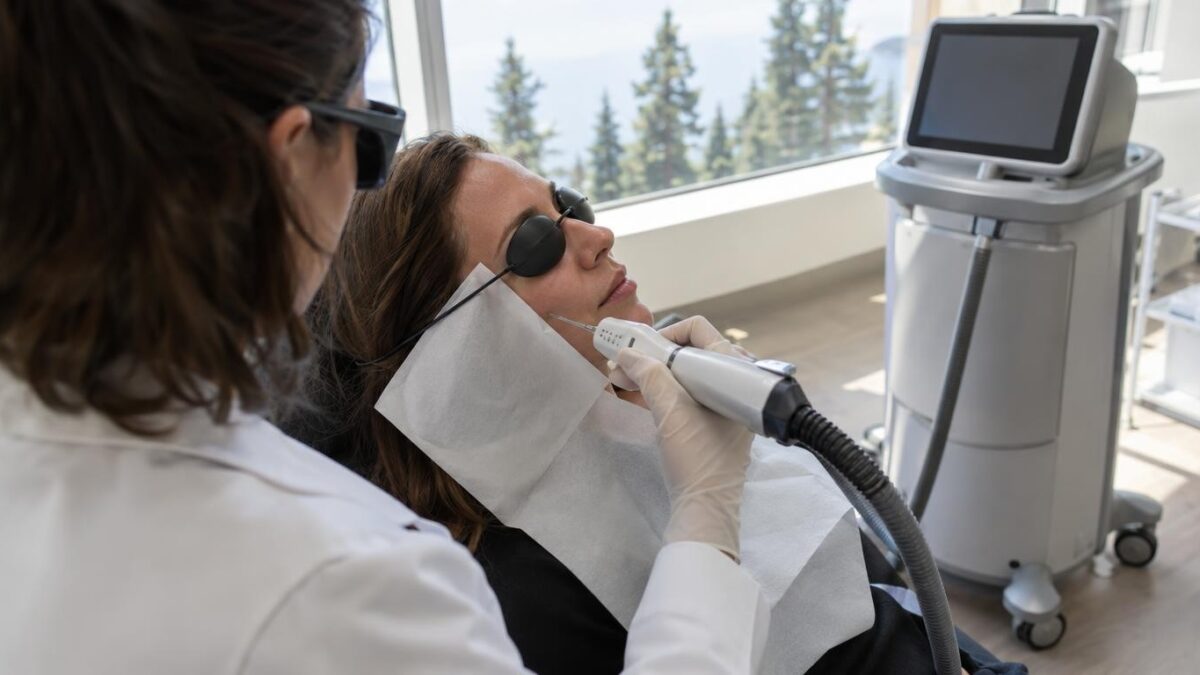
A typical laser mole removal visit begins with an examination to identify the lesion and decide whether laser treatment is appropriate. If treatment proceeds, the clinician discusses comfort measures and protective eyewear, directs light energy at the selected spot, and provides site-care instructions. Devices, session plans, and aftercare vary by practice.
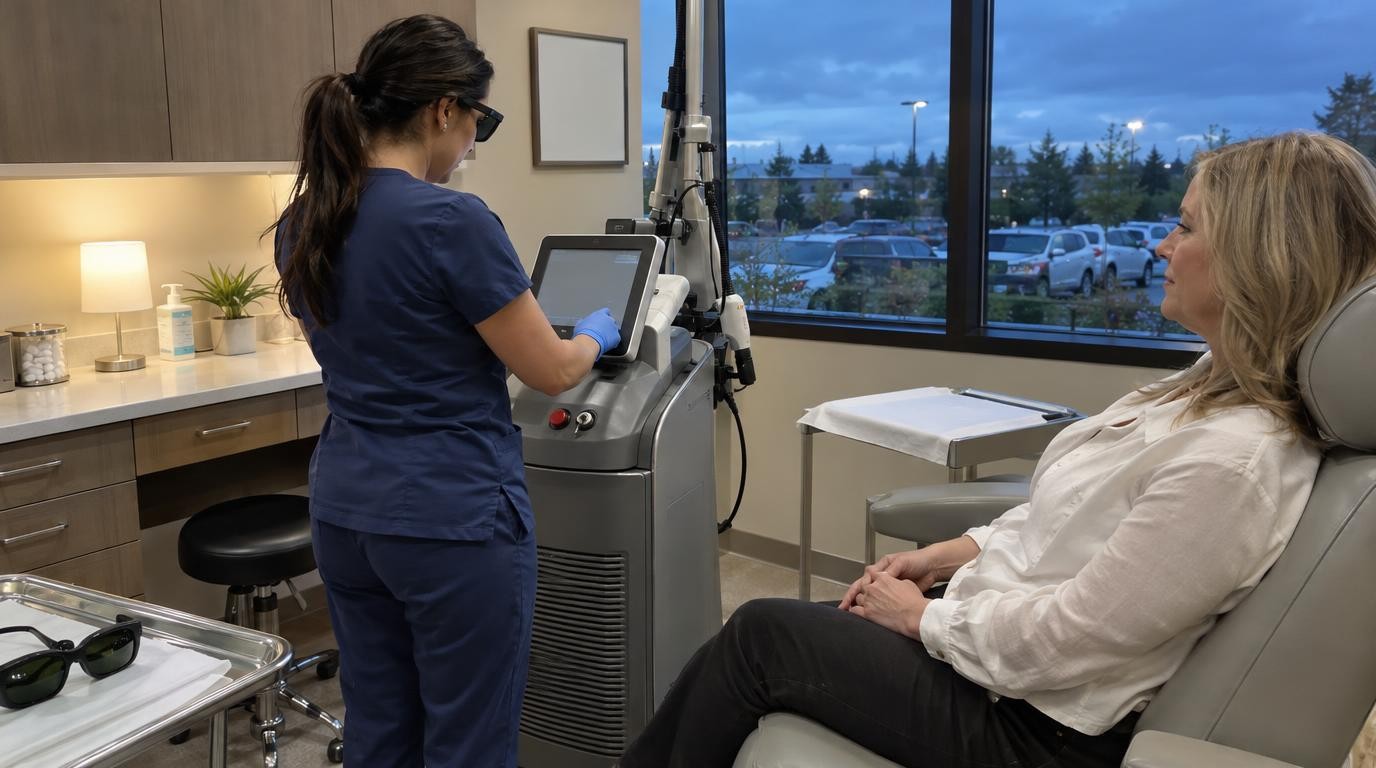
If laser treatment is appropriate, a visit may include these general steps; the exact process depends on the device and the lesion:
- Examine the spot. The clinician checks whether cosmetic laser treatment is appropriate or whether evaluation that preserves tissue is needed.
- Plan comfort and protection. The team explains whether numbing is appropriate and provides the eye protection required for the device.
- Treat the selected area. Focused light energy acts on the targeted tissue.
- Review site care. The patient receives instructions based on the treated area and the method used.
What should you ask about the removal method at NW Laser?
Ask which technique would be used for your mole, whether a biopsy is needed, and whether the method would provide a specimen for microscopic examination. We offer mole removal but do not specify laser treatment as our method for moles.
How do dermatologists remove moles?
Dermatologists commonly remove moles by surgical shave or surgical excision. The methods differ in how they remove tissue, whether a specimen remains for examination, and the chance that a mole will return:
| Method | What it does | Specimen and possible outcome |
|---|---|---|
| Surgical shave | Uses a blade to remove the mole. | Tissue is usually available for examination. Recurrence is somewhat more likely than after surgical excision. |
| Surgical excision | Cuts out the mole; stitches may be needed. | Tissue is available for examination. The procedure can leave a permanent scar. |
| Destructive laser treatment | Uses focused light to destroy targeted tissue. | No specimen is usually available. The mole may return, and a mark or scar is possible. |
| Cryotherapy | Freezes and destroys tissue. | No specimen remains for examination. Like laser treatment, it is not usually recommended for mole removal. |
Most moles removed by dermatologists are permanently removed, although some return. The best choice depends on the lesion’s depth, the reason for removal, and whether a specimen is needed.
When might shave removal or surgical excision be preferable to a laser?
When a mole is suspicious, shave removal or surgical excision allows the tissue to be examined for cancer cells. Excision can also remove a margin of surrounding skin if needed.
How long does it take for mole removal to heal?
Mole-removal healing varies with the lesion’s size and depth, the removal method, and the person’s skin response. Cleveland Clinic gives a general mole-removal healing estimate of two to three weeks; that estimate is not a promised timeline for a laser-treated spot. Surface healing and lingering color changes may follow different timelines.
For a mole-removal wound, Cleveland Clinic advises keeping it clean, moist, and covered, changing the dressing daily or as instructed, and applying sunscreen when the healed site is exposed. Care for a laser-treated site may differ, so follow the instructions you receive for that treatment.
What should you expect while a laser-treated site heals?
A laser-treated spot may feel tender and develop a crust before the surface settles. Do not pick at the crust; a lighter or darker patch may persist after the tenderness has passed. No removal method guarantees an invisible result.
What are the risks of laser mole removal?
Laser mole removal may cause discomfort, infection, scarring, or lighter or darker pigmentation. It may leave mole cells behind, allowing the mole to return. Even a benign mole that returns after nonsurgical removal can have features resembling skin cancer.
Discuss your own suitability and medical history with a licensed clinician. Seek urgent care if bleeding will not stop; contact a healthcare professional promptly for spreading redness or pus, or if a removed mole grows back. The American Academy of Dermatology also cautions against claims that removing a skin growth is scar-free or risk-free.
What should you ask at a mole removal consultation?
- Is this spot a mole, and does it need medical evaluation before cosmetic treatment?
- Which removal methods are available here, and why do you recommend one for this lesion?
- Would the chosen method provide tissue for examination if needed?
- What should I expect during healing, and what changes should prompt follow-up?
Frequently Asked Questions
Do I need to remove a mole if it isn’t bothering me?
No. Most moles do not need treatment if they are harmless and aren’t bothering you. Removal may be considered if a mole catches on clothing or you dislike its appearance. If it changes, itches, or bleeds, have it assessed rather than treating it as a cosmetic concern.
Can I remove a mole myself with a laser pen?
No. Do not use a home laser or mole removal pen on a mole. You could miss a skin cancer, leave mole cells behind, develop an infection, or cause a significant scar. Home lasers can also make skin cells look cancerous even when they are not.
Will I need to take time off work after mole removal?
Not necessarily. Many people can continue their daily activities while a mole-removal site heals, although it may be sore. Whether work activities need to change depends on the removal method, the wound’s location, and the care instructions for that wound.
Can a dermatologist remove a mole in one appointment?
Usually, yes. A dermatologist can generally remove a mole during an office visit, and most removals require only one visit; occasionally, a second visit is needed. A spot that needs further evaluation may follow a different plan.
Can a dermatologist monitor a mole instead of removing it?
Yes. Most moles do not need removal, and a clinician may recommend watching a mole for changes rather than treating it. Cleveland Clinic says mole mapping may be considered for people with more than 50 moles or a risk of melanoma. After initial photographs, individual moles may be photographed every six to 12 months to track changes.
What happens if a removed mole tests positive for skin cancer?
If a removed mole tests positive for skin cancer, further surgery may be needed to remove additional tissue around the site. The plan depends on the biopsy findings and the type of cancer. A mole destroyed without a specimen cannot be tested in this way.
Are people with Black skin at greater risk of marks after surgical mole removal?
Yes. Mayo Clinic notes that people with Black skin have an increased risk of pigment changes and keloid scars after surgical mole removal. A keloid is a raised scar.
How can you decide whether laser mole removal is right for you?
Start with an assessment of the spot, then weigh the recommended removal method against your goals and the need for tissue examination. Laser treatment may be considered for a selected benign mole, but shave removal or excision may be a better fit when depth or diagnosis matters. No method guarantees complete removal without a mark.
If you are coming from Portland, Oregon, contact NW Laser in Vancouver, Washington, to ask about mole removal. Our team can help you understand the available method, expected aftercare, and appropriate next steps for your spot.
This information is general and is not medical advice. Talk to a licensed clinician about your own situation before making a treatment decision.
