

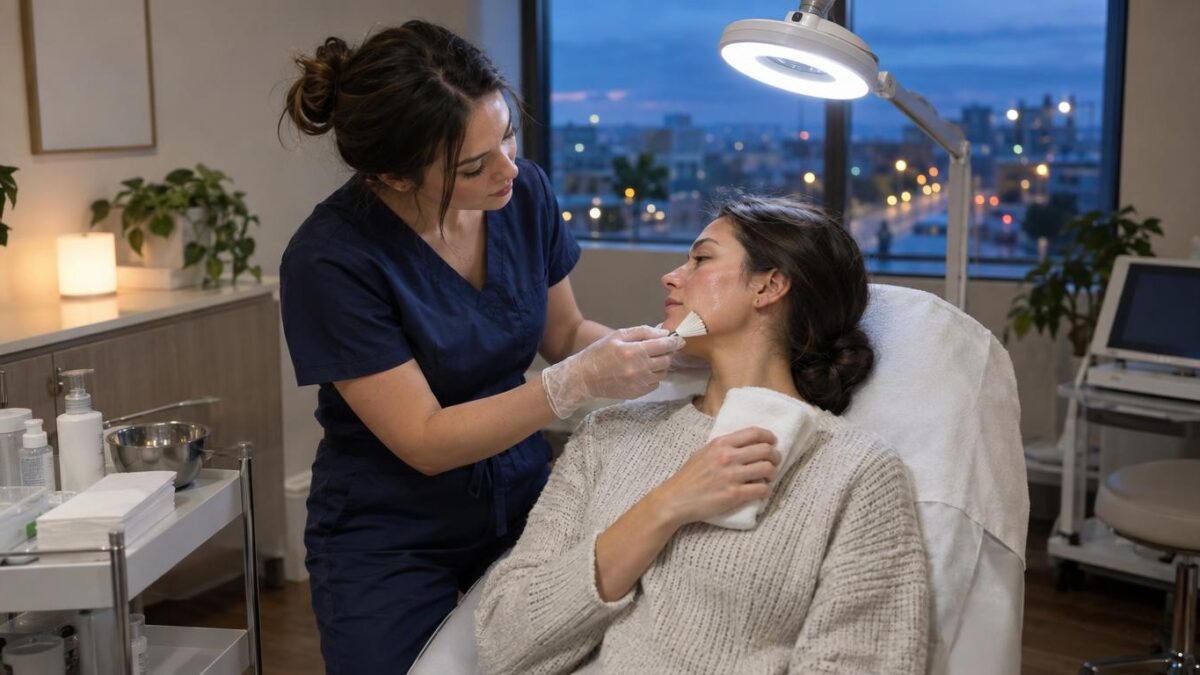
Last updated: November 5, 2026
A glycolic acid chemical peel uses an alpha-hydroxy acid to exfoliate the skin’s surface. Results and downtime depend on the formulation, how the peel is applied, your skin, and the treatment depth—not simply on the word “glycolic” on the bottle.
What Is a Glycolic Acid Chemical Peel, and How Does It Work?
By loosening and removing surface skin cells, a glycolic peel may improve dullness, rough texture, and uneven tone.
How is glycolic acid different from other exfoliating acids?
Glycolic acid has a small molecular size, which helps it penetrate skin readily. Like other exfoliating acids, it encourages shedding of surface cells; the appropriate acid depends on the concern and the person’s skin. In a clinical review of glycolic acid peel therapy, the authors identify glycolic acid as a commonly used alpha-hydroxy acid peel and emphasize skin assessment, application timing, and timely neutralization.
At NW Laser, our chemical peel treatments include options for general skin care and specific concerns, including acne.
What Determines How Deep a Glycolic Peel Goes?
Glycolic peel depth depends on acid concentration, the number of coats applied, and how long the solution remains on the skin. Skin condition and clinician technique also affect the response. A light refresh and a more intensive peel can therefore have different visible effects and recovery needs, even when both use glycolic acid.
Does a higher glycolic acid concentration always mean a deeper peel?
No. A higher concentration is one factor, but it does not establish depth by itself. The clinical review of glycolic acid peel therapy explains that coats and contact time matter alongside concentration. A percentage cannot be treated as an interchangeable instruction or a promise of a medium-depth peel.
In clinical practice, assessing sensitivity, recent skin care, and the desired improvement helps us plan an appropriate treatment rather than selecting a peel by strength alone. Our guide to light chemical peels explains how gentle resurfacing differs from a more intensive approach.
Who Might Benefit From a Glycolic Acid Peel?
A glycolic acid peel may suit adults seeking improvement in dullness, rough skin, uneven tone, or mild visible signs of aging. We also consider glycolic acid for hyperpigmentation. The likely benefit depends on the cause and depth of the concern; surface exfoliation cannot be assumed to correct every dark spot or facial acne scar.
Can a glycolic peel help with dark spots or melasma?
Glycolic acid is an option for dark spots, but melasma needs an individualized plan because discoloration can persist or return. Cleveland Clinic’s chemical peel guidance lists uneven coloring and melasma among concerns chemical peels may improve, without promising complete clearance. Skin tone and pigment-related risks also matter: the American Society for Dermatologic Surgery’s guidance on peels for skin of color discusses superficial glycolic peels as an option when treatment is tailored to the patient.
For active breakouts, we may consider a salicylic acid peel: Cleveland Clinic’s guide to chemical peels identifies salicylic acid as a beta-hydroxy acid that typically helps with acne. For uneven pigment or dark marks remaining after breakouts, we may consider glycolic acid instead. The choice depends on your skin and whether the main concern is ongoing acne or discoloration. Our comparison of glycolic and salicylic acid peels for acne offers further reading. For more on melasma, see this educational discussion of glycolic acid peels and melasma.
How Should You Prepare for a Professional Glycolic Peel?
Preparation begins with a review of your skin, treatment goals, medications, and current products. At NW Laser, we ask patients to pause facial retinoids and avoid sun exposure and waxing before a peel. These precautions help us assess skin that has not been recently irritated and choose an appropriate treatment plan.
Can I get a chemical peel if I use tretinoin?
Possibly, but tell us about prescribed tretinoin before scheduling treatment. At NW Laser, our pre-peel guidance calls for stopping facial retinoids for at least 7 to 10 days. If tretinoin is part of a prescribed treatment plan, confirm any pause with the clinician who manages that prescription rather than changing it independently.
NW Laser’s other preparation guidance is:
| Before treatment | Preparation guidance | Why it matters |
|---|---|---|
| Sun exposure | At NW Laser, avoid sun exposure for at least 10 days. If you go outdoors, limit direct sun; the American Society of Plastic Surgeons’ preparation guidance recommends broad-spectrum SPF 50+ sunscreen every morning. | Sun-exposed skin may be more sensitive. |
| Waxing | At NW Laser, avoid waxing for 7 days. | Waxing can leave skin irritated before a peel. |
Let us know about other active skin products, recent irritation, and any changes in your skin before the appointment. A medication and skin review helps determine whether to proceed or adjust the plan.
What Happens During a Glycolic Peel at NW Laser?
During a glycolic peel at NW Laser, treatment follows these steps:
- Before application, the skin is cleansed to remove excess oil, and the eyes and hair are protected.
- We apply the selected peel solution.
- We leave it on for the planned contact time while monitoring your skin’s response.
- We apply a neutralizing solution to stop the peel.
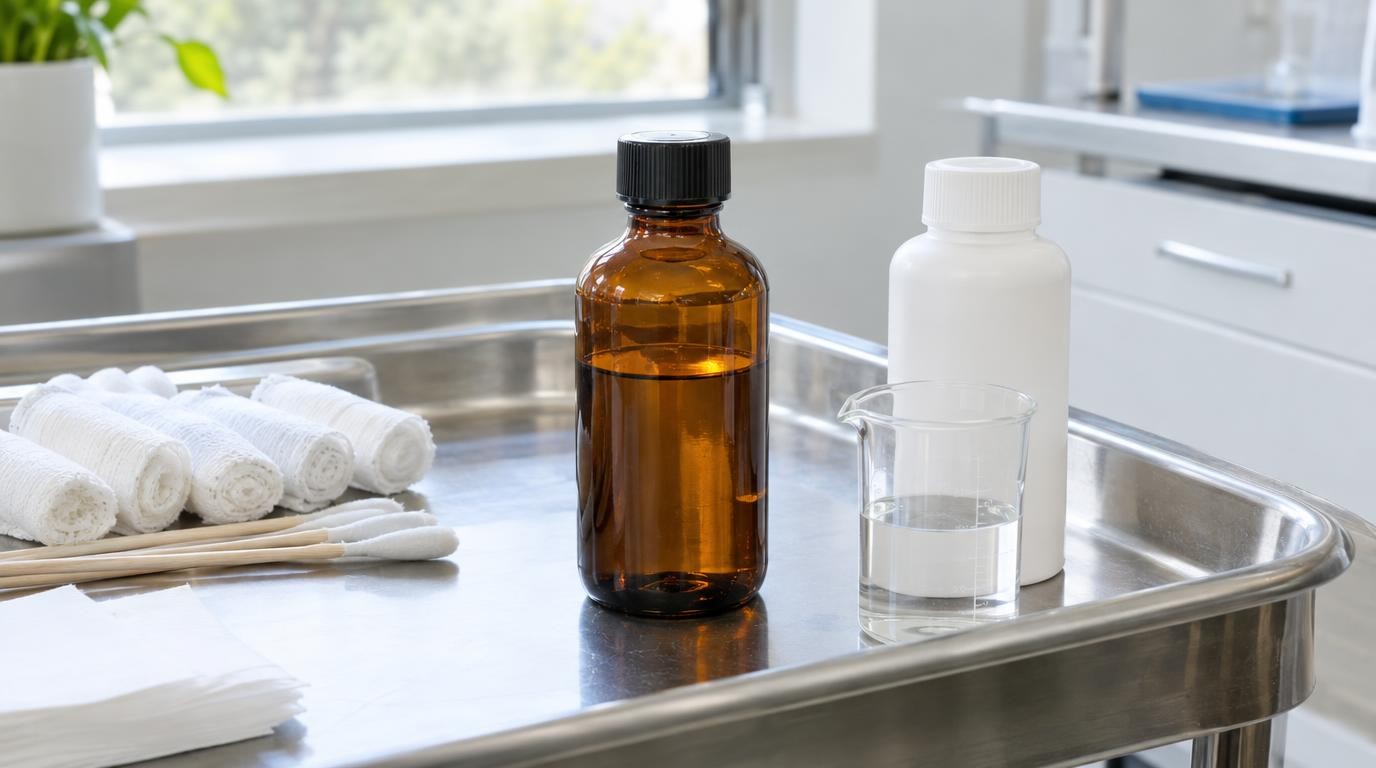
Contact time is a treatment decision, not a timer to copy at home.
How long does the glycolic acid stay on your skin?
At NW Laser, 30 to 60 seconds is an example of glycolic peel contact time, not a universal protocol. The DailyMed label for buffered glycolic peel products lists 2-10 minutes depending on skin tolerance; that product-specific label does not set the timing for your peel at NW Laser. The clinical review of glycolic acid peel therapy identifies timely neutralization as part of careful peel technique; leaving a solution on longer is not automatically better.
You may feel tingling or warmth while the solution is on your skin. Tell the treating clinician what you feel during application so the response can be assessed as the treatment proceeds.
What Does Recovery From a Glycolic Peel Look Like?
Redness, dryness, and sensitivity can occur during recovery. How long your skin takes to heal depends in part on the depth of the peel.
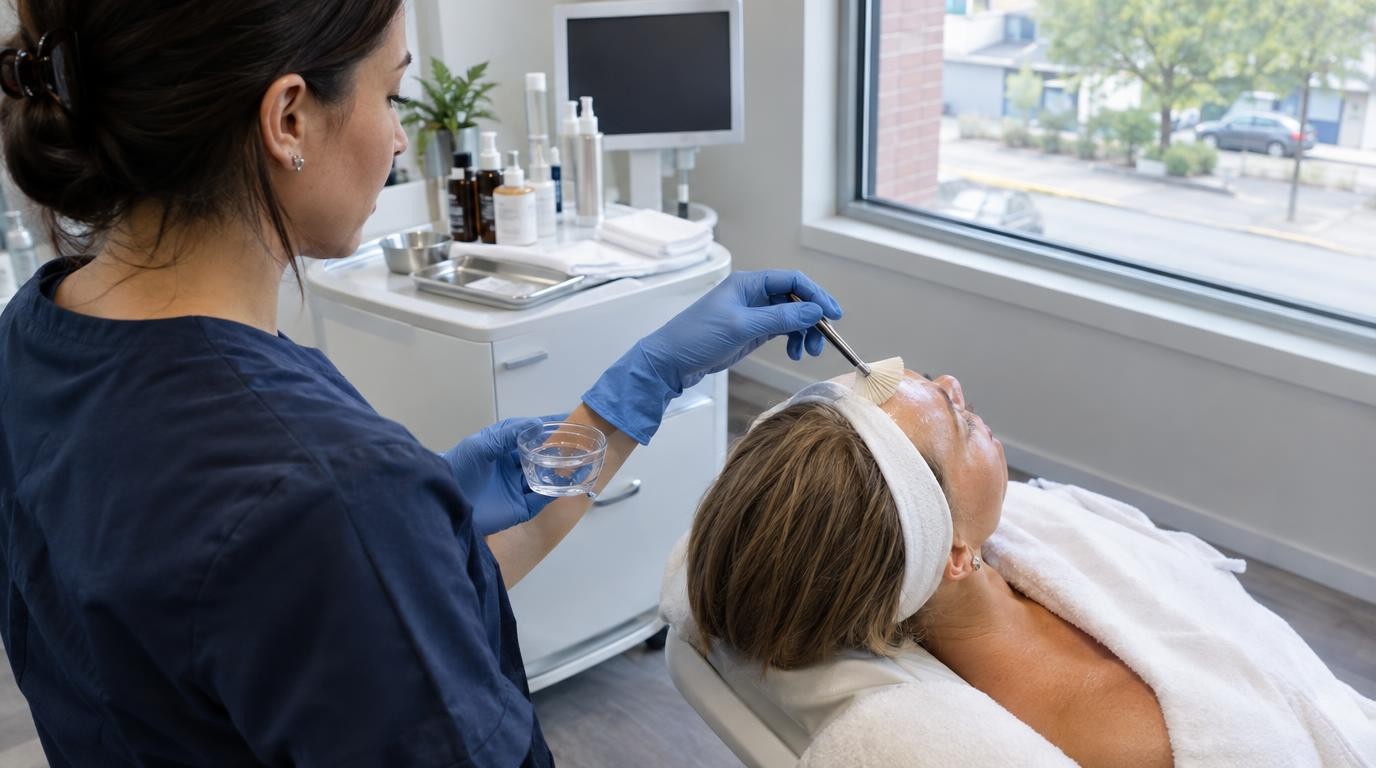
Can glycolic acid make your skin peel?
Yes. Skin can flake after a glycolic peel, but a superficial peel may cause little visible shedding and generally requires little or no downtime. According to EyeWiki’s overview of chemical peels, light-peel skin typically heals in about 3 to 4 days; medium and deep peels take longer. The broader recovery pattern below describes possible changes after chemical peels, not the expected timetable for every light glycolic peel:
| Time after treatment | Possible changes; depth and response vary | What to do |
|---|---|---|
| First 3 days | Dryness or irritation; some peels also cause swelling | Follow your aftercare instructions and moisturize gently. |
| Days 3 to 4 | With some peels, skin may look darker or develop blemishes | Do not pick, rub, or scrub. |
| Days 5 to 7 | Effects of a more intensive peel may begin to subside | Continue gentle care and sun protection. |
| Up to 2 weeks or longer | Deeper peels may still be healing | Follow the treatment-specific instructions we provide. |
Use a moisturizer suitable for sensitive skin and avoid trying to speed up flaking. Stay out of sunlight while your skin heals; if you must go outdoors, use a sunscreen that will not irritate your skin. Our day-by-day chemical peel aftercare guide gives additional context; your own instructions take priority.
When should you contact the clinic during recovery?
Contact NW Laser promptly if symptoms are unexpected or worsening, including increasing pain, pus, or significant blistering. Seek urgent medical care for fever, spreading redness, severe pain, or symptoms involving the eyes.
How Many Glycolic Peel Sessions Might You Need to See Results?
There is no fixed number of glycolic peel sessions that guarantees a result. Some patients see a visible change after one peel, while persistent concerns may need more than one visit. Treatment depth, the concern being addressed, and the way your skin responds all affect whether another session makes sense.
How often can a light peel be repeated?
At NW Laser, a light peel may be repeated approximately every 1 to 2 months when appropriate. That interval is an option, not a required series; we assess your response before recommending another session. Some acne scars may need more than one treatment or a different approach.
What changes can you realistically see after one peel?
After healing, you may notice smoother-feeling skin or a brighter, more even-looking complexion. Subtle fine lines or superficial discoloration may improve, but one peel should not be expected to erase melasma, deeper wrinkles, or facial acne scars. Assessing the skin after recovery gives a more useful basis for any next treatment than judging the result while it is still flaking.
How Does a Professional Glycolic Peel Compare With Other Options?
A professional glycolic peel is one option among chemical peels, not the default answer for every skin concern. At NW Laser, we select a peel during consultation based on the concern and appropriate depth.
Which chemical peel is most effective for treating hyperpigmentation?
No single peel is most effective for every type of hyperpigmentation. Superficial glycolic, salicylic, and mandelic peels are options for uneven pigment, including in skin of color. At NW Laser, we consider glycolic acid for hyperpigmentation; the cause of your dark spots, your skin tone and history, and the recovery you can accommodate guide our recommendation. Medium-depth peels can help some dark spots, but a deeper peel is not automatically the better choice.
Is an at-home glycolic peel the same as a professional treatment?
No. An at-home glycolic peel is an exfoliating treatment you apply yourself; a weaker glycolic wash or cream used in a daily routine is a separate type of skin care, as Cleveland Clinic’s chemical-peel guide explains. At NW Laser, we select a professional peel for your skin, monitor its effect, and neutralize it at the planned time. Follow an at-home product’s directions rather than copying our professional contact times.
What Are the Risks, Side Effects, and Reasons to Avoid a Glycolic Peel?
Temporary redness, sensitivity, dryness, and flaking can follow a glycolic peel. Uncommon complications can include unwanted pigment changes, scarring, and infection. Risk depends on the skin, peel depth, and application, so suitability matters as much as the desired benefit.
Who should ask about another treatment or postpone a peel?
Tell us about active irritation, open sores or infection, relevant medications, recent sun exposure, and any history of problematic pigment changes or scarring. A peel should wait if the treatment area has open sores, lesions, or a skin infection, until they have resolved and a clinician has assessed your skin. Pregnancy or nursing also calls for an individualized review; not every patient is a suitable candidate for every peel. Discuss your own risks and treatment options with your clinician before proceeding.
Frequently Asked Questions
How long do results from a light glycolic peel last?
Results from a light peel typically last one to two months at NW Laser. How long your skin looks refreshed depends on your skin and the concern treated. We may recommend another light peel as part of a maintenance plan, but repeat treatment is optional and will not guarantee the same result each time.
When can I wear makeup after a glycolic peel?
You can usually wear makeup the next day after a light peel, according to the American Society of Plastic Surgeons. A medium peel may require waiting about a week. Follow your NW Laser aftercare instructions, and wait if your skin remains irritated or is not healing as expected.
Does a glycolic acid peel require anesthesia?
A superficial glycolic acid peel generally does not require local anesthesia, according to Cleveland Clinic. You may still feel warmth or stinging during application. At NW Laser, tell your treating clinician if the sensation becomes uncomfortable so we can assess your skin’s response while the peel is being applied.
Can people with darker skin tones get a glycolic acid peel?
Yes. A properly selected superficial glycolic peel can be an option for people with darker skin tones. The American Society for Dermatologic Surgery notes that medium-depth TCA peels carry a greater risk of darkening or lightening skin of color and recommends that deep phenol peels not be performed on these patients. At NW Laser, we assess your pigment concerns and skin history before recommending a peel.
Can a glycolic peel trigger a cold sore?
Yes. In a Cleveland Clinic podcast, Shilpi Khetarpal, MD, notes that even an at-home chemical peel can trigger a cold sore in someone prone to them. Tell us if you have a history of cold sores, especially if the treatment area includes skin around your mouth, so we can discuss appropriate precautions before your peel.
How long does a professional glycolic peel appointment take?
A superficial chemical peel appointment takes around 30 minutes at Cleveland Clinic, though appointment length can vary by provider and treatment plan. The solution is on the skin for only part of that time. At NW Laser, we select the application interval for your skin and neutralize the peel afterward.
How Can You Decide Whether a Glycolic Peel Fits Your Goals?
A light glycolic peel may be a reasonable option for dullness, rough texture, or superficial discoloration. Deep wrinkles and depressed acne scars are less likely to respond to a light peel; the expected healing time and risk of pigment changes also matter when choosing a treatment.
If you are considering a glycolic acid chemical peel in Vancouver, Washington, contact NW Laser for a consultation. We can review your skin and current products, explain the proposed peel and likely treatment schedule, and help you decide whether it suits the change you hope to see.
This information is general and is not medical advice. Talk to a licensed clinician about your own situation before making a treatment decision.
