

Last updated: November 4, 2026
Ultherapy before and after photos may show a gradual, natural-looking lift around the brow, neck, under the chin, or along the jawline – not the change a surgical facelift can produce. Most patients can resume their usual activities after treatment, but the changes worth comparing in photos generally develop over the following months.
What do Ultherapy before and after photos actually show?
Ultherapy before and after photos can show subtle lifting and tightening in a treated area, especially around the brow, neck, under the chin, or along the jawline. The most useful comparisons identify the treatment area and when the follow-up image was taken. A photo taken immediately after treatment cannot show the full collagen-related result.
In a prospective clinical study reported in the FDA’s Ulthera System clearance document, masked assessments of before-and-after photos found improvement in décolletage (upper-chest) lines and wrinkles for 36 of 54 evaluable subjects 180 days after one Ultherapy treatment. This is an upper-chest wrinkle finding, not a brow or neck lifting rate.
At NW Laser, Ultherapy treatment uses focused ultrasound to lift loose skin without incisions. The amount of visible change varies from person to person.
Which treatment areas should you look for in Ultherapy photos?
Look for brow, neck, under-chin, or jawline photos that match the area you want treated rather than relying on a full-face comparison. A straight-on view can help you assess brow position; a side view can make changes beneath the chin, along the neck, or at the jawline easier to evaluate.
How can you compare photos without mistaking lighting or angles for results?
Compare images taken with similar lighting, camera position, head position, and facial expression. Check that the images identify the treated area and follow-up interval. Ask to review verified, treatment-specific patient images when available, and remember that another patient’s result cannot predict yours. For more context on interpreting the sequence, see this educational guide to Ultherapy before and after changes.
When will you see Ultherapy results after treatment?
At NW Laser, we expect collagen-related lifting and tightening to unfold over 2 to 3 months. Some patients report continued improvement for up to 6 months. Photos taken at those intervals are more useful for judging a developing result than a same-day image.
What might you notice immediately after Ultherapy?
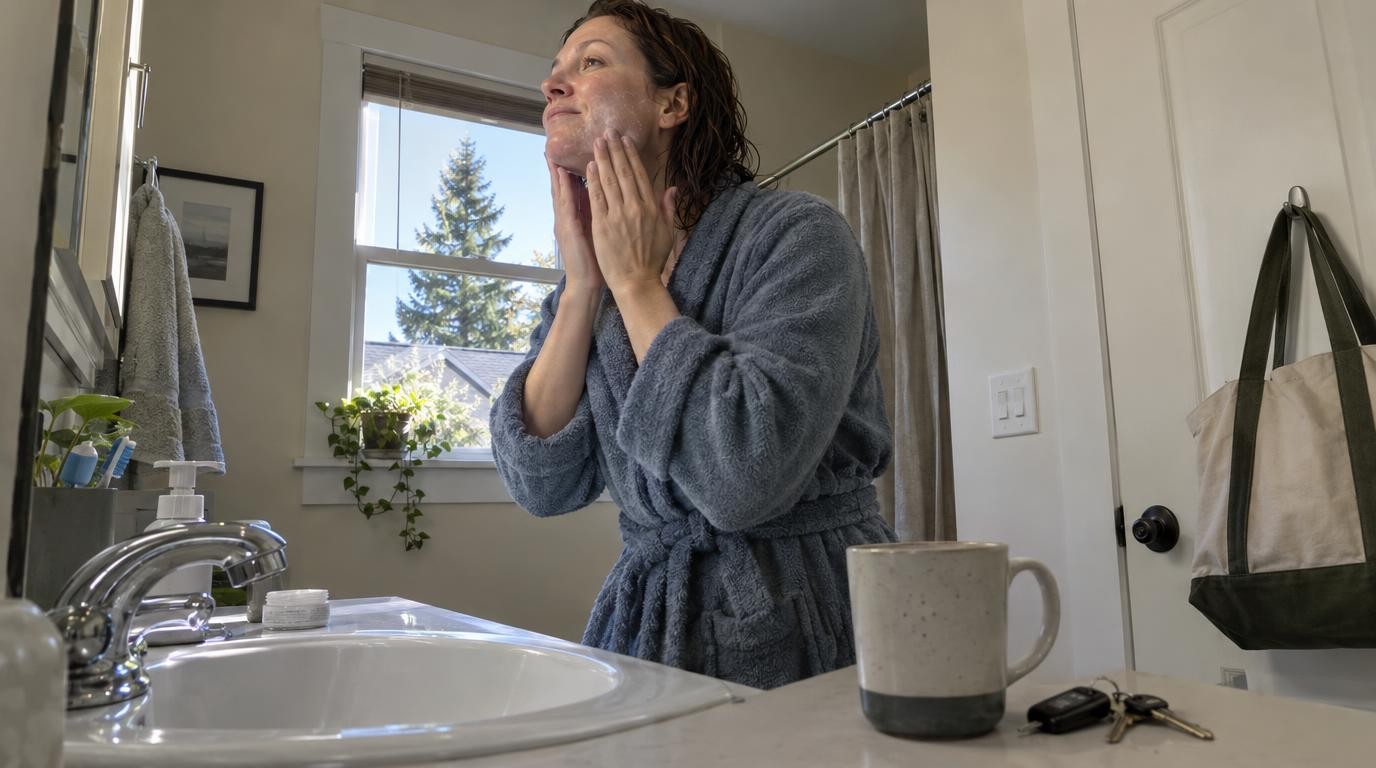
Immediately after treatment, you may notice a short-term boost, flushing, or slight swelling. These same-day appearances are not the collagen-related result that develops over the following months. Neither an encouraging early image nor an unchanged one reliably shows where your result will settle.
Why can results keep changing for up to six months?
Focused ultrasound triggers a tissue-repair response beneath the skin rather than immediately repositioning it. New collagen develops over time, and the degree and pace of visible change differ between individuals.
How does Ultherapy lift skin without surgery?
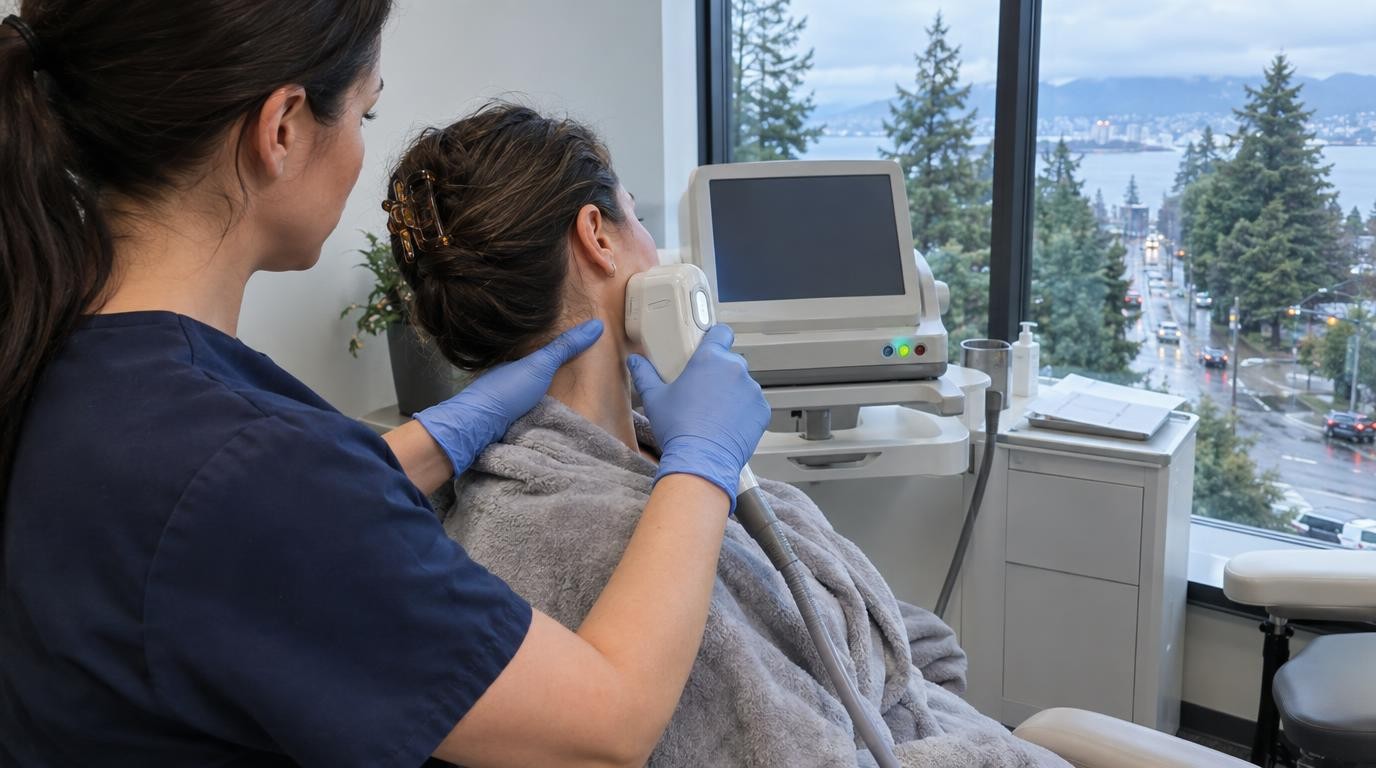
Ultherapy uses imaging to guide focused ultrasound energy beneath the skin’s surface. The energy targets planned tissue depths and stimulates new collagen, which can gradually tighten and lift loose skin. Ultherapy is neither a laser treatment nor a surgical facelift: the treatment does not require an incision and cannot reproduce a facelift’s degree of lifting.
A clinical review of microfocused ultrasound with visualization explains that targeted ultrasound energy creates small treatment points in deeper tissue that stimulate collagen renewal. The FDA clearance identifies lifting the brow and lax tissue beneath the chin and on the neck among the device’s indicated uses. Our Ultherapy treatments focus on those areas.
What does ultrasound imaging help the practitioner see?
With the handpiece against the skin, ultrasound imaging displays tissue beneath the surface. The practitioner uses that view to plan where to deliver focused energy and at what depth. The energy bypasses the skin’s surface rather than working like a laser that treats from the outside inward.
What happens before and during an Ultherapy appointment?
During your Ultherapy appointment, we identify the treatment areas and cleanse your skin, apply ultrasound gel, then use the handpiece to view tissue beneath the surface before delivering focused ultrasound energy at planned depths.
Our in-office procedure typically takes around 60 minutes; depending on the treatment area and plan, a visit may last 60 to 90 minutes.
Do you need to prepare for an Ultherapy session?
No special preparation is required for our Ultherapy procedure. Your practitioner may recommend a comfort measure, such as over-the-counter or prescribed medication, before treatment.
What does Ultherapy feel like during treatment?
Delivering focused ultrasound energy beneath the skin can be uncomfortable. How strongly you feel it varies by person and treatment area, and the discomfort occurs while the energy is being delivered. Tell us how you feel during treatment so we can discuss comfort measures.
Can you return to work after Ultherapy?
You can usually return to work and normal activities immediately after Ultherapy, without a planned recovery period. We do not require a special aftercare routine, although the treated area may temporarily look or feel different.
What might the first few days after Ultherapy feel like?
In the first few days, you may have slight swelling, tenderness to the touch, or tingling. Swelling may last a few days, while tenderness or tingling can persist for a few weeks. Immediate flushing should fade within a few hours. Contact us if a symptom is severe or unexpected, or lasts beyond these usual timeframes.
What are the risks of Ultherapy?
Ultherapy can cause temporary redness, swelling, tenderness, and tingling. Small areas of bruising or numbness are less common, and rare effects are also possible. Before treatment, we review your medical history, the planned treatment area, device-specific eligibility, and potential risks with you.
Is there a downside to Ultherapy?
Yes. Treatment can be uncomfortable, temporary effects can outlast the appointment, and the lift may be more modest than you hoped. Seek urgent medical care for trouble breathing, rapidly worsening swelling, or sudden weakness.
Who is most likely to be satisfied with Ultherapy results?
Adults with mild-to-moderate skin laxity who want gradual, modest lifting without incisions are the most plausible candidates. More pronounced sagging is less likely to respond enough to meet expectations, and one session cannot guarantee a particular result.
In clinical practice, the most useful question is not whether a photo shows a dramatic change, but whether the amount of change you want is plausible without surgery. A pilot case series of Ultherapy Prime included 30 participants and assessed jawline and neck changes at day 90. Most participants improved on the study’s assessment, but a small case series cannot predict an individual patient’s outcome or establish the result of a different treatment plan.
How do Ultherapy results compare with a surgical facelift?
Ultherapy offers a more modest, gradual lift without incisions or planned surgical recovery; a surgical facelift can reposition loose tissue more substantially and requires recovery.
| Consideration | Ultherapy | Surgical facelift |
|---|---|---|
| Change | Gradual, generally modest lifting | More substantial repositioning of loose tissue |
| Procedure | Focused ultrasound without incisions | Surgery with incisions |
| Recovery | Usually an immediate return to routine, though temporary effects can occur | Planned recovery |
We also offer Thermage, a nonsurgical skin-tightening treatment that uses radiofrequency rather than Ultherapy’s focused ultrasound. At a consultation, we can compare both options and surgery based on your degree of skin laxity and the change you want. For further reading, see our guide to noninvasive skin-tightening options.
Is Ultherapy actually worth it?
Ultherapy may be worthwhile if you would welcome a modest lift, prefer to avoid incisions and planned surgical recovery, and are comfortable waiting for a gradual result. The decision is less favorable if you need a dramatic change or expect every before-and-after photo to match your own outcome. Temporary effects and individual variation belong in that decision.
Consider which matters most to you: the degree of lift, the pace of change, or the ability to return to your routine after treatment. Our discussion of no-downtime lifting claims and patient experience offers another way to set practical expectations.
How long does Ultherapy really last?
The American Board of Cosmetic Surgery says Ultherapy results can last up to a year with good at-home skin care. That is not a guaranteed duration; how long your lift remains visible varies.
Ongoing aging and individual response affect how long an improvement remains noticeable. Photos taken with consistent lighting, angles, and expression can help you compare your result over time.
Frequently Asked Questions
Can Ultherapy treat wrinkles on the chest?
Yes, the Ulthera System is FDA-cleared to improve lines and wrinkles on the décolletage, or upper chest. That indication differs from lifting lax skin beneath the chin or on the neck. At NW Laser, our Ultherapy treatments focus on lifting the brow, neck, and area beneath the chin.
Can men get Ultherapy?
Yes. Men can receive Ultherapy; sex alone does not determine whether a gradual lift will meet someone’s goals. Results still depend on factors such as the treatment area and degree of skin laxity.
Is Ultherapy suitable for darker skin tones?
Yes, darker skin tone alone does not rule out Ultherapy. Results have been observed across different Fitzpatrick skin phototypes, although evidence from small studies cannot predict an individual’s outcome.
Will I need more than one Ultherapy treatment?
Possibly. Our Ultherapy procedure is often a single in-office session, but some people need additional nonsurgical skin-tightening treatments to reach or maintain their desired result. A before-and-after photo alone cannot determine whether another treatment would help you.
Can Ultherapy be combined with a thread lift?
Sometimes. An article on the American Society of Plastic Surgeons website recommends waiting until skin has healed around the threads before adding Ultherapy. Tell us about any prior or planned thread lift before scheduling treatment.
What is the difference between Ultherapy Prime and older Ultherapy devices?
Ultherapy Prime updates the imaging and processing capabilities of older Ultherapy devices. A patient survey comparing Prime and Legacy reported less pain, redness, and swelling with Prime, but its design limits how broadly those findings apply. Prime-specific findings do not establish what you will experience with another device.
How can you decide whether Ultherapy is right for you?
Decide whether a modest, gradual lift would make a meaningful difference for your particular concern. If the change you want requires substantial repositioning of loose skin, Ultherapy may not meet that goal.
If you are coming from Portland, Oregon, to our Vancouver, Washington, clinic, a consultation can help clarify whether Ultherapy suits your goals before you plan treatment. Contact NW Laser to review your concerns, discuss what recovery may feel like, and ask to see verified Ultherapy photos when available.
This information is general and is not medical advice. Talk to a licensed clinician about your own situation before making a treatment decision.
