

Last updated: November 17, 2026
Thermage at NW Laser in Vancouver, Washington, is a skin-tightening treatment, not a dependable way to remove fat. Facial volume loss has been reported after treatment, but its frequency and whether Thermage caused a particular change have not been established. Here is what to expect from treatment and when a change needs attention.
Thermage Fat Loss vs. Skin Tightening: Results and Risks
Temporary redness, swelling, warmth, and discomfort can follow Thermage. Burns and changes in facial contour have also been reported, but the available evidence does not establish how often Thermage causes fat loss or whether every reported volume change was caused by treatment. Good technique reduces avoidable risks but cannot guarantee an outcome.
The distinction matters: tighter skin can change how a face or body area looks without reducing the fat beneath it. Conversely, a new hollow or indentation deserves attention even if the skin appears tighter.
What Is Thermage and How Does It Work?
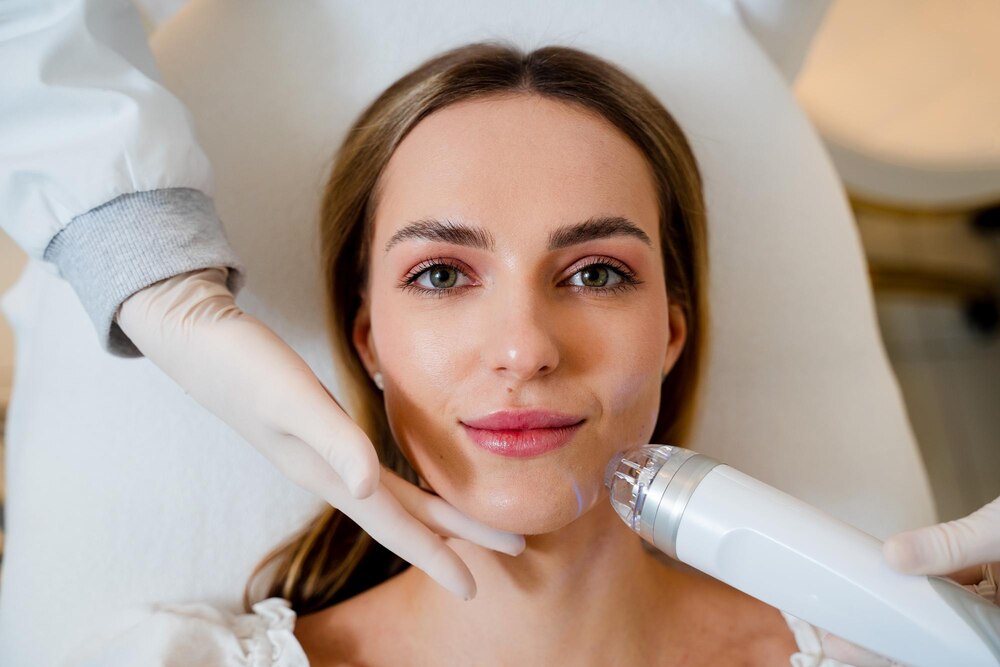
Thermage is a non-surgical monopolar radiofrequency (RF) treatment that heats tissue beneath the skin’s surface while cooling the outer skin. During an appointment, we place a treatment tip against successive areas of skin to deliver RF pulses with cooling. You may feel brief heat and, depending on the equipment used, vibration. Collagen remodeling can produce gradual tightening, typically suited to mild laxity rather than a surgical-lift result. A review of Thermage for rejuvenation describes mild tightening of facial skin. Thermage CPT and FLX are device versions; ask which system and treatment tip will be used rather than assuming we use a particular model.
The FDA’s Thermage FLX 510(k) clearance lists noninvasive treatment of wrinkles, including wrinkles around the eyes and on the eyelids. Its clearance also lists temporary improvement in the appearance of cellulite when RF energy is used with skin vibration. Clearance means the device was found substantially equivalent to a marketed device; it is not FDA approval, and fat removal is not a listed indication. At NW Laser, a facial treatment typically takes 60 minutes and a body treatment 90 minutes. Most people have one RF treatment, though some may benefit from additional treatment; we assess your response before recommending another session. Some patients notice a change within 24 hours, while tightening may continue to develop over the following 2–6 months; neither timing nor degree of improvement is guaranteed.
What Are the Most Common Thermage Side Effects?
Temporary redness, swelling, warmth, and tenderness are expected responses to RF heating. Some patients also notice tingling or bruising. A new blister, burn, or persistent indentation is not an expected part of recovery.
These expected effects rarely interfere with daily activities. The following are the most frequently reported short-term reactions:
- Temporary redness across treated areas
- Mild to moderate swelling
- Tingling or warmth during and after treatment
- Minor discomfort or tenderness
- Occasional bruising
How Long Do Redness and Swelling Last After Thermage?
At our clinic, redness and swelling generally settle within 1–2 days. Tenderness or tingling may outlast visible redness; symptoms that worsen instead of improving need attention.
Use gentle skincare while the area is sensitive. Follow the aftercare instructions given for your treatment area rather than treating a persistent or worsening reaction as routine swelling.
What Is the Downtime and Recovery Timeline After Thermage?
Thermage usually involves minimal downtime, and many patients resume ordinary activities the same day. Recovery can differ if the treated skin is unusually tender or swollen.
While your skin feels irritated, keep aftercare simple:
- Applying broad-spectrum sunscreen and limiting direct sun
- Avoiding heat that makes the treated area uncomfortable
- Returning to exercise as your skin feels comfortable, subject to your treatment instructions
- Using gentle skincare while tenderness or redness settles
Can Thermage Cause Fat Loss or a Gaunt Appearance?
Thermage does not reliably melt fat, and fat reduction is not its intended treatment outcome. Facial fat or volume loss has nevertheless been reported after treatment. One FDA adverse-event report describes a patient’s reported fat or volume loss after Thermage. Such a report is a reason to take the concern seriously, but it cannot establish that Thermage caused the change or tell us how often it happens.
Facial volume also changes with weight, aging, and other treatments, and swelling immediately after Thermage can make a later return to baseline look like volume loss. If you already have little facial fullness, even a small contour change may be noticeable. Ask that your starting contours and treatment goals be documented before treatment.
What Might Explain Volume Loss Reported After Thermage?
RF produces heat, so injury to tissue below the skin is a plausible explanation for some reported contour changes; an individual report does not prove that fat cells were destroyed. Research showing fat reduction with other equipment cannot be assumed to apply to Thermage. For example, a prospective study of an external device combining RF, suction, and electrical pulses found reduced abdominal fat measurements, but that device used additional mechanisms and was not Thermage.
On a naturally thin face, a change in the temples or cheeks may be especially apparent. Using the appropriate tip and treatment settings matters; delivering more energy is not a shortcut to a better result.
Is Thermage Fat Loss Reversible or Permanent?
There is no reliable Thermage-specific estimate of how often reported volume loss resolves. A change caused by temporary swelling may settle, but confirmed loss of fat cannot be assumed to grow back. Persistent hollowing may require evaluation of other possible causes as well as the treatment history.
If volume loss persists, a filler or fat transfer may restore some fullness; neither reverses the original tissue change. These are separate treatments with their own risks.
Can Thermage Make You Look Older?
A face can look older if it appears newly hollow, whether the change follows treatment, weight loss, or aging. Thermage-related fat loss cannot be confirmed from appearance alone, and its frequency has not been established.
Thermage aims for modest skin firming, not added facial volume. If fullness is important to the look you want, include that in the treatment plan before proceeding.
Does Thermage melt fat on the abdomen or arms?
No dependable fat reduction on the abdomen, arms, or face should be expected from Thermage. Skin tightening may change an area’s outline without removing its fat, lowering body mass index (BMI), or producing weight loss. The fat-reduction study described above tested a different device, not Thermage.
Is Thermage Safe Around the Eyes?
Thermage FLX has FDA-cleared indications for wrinkles around the eyes, including the upper and lower eyelids. That does not make every tip or technique appropriate for eyelid treatment. The operator must use the applicable periorbital equipment and eye-protection procedures; eyelid skin needs particular care because it is thin and close to the eye.
Before an eye-area session, confirm that the planned treatment is specifically intended for the eyelids or surrounding area. Do not assume a standard face treatment includes eyelid treatment.
What Are the Reported Eye Area Side Effects?
Redness, swelling, and tenderness can affect treated skin near the eyes. Burns or blisters are more concerning. The evidence provided here does not establish dry eye or eyelid retraction as expected Thermage side effects, or quantify the risk of eye injury.
Disclose existing dry eye, eye disease, or prior eye surgery when your medical history is reviewed. New eye pain or a change in vision after treatment needs urgent medical assessment.
Can Thermage Cause Nerve Damage or Burns?
Burns and blisters are recognized possible Thermage adverse reactions, and a sufficiently severe burn could leave a scar. Altered sensation or a new contour change also deserves assessment. Published evidence does not establish a rate of permanent nerve damage from Thermage, so temporary tingling should not be described as proof of nerve injury.
Cooling, proper tip contact, suitable settings, and feedback about unexpectedly intense heat are important safeguards. They reduce avoidable injury but do not eliminate every risk.
How Common Are Serious Thermage Complications?
A precise rate of serious Thermage complications cannot be calculated from the evidence cited here. A 2026 randomized study comparing a different RF device with Thermage CPT reported no serious adverse events among its 212 analyzed participants across both groups during six months of follow-up. That finding is reassuring for those participants, but it does not measure the frequency of an uncommon or later complication in all Thermage patients.
FDA adverse-event reports and short clinical studies answer different questions: a report flags a possible problem, while a study observes outcomes in a defined group. Neither establishes a lifetime risk for an individual patient.
What Are the Long-Term Side Effects of Thermage?
Persistent indentation, scarring after a burn, or continuing sensory change would be more concerning than short-lived redness. Reported volume changes may become noticeable after initial swelling settles, but their cause and usual time of onset have not been established. Separately, intended collagen remodeling can continue for months.
Our clinic expects results to continue developing over 2–6 months and notes that results can last years, although individual results vary. The American Academy of Dermatology’s patient information on skin firming says RF results can last 2–3 years with appropriate skincare. When judging a longer-term change, look for:
- A new hollow or indentation compared with the pre-treatment appearance
- A contour change that persists after initial swelling has settled
- Altered sensation that persists or worsens
- Changes that are easier to assess in comparable before-and-after photographs
How Do Thermage and Ultherapy Side Effects Compare?
Both treatments can cause temporary discomfort, redness, or swelling. The available evidence does not establish that either has a lower rate of fat loss, nerve injury, or other serious complications. Thermage uses monopolar RF; Ultherapy uses focused ultrasound.
The table below summarizes general side effect considerations for each treatment.
| Factor | Thermage (RF) | Ultherapy (HIFU) |
|---|---|---|
| Common effects | Redness, swelling, tingling | Redness, swelling, tenderness |
| Discomfort | Heat sensation during pulses | Deeper, sometimes sharper sensation |
| Fat loss | Patient reports exist; frequency and causation are uncertain | Frequency cannot be compared from the evidence here |
| Serious complications | Possible; reliable comparative rates are unavailable | Possible; reliable comparative rates are unavailable |
| Recovery | Usually minimal downtime | Usually minimal downtime |
Which Has Less Downtime: Thermage or Ultherapy?
Both treatments generally have minimal downtime; many patients resume ordinary activities the same day. Neither has a demonstrated downtime advantage in the evidence cited here.
Comfort varies by treatment area and person, so the sensation during a session may matter more to your choice than time away from routine activities.
Who Is a Good Candidate for Thermage and Who Should Avoid It?
Thermage is best suited to adults seeking modest improvement in mild skin laxity, not fat removal or correction of substantial excess skin. Tell us about existing facial hollowing and any implanted electronic device, such as a pacemaker or defibrillator. Pregnancy or an active problem in the proposed treatment area—such as an open wound, infection, or significant inflammation—may mean treatment should be avoided or deferred. These are screening examples, not a complete list of contraindications. Your treating clinician must review your individual history and the instructions for the device being used before deciding whether to proceed.
For loose skin on the abdomen or arms, tightening may improve texture without removing excess skin. If fullness is primarily fat, we can discuss a treatment suited to that goal: Kybella may be appropriate for submental fat, while liposuction can address selected fat deposits. Neither is interchangeable with skin tightening. NW Laser also offers Ultherapy and laser skin resurfacing for skin concerns. Whether a particular laser procedure offers stronger tightening depends on the procedure we offer, the area, and your tolerance for downtime; not every laser treatment is equivalent to intensive laser resurfacing.
Is Thermage Appropriate for Younger Patients?
Some younger adults have early skin laxity, but age alone does not establish a need for Thermage. If skin is already firm, there may be little visible tightening to gain while treatment still carries risks. We do not recommend cosmetic Thermage for anyone under 18; teenagers with concerns about their skin should speak with a pediatrician or family doctor.
Jawline definition depends on whether the issue is loose skin, submental fat, or underlying facial structure. Tightening skin will not reliably remove a double chin caused by fat.
How Can You Minimize the Risk of Thermage Side Effects?
Risk reduction starts with a trained operator, an appropriate treatment tip, good skin contact and cooling, and settings selected for the treatment area. No device version or setting guarantees freedom from burns or contour changes. Check with your own clinician about your medical history and individual risks before treatment.
Key risk-reduction factors include:
- Treatment by a trained, credentialed provider
- Use of the appropriate Thermage system and treatment tip for the planned area
- Area-appropriate settings and attention to unexpected pain or heat
- Device-appropriate eye protection when treating the eye area
- Clear discussion of risks before treatment
When Should You Contact Your Clinic After Thermage?
Contact us promptly for a blister or suspected burn, severe or worsening pain, increasing swelling, new facial asymmetry, or a persistent indentation. Seek urgent medical care for eye pain or a change in vision after treatment. Do not wait for a routine follow-up if symptoms are worsening.
Keeping a record of when symptoms appear and how they progress can help your provider respond effectively.
What Should You Know Before Deciding on Thermage?
Before deciding on Thermage, weigh its potential for modest skin tightening against temporary reactions and less well-quantified risks, including burns and reported contour changes. It is not a dependable way to lose fat or replace surgery for substantial loose skin.
If you would like to discuss skin tightening at NW Laser, schedule a consultation so we can examine the area, explain the treatment we offer, and compare it with options suited to your goal.
Frequently Asked Questions
How should I prepare for a Thermage consultation?
Tell us your main concern and bring a list of implanted devices, medical conditions, medications, and previous cosmetic treatments. Let us know about recent weight changes or any area that already looks hollow so we can discuss realistic goals before treatment.
Is there an upper age limit for Thermage?
Age alone does not tell us whether treatment will help. We consider your skin laxity, medical history, and goals; substantial excess skin is unlikely to respond like mild laxity.
Can Thermage improve cellulite?
Thermage FLX has a clearance for temporary improvement in the appearance of cellulite when RF is used with skin vibration. That is different from removing the fat beneath cellulite. Ask whether the equipment and treatment proposed for you are appropriate for that goal.
Can Thermage lift my eyebrows?
Modest tightening around the eyes may make the brow area look somewhat more open for some patients. It cannot be counted on to produce the lift of a surgical brow procedure; we would assess your starting skin and the change you hope to see.
Can I have Thermage if I have had fillers or other facial procedures?
Tell us what was done, where, and when. Your treating clinician can then assess the area and advise on timing rather than assuming that every combination or treatment sequence is appropriate.
Should I wait if my weight is changing?
Possibly. Weight change can alter facial and body contours while you are assessing a subtle tightening result. Tell us about ongoing weight loss or gain so we can decide together whether it would be more useful to evaluate your goals after your weight stabilizes.
How will we decide whether another Thermage session is worthwhile?
We would assess your skin and the change after the initial treatment has had time to develop, then weigh any further potential benefit against treatment risks. An additional session is not an automatic part of a course.
Does skin tone affect eligibility for RF tightening?
Skin tone alone does not determine eligibility, but results from one RF device cannot guarantee results from another. A 2022 prospective cohort study of a different monopolar RF device followed 30 people with Fitzpatrick skin types III–V and mild-to-moderate lower facial laxity. We still need to assess your skin and the treatment we would use.
What if swelling has not improved after two days?
Contact us if it persists beyond the recovery period we discussed, worsens, or comes with increasing pain. Do not wait for swelling to settle if you develop a blister or suspected burn; eye pain or a vision change needs urgent medical assessment.
Does the Thermage CPT comparison study establish how Thermage FLX performs?
No. The study compared Thermage CPT with another RF device, not CPT with FLX. It cannot establish that FLX has the same results or a lower side-effect rate.
Can I combine Thermage and Ultherapy?
Do not assume that combining treatments will give more tightening or less risk. We would first assess what needs treating, your prior procedures, and whether either treatment is appropriate before discussing a sequence.
Is Thermage actually effective?
Yes, Thermage can produce modest tightening of mildly lax skin, although individual results vary. In the 2026 multicenter randomized Thermage CPT–YOUMAGIC trial, 98.10% of the Thermage CPT group and 100% of the YOUMAGIC group met the study’s Global Aesthetic Improvement Scale criterion (score ≤3) at 90 days. The difference was not statistically significant; the investigators concluded that YOUMAGIC was noninferior, not superior. This facial-wrinkle result does not show fat removal or establish that either device is universally better.
What is the strongest skin tightening treatment?
The American Academy of Dermatology identifies laser resurfacing as generally producing more tightening than other skin-tightening procedures, with a tradeoff of 5–7 days at home and a greater risk of effects such as scarring. Not every laser treatment provides that degree of resurfacing or tightening. Surgery can address substantial excess skin more directly, but it involves different recovery and risks.
What is better than Thermage for skin tightening?
It depends on the area and what needs correcting. For skin laxity, Ultherapy is another treatment we offer, but the evidence here does not show it is universally better or safer than Thermage. A suitable laser resurfacing procedure may offer stronger tightening with more recovery; surgery may be more appropriate for substantial excess skin. If fat is the main concern, we would assess whether a fat-directed treatment fits your goal instead.
This information is general and is not medical advice. Talk to a licensed clinician about your own situation before making a treatment decision.
About the doctor at NW Laser
Dr. Max Grishkevich, MD – Founder and Medical Director of NW Laser & Skin Care Center; member of the American Academy of Cosmetic Surgery.
