

Last updated: June 26, 2026
Smile lines, clinically known as nasolabial folds, are among the most common facial aging concerns for adults across a wide age range. This guide explains what causes them, which non-invasive and in-office treatments actually work, and how to know when surgical correction makes more sense than fillers. From prevention to surgery, here is the complete treatment pathway.
What Are Smile Lines and Are They the Same as Nasolabial Folds?
Smile lines and nasolabial folds are the same feature. They are the two creases that run from the sides of the nose down to the corners of the mouth. These folds deepen with repeated smiling, age-related volume loss, and skin changes. While “smile lines” is the everyday term, “nasolabial folds” is the clinical name used by physicians.
Some people also use “smile lines” loosely to describe fine wrinkles at the outer corners of the eyes or around the mouth. In a clinical context, however, the term refers specifically to the nasolabial folds, which are structural creases rather than superficial surface lines.
What Causes Smile Lines Around the Mouth?
Smile lines are caused by a combination of repeated facial movement, age-related collagen and fat loss, descent of the midface tissues, sun exposure, and genetics. As the cheeks lose volume and skin elasticity declines, the fold between the cheek and upper lip becomes more pronounced and visible even at rest.
Sun exposure is one of the most modifiable contributors. Ultraviolet radiation breaks down collagen and elastin, accelerating the formation of folds. During summer months especially, daily broad-spectrum sunscreen is one of the simplest ways to slow this process. The Cleveland Clinic notes that while nasolabial folds cannot be permanently prevented, sun protection and lifestyle factors can help delay their progression.
Are Smile Lines in Your 20s and 30s Normal or a Sign of Damage?
Smile lines in your 20s and 30s are usually normal. Dynamic folds appear with movement because facial muscles crease the skin every time you smile. These early lines are typically not a sign of damage. However, deep folds at rest in younger adults can indicate accelerated aging from sun exposure, smoking, or significant volume loss.
For most younger patients, early smile lines reflect natural facial anatomy rather than premature aging. The distinction matters: lines that vanish when your face is relaxed are dynamic and largely cosmetic, while folds that remain visible at rest may benefit from earlier intervention.
Are Smile Lines Permanent or Can They Be Reversed?
Smile lines are not necessarily permanent, but reversibility depends on their depth. Dynamic folds that appear only with movement can be softened with skincare and prevention. Static folds that remain at rest are harder to reverse and usually require injectables, resurfacing, or surgery to meaningfully correct the underlying volume loss and tissue descent.
Realistic expectations vary by severity. Mild folds often respond well to non-invasive care, moderate folds improve with fillers or biostimulators, and deep folds linked to midface descent typically need lifting procedures for lasting results.
How Can You Reduce Smile Lines Naturally Without Injectables?
You can reduce smile lines naturally by protecting and rebuilding skin quality through consistent skincare and sun protection. Daily broad-spectrum sunscreen, retinol or prescription tretinoin, hyaluronic acid, peptides, vitamin C, and niacinamide support collagen and hydration. These measures soften fine lines and slow progression but cannot correct deep, volume-related folds.
Key non-invasive strategies include:
- Sun protection: Daily SPF 30 or higher to prevent collagen breakdown, especially important during summer.
- Retinoids: Retinol or tretinoin to stimulate collagen and improve skin texture over time.
- Hydration: Hyaluronic acid serums and moisturizers to plump and smooth surface lines.
- Antioxidants: Vitamin C and niacinamide to support skin barrier and brightness.
- Lifestyle: Avoiding smoking and maintaining stable weight to preserve facial volume.
Do Facial Exercises or Face Yoga Really Help Nasolabial Folds?
Facial exercises and face yoga have limited evidence for reducing nasolabial folds. While some studies suggest facial exercises may improve mild fullness in certain areas, there is no strong clinical proof that they meaningfully reduce established smile lines. Repeated muscle movement can, in some cases, contribute to creasing rather than smoothing folds.
For most patients seeking visible improvement, skincare, sun protection, and in-office treatments deliver more reliable and measurable results than facial exercise routines alone.
Can Retinol and Skincare Products Get Rid of Smile Lines Long Term?
Retinol and skincare products can soften fine lines and slow the progression of smile lines, but they cannot eliminate deep, volume-related folds. Topical retinoids stimulate collagen and improve skin texture over months of consistent use. However, skincare works on skin quality, not on the underlying loss of facial volume that drives deeper nasolabial folds.
In clinical practice, skincare is best viewed as a foundation and maintenance strategy rather than a standalone fix for moderate to severe folds. It enhances results from in-office treatments and helps preserve them over time.
What Is the Best In-Office Treatment for Nasolabial Folds?
The best in-office treatment for nasolabial folds depends on the cause and severity. For volume loss, dermal fillers or collagen-stimulating injectables work well. For skin quality, lasers and microneedling help. For deep folds caused by midface descent, surgical lifting outperforms injectables. A personalized assessment determines the right approach.
Rather than a single “best” option, smile line treatment follows a decision framework based on anatomy. The main categories of in-office care include hyaluronic acid fillers, biostimulatory injectables, energy-based resurfacing, and surgical correction, often used in combination for natural-looking results.
Do Dermal Fillers Help Smile Lines and Which Filler Is Best?
Dermal fillers help smile lines by restoring lost volume and smoothing the fold. Hyaluronic acid fillers are the most common choice because they provide immediate results and can be dissolved if needed. The best filler depends on anatomy, as skilled injectors often treat midface volume to lift the fold rather than injecting the crease directly.
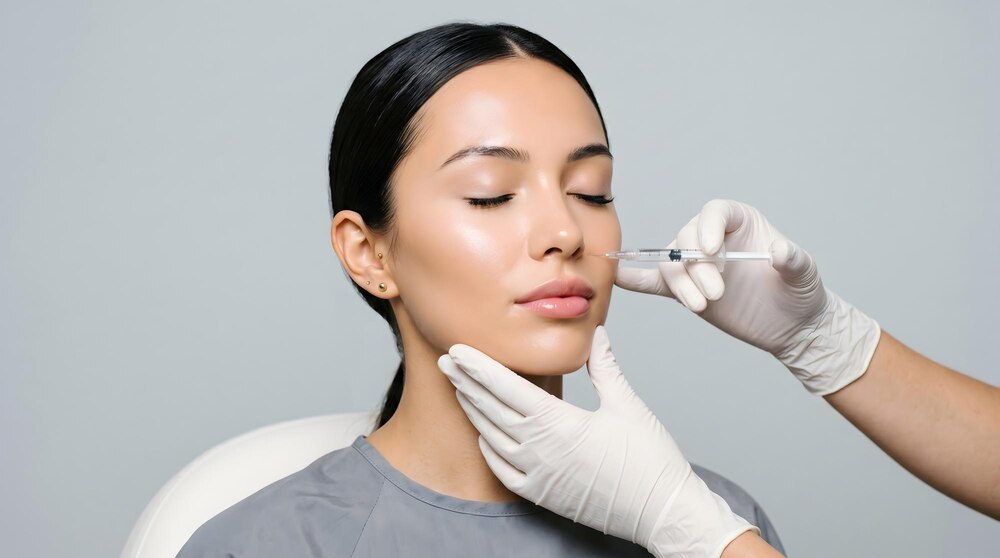
Juvederm XC dermal filler injections use hyaluronic acid with lidocaine for comfort and come in multiple formulations designed for different severity levels and treatment areas. Replacing lost hyaluronic acid restores volume, smooths the fold, and provides visible results immediately after treatment.
Are Collagen-Stimulating Injectables Like Sculptra or Ultracol Better Than Filler?
Collagen-stimulating injectables like Sculptra and Ultracol are not universally better than fillers, but they work differently. Biostimulators trigger your body to build its own collagen gradually over several months, creating a subtle, natural improvement. Hyaluronic acid fillers provide immediate volume. The ideal choice depends on your goals, timeline, and severity of volume loss.
Biostimulatory injectables are often favored for patients in their 30s and 40s who want gradual, long-lasting collagen rebuilding rather than instant correction. In 2026, social and professional channels continue to highlight these collagen-stimulating options as part of subtle, structure-focused treatment plans.
Is Botox Good for Nasolabial Folds?
Botox is not a primary treatment for nasolabial folds. Neuromodulators relax muscles to soften dynamic wrinkles, but static nasolabial folds are caused by volume loss and tissue descent rather than muscle activity. Botox has only a limited, supporting role around the mouth and is not effective for the folds themselves.
For nasolabial folds, fillers, biostimulators, resurfacing, or surgery address the actual causes far more effectively than neuromodulators.
Can Laser and Microneedling Treatments Improve Smile Lines?
Laser and microneedling treatments can improve smile lines by stimulating collagen and enhancing skin quality. These resurfacing procedures tighten and smooth the skin around the fold, supporting better overall texture. While they do not replace volume the way fillers do, they are valuable components of combination therapy for natural, balanced results.
Professional aesthetic practice increasingly emphasizes subtle, multimodal correction. Lasers and microneedling build collagen over time and complement injectables by improving the canvas, which helps results look more natural and last longer.
When Should You Consider Surgery Instead of Med Spa Treatments?
You should consider surgery when smile lines are deep and driven by midface descent rather than simple volume loss. When the cheeks and surrounding tissues sag, filling the fold alone often looks heavy or unnatural. In these cases, a cheek lift or facelift repositions tissue to address the underlying cause more effectively than injectables.
Signs that surgical correction may be appropriate include significant midface sagging, jowling, and folds that persist despite adequate filler. A practice offering both med spa and surgical services can guide patients along the full pathway and recommend the least invasive option that achieves lasting results.
Would a Cheek Lift or Facelift Help More Than Filling the Fold Directly?
A cheek lift or facelift can help more than filling the fold directly when smile lines result from sagging midface tissue. Lifting and repositioning the tissue treats the root cause, while filler only masks the crease. For advanced descent, surgery produces more natural, durable results than progressively adding more filler.
Deciding between the two comes down to anatomy. Younger patients with isolated volume loss often do well with injectables, while those with established tissue descent typically achieve better outcomes with surgical lifting. You can learn more about filler options for facial folds as part of a broader consultation.
How Should Smile Line Treatment Change With Age and Severity?
Smile line treatment should evolve with age and severity. In your 20s and 30s, prevention and skincare are the priority. In your 30s and 40s, biostimulators and resurfacing build collagen. For advanced folds with midface descent, combination therapy and surgical lifting deliver the most meaningful, lasting correction.
The table below outlines a general, stage-based approach used in aesthetic practice:
| Age and Severity | Primary Goal | Typical Treatments |
|---|---|---|
| 20s to 30s, mild lines | Prevention | Sunscreen, retinoids, hydration |
| 30s to 40s, moderate folds | Collagen building | Biostimulators, fillers, laser, microneedling |
| 40s to 60s, advanced descent | Structural correction | Combination therapy, cheek lift, facelift |
Can Combining Injectables, Laser, and Skincare Deliver Better Results?
Combining injectables, laser, and skincare often delivers better results than any single treatment. Layered therapy addresses smile lines from multiple angles: injectables restore volume, lasers and microneedling improve skin quality, and skincare maintains and protects the outcome. This multimodal approach produces more natural, balanced, and longer-lasting improvement.
Because smile lines involve volume, skin texture, and structure simultaneously, treating only one element rarely achieves a complete result. A coordinated plan tailored to your anatomy is the cornerstone of modern aesthetic care.
How Long Do Smile Line Fillers Last and How Often Do You Need Maintenance?
Smile line fillers typically last 6 to 18 months, depending on the product and the patient. Hyaluronic acid fillers generally last 9 to 18 months in the nasolabial folds, while collagen-stimulating injectables can produce results lasting up to two years as the body builds new collagen. Maintenance schedules vary by individual.
The table below shows approximate durability and maintenance ranges:
| Treatment Type | Approximate Duration | Typical Maintenance |
|---|---|---|
| Hyaluronic acid filler | 9 to 18 months | Once or twice per year |
| Biostimulatory injectable | Up to 2 years | Series, then annual touch-ups |
| Laser or microneedling | Varies by protocol | Periodic sessions |
Factors such as metabolism, treatment area, and product volume all influence how long results last for any given patient.
What Are the Risks and Side Effects of Smile Line Treatments?
The risks and side effects of smile line treatments range from common and mild to rare and serious. Most patients experience temporary swelling, bruising, redness, or tenderness. Less common issues include lumps, filler migration, and an over-filled or heavy appearance. Rare but serious complications include vascular occlusion, which requires immediate medical attention.
Common and less common risks include:
- Common: Swelling, bruising, redness, mild tenderness.
- Less common: Lumps, asymmetry, filler migration, heaviness from over-filling.
- Rare and serious: Vascular occlusion or infection requiring prompt treatment.
Choosing an experienced, qualified provider significantly reduces the likelihood of aesthetic and medical complications.
Why Do Smile Lines Sometimes Look Worse or Heavier After Filler?
Smile lines can look worse or heavier after filler when too much product is placed directly in the fold instead of restoring midface volume. Over-filling the crease adds weight that drags the area down and looks unnatural. Skilled assessment that addresses cheek volume, rather than only the fold, prevents this common pitfall.
This is one of the most frequent sources of patient dissatisfaction. A thoughtful injector evaluates the entire midface to lift and support the fold rather than simply packing the line.
Can Smile Line Fillers Be Dissolved if You Regret the Results?
Hyaluronic acid smile line fillers can be dissolved if you regret the results. An enzyme called hyaluronidase breaks down HA filler within hours to days, allowing adjustment or full reversal. Biostimulatory injectables and surgical procedures cannot be reversed the same way, which is why product choice matters for patients new to treatment.
The reversibility of HA fillers is a key safety advantage, particularly for first-time patients or those concerned about commitment to a permanent change.
How Much Does Smile Line Treatment Cost and Who Should Perform It?
Smile line treatment cost varies by treatment type, location, and provider experience. Hyaluronic acid fillers are commonly priced per syringe, and most patients need one or more syringes for the nasolabial folds. Beyond price, the qualifications of your provider matter most, since technique directly affects safety and natural-looking results.
Price shopping for the lowest cost per syringe can lead to poor outcomes or complications. Investing in a qualified, experienced injector typically delivers safer, more satisfying, and longer-lasting results.
Should a Plastic Surgeon, Dermatologist, or Nurse Injector Treat Your Smile Lines?
A board-certified plastic surgeon, dermatologist, or experienced nurse injector working under physician supervision can all safely treat smile lines. What matters most is training, injection experience, and a deep understanding of facial anatomy. A practice offering both surgical and med spa services provides the most complete pathway from injectables to surgery.
The advantage of a combined practice is continuity: if your folds eventually progress beyond what injectables can address, the same trusted team can guide you toward surgical options without starting over elsewhere.
How Do You Find Trusted Smile Line Treatment Near You?
To find trusted smile line treatment near you, evaluate a provider’s credentials, before-and-after galleries, and consultation approach. Look for board certification, demonstrated experience with nasolabial folds, and natural-looking results in their portfolio. A thorough consultation that assesses your full facial anatomy is the clearest sign of a quality provider.
During your consultation, ask how the provider decides between treating the fold and the midface, what products they recommend, and how they handle complications. Reviewing genuine before-and-after photos helps set realistic expectations and confirms the practice can deliver the outcomes you want.
Frequently Asked Questions About Smile Line Treatment
Below are concise answers to common questions about smile line treatment, covering early intervention, filler behavior, and the best options for deep folds.
Is It Worth Starting Fillers Early for Smile Lines?
Starting fillers early can be worthwhile for some patients but is not always necessary. For young adults with mild dynamic lines, prevention through skincare and sun protection is usually sufficient. Early filler makes more sense for those with noticeable static folds or significant volume loss, ideally guided by professional assessment to avoid over-treatment.
Do Smile Line Fillers Migrate?
Smile line fillers can migrate in rare cases, but proper technique and appropriate product selection greatly reduce this risk. Migration occurs when filler shifts from its intended placement, sometimes due to excessive volume or improper depth. An experienced injector minimizes this risk through careful placement and conservative dosing.
What Is the Best Treatment for Deep Smile Lines?
The best treatment for deep smile lines is often a combination approach or surgical correction. Deep folds driven by midface descent typically require lifting procedures such as a cheek lift or facelift, sometimes paired with injectables and resurfacing. A personalized evaluation determines the most effective plan for advanced folds.
What Is the Right Next Step for Treating Your Smile Lines?
The right next step for treating your smile lines is a personalized consultation that matches your anatomy, age, and goals to the appropriate point on the treatment pathway. From prevention and skincare to fillers, biostimulators, resurfacing, and surgical lifting, smile line treatment is most effective when tailored rather than one-size-fits-all.
Whether you are noticing early lines or considering more definitive correction, an expert assessment clarifies your best options. To explore your full range of med spa and surgical choices, schedule a consultation to build a treatment plan designed specifically for your face.
Frequently Asked Questions
Are smile lines the same as nasolabial folds?
Yes, smile lines and nasolabial folds are the same feature. They are the two creases that run from the sides of the nose down to the corners of the mouth. While ‘smile lines’ is the everyday term, ‘nasolabial folds’ is the clinical name physicians use. These folds deepen with repeated smiling, age-related volume loss, and changes in skin elasticity over time.
How long do smile line fillers last?
Smile line fillers typically last 6 to 18 months depending on the product and patient. Hyaluronic acid fillers generally last 9 to 18 months in the nasolabial folds, while collagen-stimulating injectables can produce results lasting up to two years as the body builds new collagen. Most patients need maintenance once or twice per year, though metabolism and product volume affect individual results.
Can smile lines be removed naturally without injectables?
Smile lines can be softened naturally through consistent skincare and sun protection, but deep folds cannot be fully removed without injectables. Daily SPF 30 or higher, retinol or tretinoin, hyaluronic acid, vitamin C, and niacinamide support collagen and hydration. These measures slow progression and smooth fine lines but cannot correct volume-related folds caused by midface descent.
Is Botox good for nasolabial folds?
Botox is not a primary treatment for nasolabial folds. Neuromodulators relax muscles to soften dynamic wrinkles, but static nasolabial folds are caused by volume loss and tissue descent rather than muscle activity. Botox has only a limited supporting role around the mouth. Fillers, biostimulators, resurfacing, or surgery address the actual causes of nasolabial folds far more effectively.
What is the best treatment for deep smile lines?
The best treatment for deep smile lines is often a combination approach or surgical correction. Deep folds driven by midface descent typically require lifting procedures such as a cheek lift or facelift, sometimes paired with injectables and resurfacing. Filler alone can look heavy or unnatural in advanced cases. A personalized evaluation determines the most effective plan for severe folds.
Can smile line fillers be dissolved if you regret the results?
Hyaluronic acid smile line fillers can be dissolved if you regret the results. An enzyme called hyaluronidase breaks down HA filler within hours to days, allowing adjustment or full reversal. Biostimulatory injectables and surgical procedures cannot be reversed the same way. This reversibility is a key safety advantage, especially for first-time patients concerned about commitment.
Why do smile lines sometimes look worse after filler?
Smile lines can look worse or heavier after filler when too much product is placed directly in the fold instead of restoring midface volume. Over-filling the crease adds weight that drags the area down and looks unnatural. Skilled assessment that addresses cheek volume, rather than only the fold, prevents this common source of patient dissatisfaction.
Are smile lines in your 20s and 30s normal?
Smile lines in your 20s and 30s are usually normal. Dynamic folds appear with movement because facial muscles crease the skin every time you smile, and these early lines are typically not a sign of damage. However, deep folds that remain visible at rest in younger adults can indicate accelerated aging from sun exposure, smoking, or significant volume loss.
