

Last updated: September 17, 2026
For years, Radiesse has been trusted by cosmetic practitioners for restoring volume and smoothing deeper lines. In September 2021, the FDA expanded its indication to include jawline contour improvement in adults over age 21, giving patients a non-surgical path to better lower facial definition. This regulatory milestone opens new possibilities for adults in Portland, Oregon and Vancouver, Washington seeking a sculpted, balanced profile without surgery.
What Is Radiesse and How Does It Work?
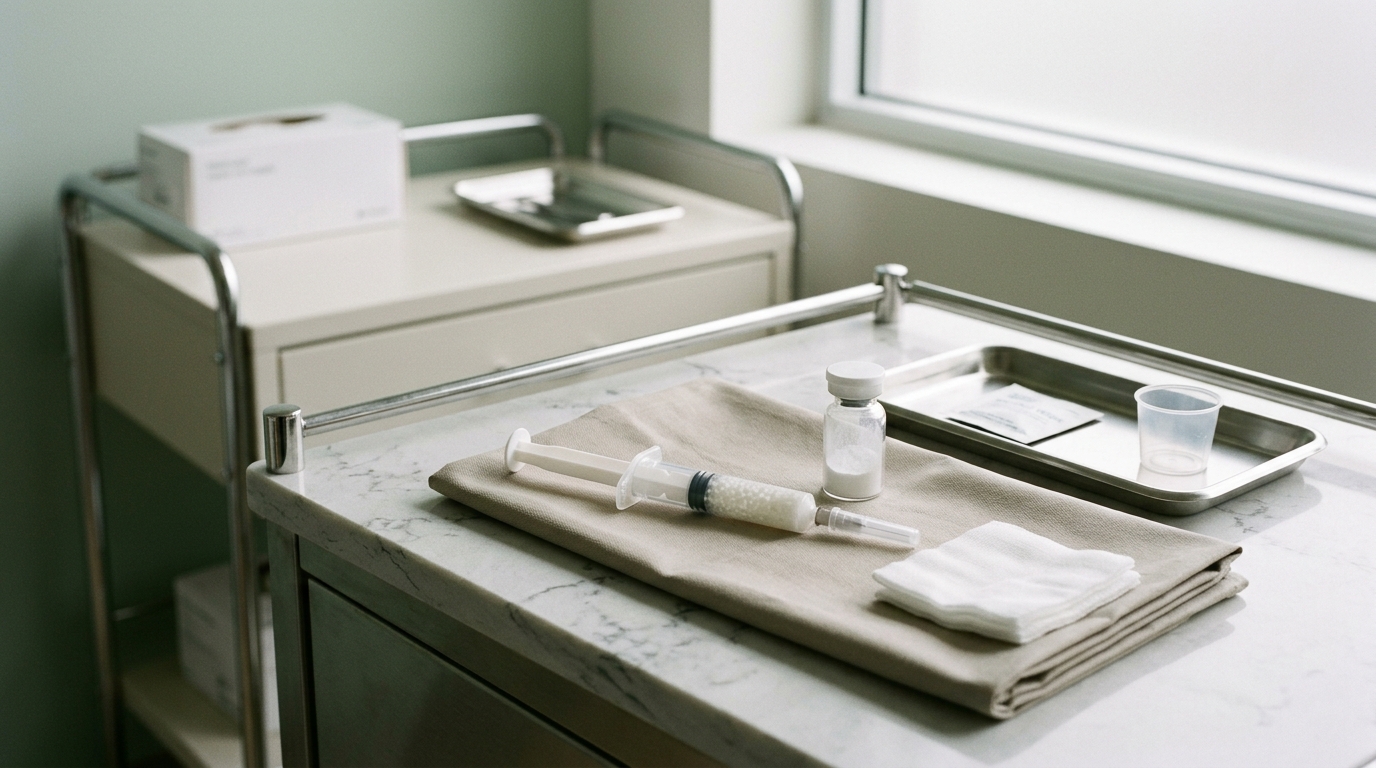
Radiesse is a collagen-stimulating dermal filler composed of calcium hydroxylapatite microspheres suspended in a water-based gel carrier. Merz Pharmaceuticals, the manufacturer, provides detailed product specifications for this FDA-cleared injectable.
What Is Calcium Hydroxylapatite and Why Is It Used in Fillers?
Calcium hydroxylapatite is a mineral compound naturally found in human bone and teeth. In Radiesse, these microspheres provide immediate volume while serving as a scaffold that encourages the body to produce its own collagen. This mechanism distinguishes Radiesse from hyaluronic acid fillers, which primarily add volume through their gel content alone.
How Does Radiesse Stimulate Natural Collagen Production?
Once injected, Radiesse triggers a biological response where fibroblasts become activated to generate new collagen fibers around the microspheres. Over time, the body gradually absorbs the gel carrier, but the newly formed collagen maintains the contouring effect. This collagen-stimulating quality makes Radiesse particularly valuable for deeper structural enhancements like jawline definition.
What Is the FDA Clearance for Radiesse Jawline Contouring?
The September FDA approval expanded Radiesse (+) Lidocaine’s indication for deep injection to improve moderate to severe loss of jawline contour in adults over age 21, providing a non-surgical option specifically cleared for this concern.
What Did the September FDA Approval Change?
Before this clearance, Radiesse was FDA-approved for correcting moderate to severe nasolabial folds and for correcting volume loss in the hands. The new indication specifically addresses jawline contour, allowing practitioners to treat loss of definition along the mandibular border with a device whose safety profile was already well established. Adults in Portland and Vancouver seeking to address early jowl formation or a softened jawline can now access a treatment with a clear regulatory pathway for this exact purpose.
How Is Radiesse (+) With Lidocaine Different From Earlier Formulations?
The addition of lidocaine to Radiesse significantly improves patient comfort during injection. Because jawline contouring requires deep placement of the filler, the built-in anesthetic reduces the discomfort associated with these injections. The original Radiesse received FDA approval for nasolabial folds in December 2006, while the lidocaine-containing formulation was approved in January 2015.
Why Does Jawline Definition Matter for Facial Balance?
A well-defined jawline creates a clear visual boundary between the face and neck, establishing the lower facial framework that contributes to overall facial harmony and perceived youth.
What Causes Loss of Jawline Definition Over Time?
Multiple factors contribute to diminishing jawline definition with age. Bone resorption in the mandible reduces underlying support, while descending soft tissues and volume loss in facial fat compartments create a less crisp contour. Weakening of the platysma muscle allows tissues to sag, forming jowls along the jawline. Environmental factors like sun exposure and lifestyle habits can accelerate these changes, making the once-sharp angle between face and neck appear softened.
How Does a Defined Jawline Affect Overall Facial Appearance?
A sculpted jawline conveys youth, strength, and vitality. It provides structural support that helps prevent the appearance of loose facial skin and early jowl formation. For adults concerned about these changes, Radiesse for jawline contour offers a non-surgical approach to restoring lower facial definition. The treatment can be combined with other procedures like cheek and chin augmentation for a comprehensive approach to facial balancing.
Am I a Good Candidate for Radiesse Jawline Treatment?
Adults seeking to improve moderate to severe loss of jawline contour without surgery are potential candidates for Radiesse jawline treatment, though a consultation with a qualified provider is necessary to determine individual suitability.
Who Should Consider Radiesse for Jawline Contouring?
Ideal candidates are adults in good overall health who want to enhance jawline definition, address early jowl formation, or restore volume lost along the mandibular border. Those with realistic expectations about outcomes and a desire for a non-surgical approach fit well with this treatment. Patients interested in a defined profile without the recovery time of surgical procedures may find Radiesse aligns with their goals.
What Should I Discuss During My Consultation?
A thorough consultation should cover aesthetic goals, medical history including allergies and medications, and any previous facial treatments. Patients should discuss whether Radiesse or alternatives like Juvederm Voluma XC, which is reversible, better match their needs. Before and after photographs help establish realistic expectations for jawline contour improvement.
What Can I Expect During and After a Radiesse Jawline Procedure?
Radiesse jawline treatment is an office-based procedure that typically takes 30 to 60 minutes depending on the treatment area, with minimal downtime and results that appear gradually as collagen builds.
How Long Does a Radiesse Jawline Treatment Take?
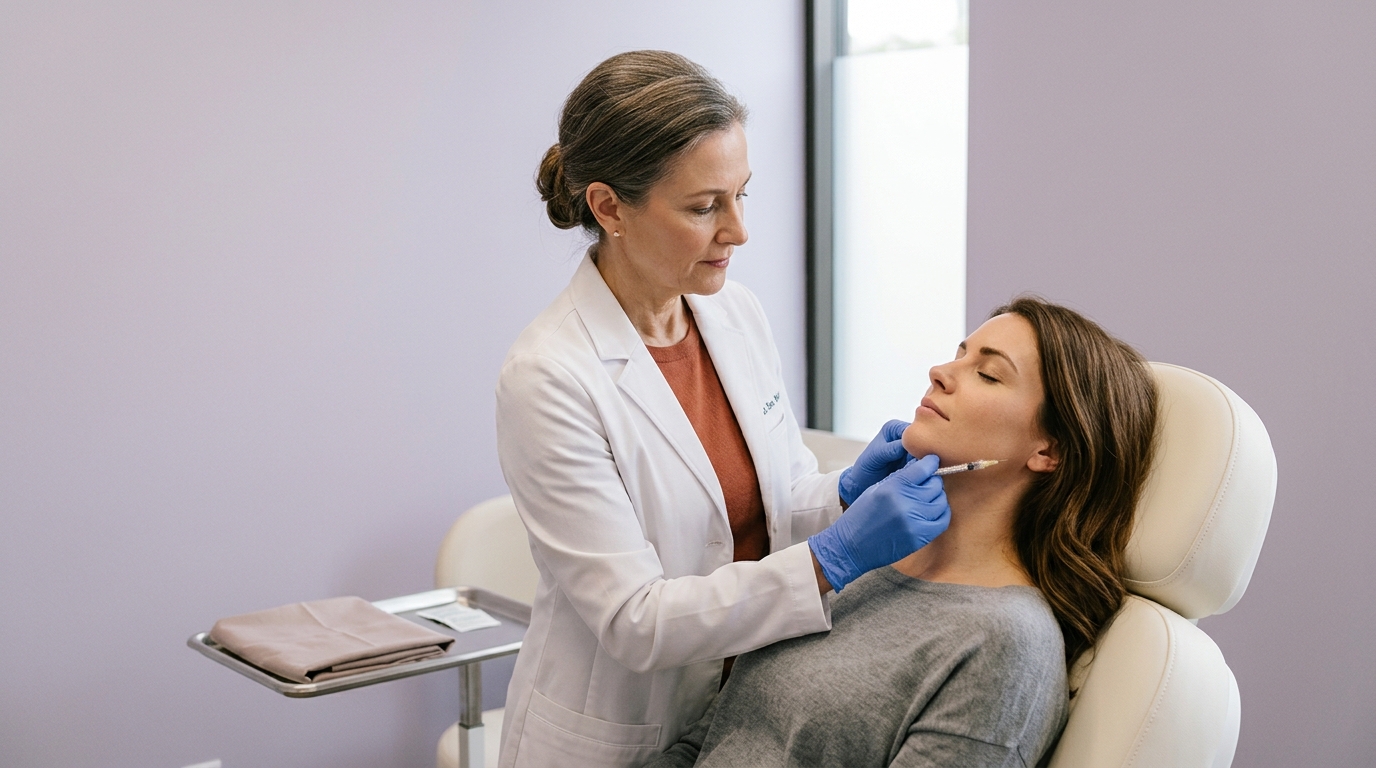
The procedure begins with cleansing and marking the jawline area. Radiesse (+) is then injected deep into the subcutaneous or supraperiosteal layer along the jawline using precise techniques to create a smooth, defined contour. The lidocaine in the formulation helps manage discomfort during injection. Most patients return to normal activities immediately, though temporary redness, swelling, or bruising at injection sites may occur.
Results are visible immediately, with continued improvement as the collagen-stimulating effects develop over the following weeks and months. Treatment duration varies by individual, and follow-up appointments allow for monitoring and planning additional sessions if desired. Adults in the Portland and Vancouver area interested in jawline enhancement can explore Radiesse dermal filler options during a consultation.
Risks, Side Effects and Who Is Not a Candidate
Radiesse (+) carries risks common to injectable treatments, including bruising, swelling, tenderness, redness, and itching at injection sites. More uncommon but serious risks include infection, nodule formation, and vascular complications that could affect vision. Patients should seek immediate medical attention if visual disturbances occur after treatment. The device is contraindicated in patients with severe allergies to any component, those with active inflammation or infection in the treatment area, and individuals who are pregnant or breastfeeding. Patients with known hypersensitivity to lidocaine or amide-type anesthetics should not receive this treatment. Those with bleeding disorders or who are taking anticoagulants should discuss their situation with a qualified provider, as these conditions may affect treatment suitability. A thorough consultation helps confirm whether Radiesse is appropriate for each individual’s health history and aesthetic goals.
If you are considering Radiesse for jawline contour improvement, schedule a consultation at NW Laser to discuss your options with our team. We serve patients in Portland, Oregon, Vancouver, Washington, and surrounding communities including Maywood Park and Camas, Washington.
Frequently Asked Questions
What is Radiesse and how does it work for jawline contouring?
Radiesse is a collagen-stimulating dermal filler composed of calcium hydroxylapatite microspheres suspended in a water-based gel carrier. It provides immediate volume while encouraging the body to produce its own collagen, making it particularly valuable for deeper structural enhancements like jawline definition. The microspheres act as a scaffold that triggers fibroblast activation to generate new collagen fibers over time.
When did the FDA clear Radiesse for jawline contouring?
The FDA expanded Radiesse’s indication to include jawline contour improvement in September 2021. This clearance specifically addresses moderate to severe loss of jawline contour in adults over age 21, providing a non-surgical option with a clear regulatory pathway for this purpose. Prior to this, Radiesse was FDA-approved for nasolabial folds and hand volume loss.
Who is a good candidate for Radiesse jawline treatment?
Ideal candidates are adults in good overall health who want to enhance jawline definition, address early jowl formation, or restore volume lost along the mandibular border. Those with realistic expectations and a desire for a non-surgical approach fit well with this treatment. A consultation with a qualified provider is necessary to determine individual suitability based on medical history and aesthetic goals.
How long does a Radiesse jawline treatment take?
Radiesse jawline treatment is an office-based procedure that typically takes 30 to 60 minutes depending on the treatment area. The procedure involves cleansing and marking the jawline area, then injecting Radiesse (+) deep into the subcutaneous or supraperiosteal layer using precise techniques. Most patients return to normal activities immediately after treatment.
What causes loss of jawline definition over time?
Multiple factors contribute to diminishing jawline definition with age. Bone resorption in the mandible reduces underlying support, while descending soft tissues and volume loss in facial fat compartments create a less crisp contour. Weakening of the platysma muscle allows tissues to sag, forming jowls along the jawline. Environmental factors like sun exposure and lifestyle habits can accelerate these changes.
What are the contraindications for Radiesse jawline treatment?
Radiesse is contraindicated in patients with severe allergies to any component, those with active inflammation or infection in the treatment area, and individuals who are pregnant or breastfeeding. Patients with known hypersensitivity to lidocaine or amide-type anesthetics should not receive this treatment. Those with bleeding disorders or taking anticoagulants should discuss their situation with a qualified provider.
What results can I expect from Radiesse jawline treatment?
Results from Radiesse jawline treatment are visible immediately, with continued improvement as the collagen-stimulating effects develop over the following weeks and months. A well-defined jawline creates a clear visual boundary between the face and neck, establishing the lower facial framework that contributes to overall facial harmony. Follow-up appointments allow for monitoring and planning additional sessions if desired.
This article is general information and is not medical advice. Talk to a licensed clinician about your own situation before making a treatment decision.
