

Last updated: October 13, 2026
Dermal fillers for a weak chin can add soft-tissue volume and make a small or receding chin appear more projected, but they do not move the underlying bone. At NW Laser in Vancouver, Washington, our cheek augmentation and chin lift plans may include laser chin sculpting, fat grafting, or dermal filler injections, depending on the contour concern.
Can dermal fillers improve a weak or receding chin?
Yes, dermal fillers can improve the appearance of a weak or receding chin by adding volume where the chin needs modest projection or contour refinement. A pronounced skeletal recession needs a broader assessment because adding volume alone may not achieve the desired facial balance.
For someone seeking chin augmentation without implants, the distinction is whether the concern is primarily a small-looking chin, loose tissue, fullness beneath the chin, or a combination. That assessment guides whether an injection, our laser approach, fat grafting, or a combined plan makes sense.
What does research say about hyaluronic acid chin fillers?
Research supports hyaluronic acid chin filler as an option for improving chin appearance, while leaving room for individual variation and uncommon complications. A 2023 Cureus systematic review of patient-reported outcomes found increased satisfaction after treatment for chin enhancement or retrusion. The review called for larger randomized trials to better understand the benefits and risks of chin filler.
The published evidence includes both a broad review and a controlled study of a particular hyaluronic acid filler. The figures below describe those research populations, not expected results for every patient.
| Source | Evidence | Finding |
|---|---|---|
| Cureus systematic review | 24 articles covering 2,738 patients; 2,259 received hyaluronic acid chin injections | Patient satisfaction increased, although the reviewed studies also reported unwanted effects, including a serious tissue complication. |
| Dermatologic Surgery randomized study of VYC-20L | 192 participants received the study filler | At month 6, 56.3% of the initial-treatment group met the study’s chin-retrusion improvement measure, compared with 27.5% of the delayed-treatment group. Benefit remained evident at month 12. |
Who might benefit from chin filler rather than a different approach?
Chin filler may suit someone seeking modest added projection or refinement of mild asymmetry without implant surgery. Sagging jowls, shifted fat, and fullness beneath the chin involve tissue concerns that added chin volume cannot remove. Substantial skeletal retrusion may also need an assessment beyond soft-tissue augmentation to determine what change is achievable.
A receding chin and a weak jawline can look similar in a mirror but call for different plans. In clinical practice, examining the chin from the side and front helps distinguish inadequate projection from loose tissue along the jaw or neck.
Can dermal fillers be used to correct a cleft chin?
Filler can temporarily soften a cleft chin, but how much correction is possible depends on its depth and anatomy. The American Society of Plastic Surgeons’ cleft-chin guidance says fillers injected into a chin cleft tend to last six to 12 months.
How does NW Laser approach cheek and chin augmentation?
NW Laser approaches cheek and chin augmentation by matching the treatment to the contour concern rather than defaulting to an implant. Our chin laser sculpting reshapes natural fat and tightens soft tissue; fat grafting or dermal filler injections may refine the chin contour. For cheeks, we offer fillers and fat grafts to add or restore volume.
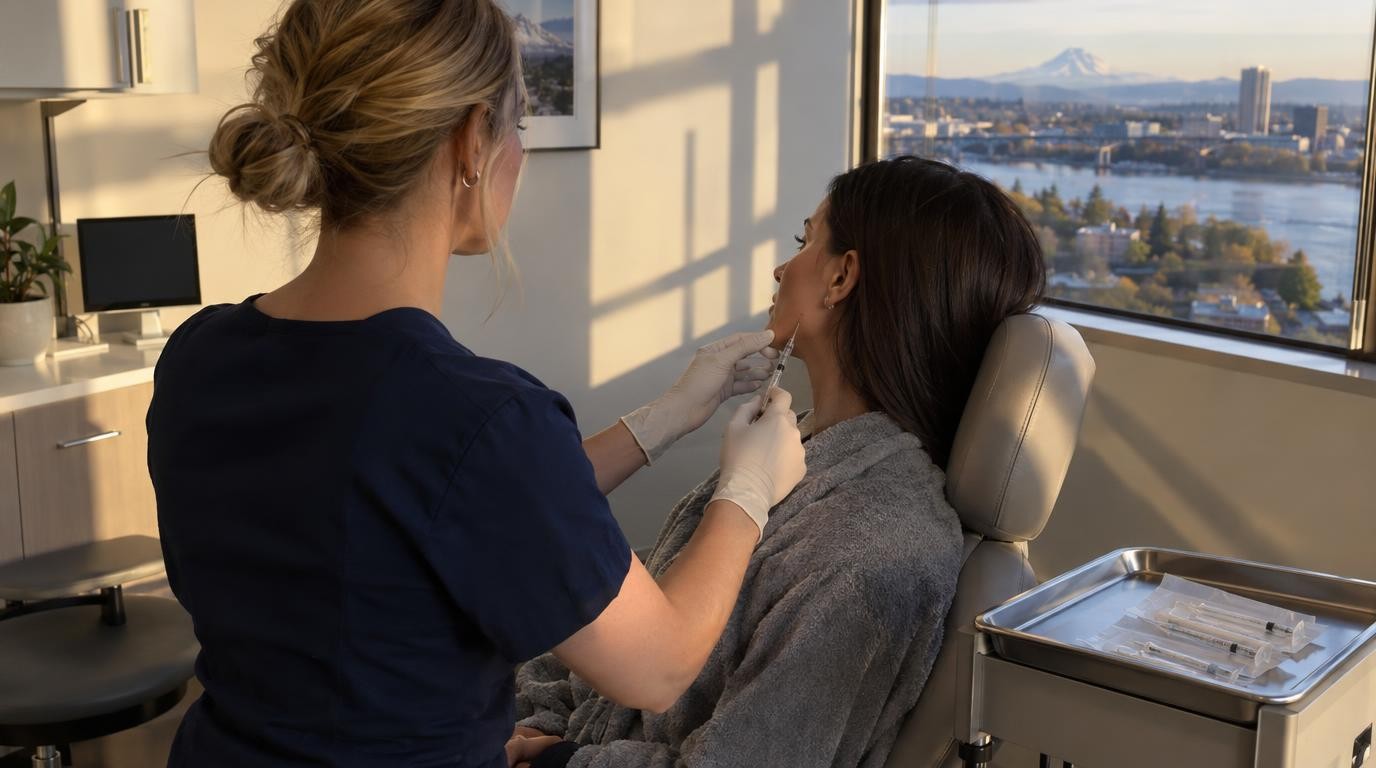
These options serve different purposes. Laser treatment addresses existing fat and tissue laxity, while injections or transferred fat add volume.
Can cheek enhancement be part of the same treatment plan?
Yes. Flat or hollow cheeks and a small chin can be assessed together when the goal is facial balance. The American Society of Plastic Surgeons’ cheek augmentation guidance distinguishes injectable fillers from fat grafting as ways to add cheek volume. At NW Laser, we can consider cheek fillers or fat grafting alongside a chin plan when both areas affect the contour you want to change.
What happens during treatment and recovery?
Filler injections add soft-tissue volume; fat grafting collects and transfers your own fat; and laser sculpting reshapes existing fat and tightens soft tissue. Recovery depends on which approach we use:
- We assess chin projection, cheek volume, skin laxity, and fullness beneath the chin.
- Depending on the plan, we inject filler where added volume is needed, transfer fat harvested through liposuction, or pass the laser tip through small skin openings that generally heal without sutures.
- We give recovery instructions for each treated area, including a fat-grafting donor site when applicable. After chin filler, minor swelling or bruising may ease within a few days, although your recovery can vary; Cleveland Clinic’s jawline-filler guidance gives that estimate for a related injection.

How long can swelling or bruising last after laser chin sculpting?
At NW Laser, minor swelling and bruising after laser chin reshaping may last seven to 14 days. That is our laser-recovery guidance, not a universal timeline for chin filler or fat grafting. The extent of treatment and any combined procedures affect what recovery instructions a patient receives.
How long do chin fillers last?
Chin fillers are temporary, and their duration depends on the material, placement, and individual factors. The American Academy of Facial Plastic and Reconstructive Surgery’s chin guidance says most fillers last six to 18 months, with some types lasting longer. That range is general guidance, not a promised lifespan for a particular injection.
The U.S. Food and Drug Administration’s dermal filler guidance likewise explains that duration depends on the filler material and injection area. Fat-graft retention and laser tissue-tightening results follow different processes, so filler longevity should not be applied to either. Our cheek and chin augmentation longevity guide provides further context on how long results from different approaches may last.
Will chin fillers help with jawline definition?
Added chin projection can improve the apparent transition from chin to jawline, but chin filler alone does not remove a double chin or tighten sagging jowls. When a weak jawline is largely due to submental fullness or loose tissue, treating only the chin may leave the main concern unchanged. The best approach depends on what is creating the contour.
NW Laser offers laser treatment for fullness beneath the chin and uses chin laser sculpting to address natural fat and skin laxity. Filler used specifically along the jawline is a separate consideration from adding projection at the chin.
What are the downsides of chin fillers, and who should avoid them?
Chin fillers have temporary results and can cause swelling, bruising, asymmetry, or an unsatisfactory contour. An uncommon but serious risk is unintended injection into a blood vessel. An injector should assess medical history, the intended injection site, facial anatomy, and expectations before deciding whether filler is appropriate.
The FDA warns that blocked blood vessels can cause tissue death, vision abnormalities including blindness, or stroke. Seek urgent medical attention after an injection for severe pain, unusual skin discoloration, or vision changes. An active infection at the planned injection site is a reason to defer injection and have the area assessed. You should not receive a filler containing a material you know you are allergic to; suitability depends on the specific product and your medical history.
The Dermatologic Surgery study reported the following injection-site responses among its VYC-20L recipients. These study figures concern that product and population, not every chin filler:
| Source | Reported response | Frequency |
|---|---|---|
| Dermatologic Surgery randomized study | Tenderness | 81.1% |
| Dermatologic Surgery randomized study | Firmness | 75.1% |
In the same Dermatologic Surgery randomized study, one participant (0.5%) discontinued because of two treatment-related serious adverse events—facial cellulitis and injection-site inflammation—that resolved without lasting effects. These findings should be considered alongside the review’s report of a serious tissue complication, rather than taken as a blanket safety guarantee. In its cheek-filler guidance, Cleveland Clinic notes that filler can move and leave an uneven or lumpy result. If you notice a change like that after chin filler, have your injector assess it; dissolving the filler may be possible, depending on the product. Discuss your own risks and whether injection is appropriate with your licensed clinician. Our guide to filler migration and warning signs offers further detail.
How do fillers compare with fat grafting, laser sculpting, and implants?
Filler and grafted fat add volume, our laser sculpting reshapes existing fat and tightens soft tissue, and a surgically placed chin implant adds structural projection: Our guide to chin augmentation before and after explains how the possible changes differ among these options.
| Approach | What it addresses | Key consideration |
|---|---|---|
| Dermal filler | Chin volume and apparent projection | The added volume is temporary and does not move bone. |
| Fat grafting | Volume and contour using the patient’s fat | Retained grafted fat may provide longer-lasting volume than temporary filler, but some transferred fat may not survive. Harvesting fat by liposuction also creates a donor site. |
| Laser sculpting | Existing fat and soft-tissue laxity | Laser treatment does not add the same kind of volume as filler. |
| Chin implant | Structural projection using an implant over bone | Implant placement is surgery and is included here for comparison, not as an NW Laser service. |
An article on the American Society of Plastic Surgeons website also separates treatments that add projection from those that reduce excess fat or skin.
What should you ask at a cheek and chin consultation?
Ask which feature is driving the concern: chin projection, jawline laxity, fullness beneath the chin, cheek volume, or several of these together. Then ask what each proposed treatment would change, which filler product would be used if injection is recommended, and what recovery, follow-up, and individual risks to expect. Clear answers make treatment choices easier to compare.
- Is the apparent recessed chin mainly a volume concern, or does the underlying bone position limit what soft-tissue treatment can accomplish?
- Would filler, fat grafting, laser sculpting, or a combination address the specific contour I want to change?
- If filler is proposed, what product and placement are planned, and how will the result be assessed?
- What healing should I expect from each treated area, including a fat-grafting donor site if applicable?
Frequently Asked Questions
Are chin fillers FDA-approved?
Yes. The FDA has approved certain dermal fillers for specific uses in the chin in adults aged 22 or older; approval depends on the product and its intended use. That does not mean every filler is approved for the chin or appropriate for every patient.
What type of filler is used for chin augmentation?
Hyaluronic acid is commonly used to augment the chin, according to Cleveland Clinic. Fillers vary in composition, firmness, and longevity, so there is no single best product for everyone.
Can hyaluronic acid chin filler be reversed?
Yes. Hyaluronic acid filler can generally be dissolved with hyaluronidase. Other filler types cannot necessarily be reversed this way.
When will I see results from chin filler?
Many injectable fillers produce a visible change immediately, although swelling can affect how the chin initially looks. Cleveland Clinic notes that fillers that stimulate collagen or fat production can take weeks to months to show their final results.
Will I need time off work after chin filler?
Most patients do not need to plan time off from ordinary work after chin filler. Visible swelling or bruising and physically demanding duties may affect when you feel ready to return; ask your injector for guidance based on your job.
How long does a chin filler injection take?
The injections themselves usually take only a few minutes, according to an article on the American Society of Plastic Surgeons website. The full visit can take longer because assessment, treatment planning, and aftercare are separate from injection time.
Can I try chin filler before deciding on a chin implant?
Yes, temporary chin filler can help you preview added projection before considering a more lasting change. The American Academy of Facial Plastic and Reconstructive Surgery notes that filler results are usually less dramatic than surgical results. An implant is placed over the chin bone to increase structural projection, while filler adds soft-tissue volume.
What is the next step for a weak or receding chin?
The next step is a personalized assessment of the chin, jawline, neck, and cheeks rather than choosing a procedure from a profile photo alone. Filler may provide modest temporary projection, while loose tissue, excess fat, or pronounced skeletal recession may call for a different plan. Contact NW Laser in Vancouver, Washington, to arrange a consultation and discuss which options fit your goals and anatomy.
This information is general and is not medical advice. Talk to a licensed clinician about your own situation before making a treatment decision.
