

Last updated: January 26, 2026
Non-invasive body sculpting has evolved dramatically, with 2026 bringing multimodal platforms, AI-driven customization, and innovative biostimulators that deliver results without surgery. Whether you’re targeting stubborn fat pockets or seeking skin tightening, understanding your options helps you make informed decisions about achieving your aesthetic goals.
What Is Non-Invasive Body Sculpting and How Does It Work?
Non-invasive body sculpting refers to FDA-cleared treatments that reduce fat and tighten skin without surgical incisions, anesthesia, or significant recovery time. These procedures use targeted energy – including radiofrequency, laser, ultrasound, or electromagnetic technology – to destroy fat cells or stimulate collagen production. The body naturally eliminates treated fat cells over weeks to months, creating gradual, natural-looking improvements.
Unlike surgical liposuction, which physically removes fat through cannulas, non-invasive treatments work through the skin to selectively target fat cells while leaving surrounding tissues unharmed. This approach appeals to patients seeking modest improvements without the risks, costs, and downtime associated with surgery. The body sculpting market reflects this demand, with the global industry valued at USD 8.92 billion in 2025 and projected to reach USD 12.98 billion by 2032, driven largely by non-invasive procedure growth.
What Is the Difference Between Body Sculpting and Weight Loss?
Body sculpting targets specific areas of stubborn fat that resist diet and exercise – it is not a weight loss solution. Ideal candidates are typically within 10-15 pounds of their goal weight but struggle with localized fat deposits on the abdomen, flanks, thighs, or arms. These treatments reduce fat cell volume in targeted zones rather than producing overall weight reduction.
Setting realistic expectations matters significantly for satisfaction. A body contouring treatment might eliminate 20-25% of fat cells in a treated area, creating visible improvement in contour without substantial change on the scale. Patients who approach these treatments as refinement tools rather than weight loss shortcuts consistently report higher satisfaction with their results.
Who Is an Ideal Candidate for Non-Invasive Body Contouring?
The best candidates for non-invasive body sculpting maintain a stable weight near their goal, have good skin elasticity, and want to address specific problem areas. Healthy adults without underlying conditions affecting healing or metabolism typically see optimal results. During consultation, providers assess skin quality, fat distribution, and overall health to recommend appropriate technologies.
Certain conditions may preclude treatment, including pregnancy, active infections in treatment areas, implanted electronic devices for some modalities, and specific autoimmune disorders. A thorough medical history review ensures safety and helps determine which technology best addresses your concerns.
What Are the Latest Body Sculpting Technologies Available in 2026?
Body sculpting technologies in 2026 include radiofrequency devices, laser-based systems, focused ultrasound, electromagnetic muscle stimulation, and innovative multimodal platforms combining multiple energy types. These options allow providers to customize treatment plans based on individual anatomy, fat distribution, skin quality, and aesthetic goals, delivering more precise results than ever before.
The trend toward combination approaches reflects growing understanding that optimal body contouring often requires addressing both fat reduction and skin tightening simultaneously. Advanced med spas now offer comprehensive treatment protocols that may incorporate several technologies across a treatment series.
How Do Radiofrequency Body Treatments Tighten Skin and Reduce Fat?
Radiofrequency treatments deliver controlled thermal energy deep into tissue, heating fat cells to trigger apoptosis while stimulating collagen and elastin production for skin tightening. The dual action makes RF technology particularly valuable for patients concerned about both fat reduction and skin laxity. Treatment feels like a warm massage, with most sessions lasting 30-60 minutes depending on the area.
RF microneedling represents a significant 2026 advancement, combining traditional radiofrequency benefits with micro-injuries that amplify the collagen remodeling response. This technology penetrates deeper than surface RF devices, offering enhanced skin tightening particularly beneficial for areas with moderate laxity.
What Results Can You Expect from Laser-Based Body Contouring?
Laser body contouring uses specific wavelengths to penetrate skin and rupture fat cell membranes, releasing their contents for natural elimination through the lymphatic system. Results typically become visible 6-12 weeks after treatment as the body processes disrupted fat cells. Most patients achieve noticeable improvement after 2-4 sessions spaced several weeks apart.
Common treatment areas include the abdomen, flanks, thighs, upper arms, and submental region. Laser technology offers precise targeting, making it effective for smaller, defined areas where contouring refinement matters. Clinical studies demonstrate fat layer reduction of 2-4 centimeters in treated areas, though individual results vary based on starting point and treatment protocol.
How Does Ultrasound Body Sculpting Compare to Other Methods?
Focused ultrasound body sculpting delivers acoustic energy to specific tissue depths, creating thermal destruction of fat cells while bypassing the skin surface entirely. This technology penetrates deeper than radiofrequency, making it effective for patients with thicker fat deposits. Treatment precision allows providers to target specific fat layers while protecting surrounding structures.
Compared to RF and laser options, ultrasound typically treats deeper fat layers and may produce more dramatic single-session results in appropriate candidates. However, RF technologies often provide superior skin tightening benefits. Many providers recommend combining modalities – using ultrasound for deeper fat reduction and RF for skin quality improvement.
What Are Multimodal Platforms and Why Are They Trending?
Multimodal platforms combine multiple energy types – typically laser, radiofrequency, and ultrasound – within a single device, allowing providers to address fat reduction and skin tightening in customized treatment sessions. These systems represent a significant 2026 trend in aesthetic technology, enabling more comprehensive results with minimal downtime through strategic energy combination.
The advantage lies in customization. Rather than limiting treatment to one mechanism, providers can select optimal energy combinations based on individual anatomy and goals. A patient with stubborn abdominal fat and mild skin laxity might receive ultrasound for fat destruction followed by RF for collagen stimulation – all within one appointment. This efficiency appeals to patients seeking maximum results with minimal visits.
What Is Radiesse for Body Contouring and Is It Right for You?
Radiesse is a regenerative biostimulator containing calcium hydroxylapatite microspheres that stimulate natural collagen and elastin production for skin tissue regeneration. In June 2025, Merz Aesthetics received Health Canada approval for Radiesse to treat moderate wrinkles in the décolleté area, expanding body contouring options beyond traditional fat reduction to include skin quality improvement.
Unlike treatments that primarily target fat cells, Radiesse addresses skin texture, firmness, and elasticity through biological regeneration. This makes it valuable for patients whose primary concern is skin quality rather than fat volume – or as a complement to fat reduction treatments for comprehensive body contouring.
How Does Radiesse Work as a Biostimulator for Skin Regeneration?
Radiesse’s calcium hydroxylapatite microspheres create a scaffold within the skin that stimulates fibroblasts to produce new collagen and elastin. Unlike traditional fillers that simply add volume, biostimulators trigger the body’s natural regenerative processes. Results develop gradually over 2-3 months as new structural proteins form, with improvements lasting 12-18 months or longer.
The regenerative mechanism differs fundamentally from energy-based devices. While RF and ultrasound create controlled thermal damage to stimulate healing responses, Radiesse provides physical scaffolding that guides tissue regeneration. This complementary approach allows combination with other modalities for comprehensive body contouring.
Which Body Areas Can Be Treated with Radiesse?
The Health Canada approval specifically covers the décolleté – the chest area between the neck and breasts where sun damage and aging often create crepey, wrinkled skin. This approval represents significant expansion of body treatment options, as the décolleté has traditionally been challenging to address with energy-based devices alone due to thinner skin and prominent bone structure.
Providers may discuss potential off-label applications based on clinical experience, including treatment of aging hands, inner arms, and above-knee skin laxity. Combination protocols incorporating Radiesse with RF or ultrasound treatments offer comprehensive approaches for patients seeking both skin quality improvement and fat reduction.
How Is AI Changing Body Sculpting Treatments in 2026?
Artificial intelligence is transforming body sculpting through personalized treatment planning, real-time parameter adjustment, and predictive outcome modeling. AI-driven systems analyze body composition, skin quality, and individual response patterns to optimize treatment protocols beyond what standardized approaches achieve. This customization represents a fundamental shift toward precision aesthetics.
Modern AI-integrated devices can assess tissue characteristics during treatment, automatically adjusting energy delivery for optimal results while maintaining safety parameters. This real-time responsiveness addresses the variability between patients that previously required extensive provider experience to manage effectively.
What Does AI-Driven Customization Mean for Your Treatment Plan?
AI customization means your treatment protocol adapts to your unique physiology rather than following generic guidelines. Systems analyze factors including fat distribution patterns, skin thickness, hydration levels, and tissue density to create individualized energy delivery maps. During treatment, sensors monitor tissue response and adjust parameters automatically.
For patients, this translates to more consistent outcomes across different body types and treatment areas. AI systems can also track results across sessions, refining protocols based on observed responses. This iterative optimization often reduces total treatment sessions needed while improving final results.
What Should You Expect During and After Body Sculpting Treatment?
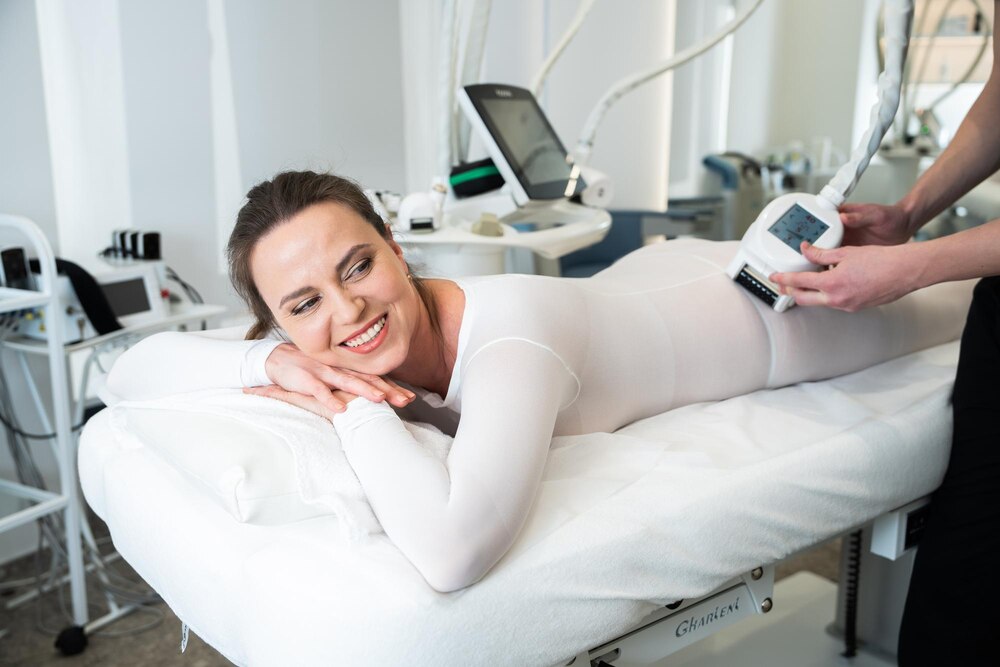
Non-invasive body sculpting treatments typically involve lying comfortably while a provider applies a device to targeted areas, with sessions lasting 25-60 minutes depending on technology and treatment zones. Most patients describe sensations ranging from warming to cooling to mild muscle contractions, depending on the modality used. No anesthesia is required, and most people return to normal activities immediately.
Post-treatment effects vary by technology. RF treatments may cause temporary warmth and mild redness. Cryolipolysis can produce temporary numbness and sensitivity. Electromagnetic muscle stimulation like Emsculpt creates muscle soreness similar to an intense workout. These effects typically resolve within hours to days.
How Many Sessions Are Typically Needed for Visible Results?
Most non-invasive body sculpting technologies require 2-6 sessions spaced 1-4 weeks apart for optimal results. Treatment frequency depends on the technology, treatment area, and individual goals. Emsculpt protocols typically involve four sessions over two weeks, delivering approximately 15% fat reduction and 19% muscle mass increase in the treated area.
The following table compares typical session requirements by technology:
| Technology Type | Typical Sessions | Session Interval |
|---|---|---|
| Radiofrequency | 4-6 sessions | 1-2 weeks |
| Laser Fat Reduction | 2-4 sessions | 4-6 weeks |
| Focused Ultrasound | 1-2 sessions | 8-12 weeks |
| Electromagnetic (HIFEM) | 4 sessions | 2-3 days |
| Cryolipolysis | 1-3 sessions | 4-8 weeks |
What Is the Downtime for Non-Invasive Body Contouring?
Non-invasive body contouring requires minimal to no downtime, with most patients returning to work and normal activities immediately after treatment. This contrasts dramatically with surgical liposuction, which typically requires 1-2 weeks of restricted activity and several weeks before resuming exercise. The convenience factor drives much of the growing demand for non-surgical options.
Temporary side effects may include redness, swelling, tenderness, or bruising at treatment sites, typically resolving within hours to days. Some technologies produce temporary numbness or altered sensation that resolves over 1-2 weeks. These minor effects rarely interfere with daily activities or require activity modification.
When Will You See Results and How Long Do They Last?
Results from non-invasive body sculpting develop gradually over 6-12 weeks as the body eliminates destroyed fat cells through natural metabolic processes. Final results typically appear 2-3 months after completing a treatment series. The timeline reflects biological processes – fat cells rupture during treatment, release their contents, and are cleared by the lymphatic system over subsequent weeks.
Fat cells eliminated through body contouring treatments are permanently destroyed and cannot regenerate. However, remaining fat cells can expand with weight gain, potentially diminishing results. Maintaining stable weight through healthy lifestyle habits preserves treatment outcomes long-term. Skin tightening results from collagen stimulation also require maintenance, as natural aging continues over time.
Why Should You Choose a Med Spa with Plastic Surgery Expertise?
Selecting a med spa with plastic surgery oversight ensures treatments are performed under medical direction with comprehensive understanding of anatomy, safety protocols, and realistic outcome expectations. Board-certified plastic surgeons bring surgical training that enhances non-surgical treatment planning, particularly for patients who may benefit from combined approaches or who need surgical intervention for optimal results.
Medical oversight matters for safety and outcomes. Practices with surgical backgrounds maintain higher emergency preparedness standards, conduct thorough medical screenings, and recognize when non-invasive treatments may not adequately address a patient’s concerns. This expertise protects patients from pursuing treatments unlikely to meet their goals while ensuring appropriate candidates receive optimal care.
What Questions Should You Ask During a Body Sculpting Consultation?
A thorough consultation helps you evaluate provider qualifications and treatment appropriateness. Key questions include: What certifications and training do providers hold? How many procedures of this type has the practice performed? What technology do you recommend for my concerns and why? What results can I realistically expect? What are potential risks and how are they managed?
Additional important questions address practical considerations: How many sessions will I need and what is the total cost? What does pre-treatment and post-treatment care involve? Can I see before-and-after photos of actual patients? How do you handle complications if they occur? Reputable providers welcome these questions and provide clear, honest answers.
Why Is Winter the Best Time to Start Body Sculpting Treatments?
Winter provides ideal timing for body sculpting because results develop over 2-3 months, allowing improvements to fully appear before spring and summer when patients want to reveal more skin. Starting treatment in January or February means optimal results are visible by May or June. Additionally, winter clothing easily conceals any temporary post-treatment effects like redness or mild swelling.
The multi-session nature of most body contouring treatments makes planning ahead essential. Completing a 4-6 session series with appropriate intervals requires 2-4 months before final results emerge. Patients who begin now position themselves to enjoy full treatment benefits when warmer weather arrives.
Frequently Asked Questions About Body Sculpting
Is Non-Invasive Body Sculpting Safe?
Non-invasive body sculpting technologies used at qualified medical practices have strong safety profiles, with FDA clearance requiring demonstrated safety and efficacy data. Serious complications are rare when treatments are performed by trained providers using appropriate patient selection criteria. Common side effects like temporary redness, swelling, and tenderness typically resolve quickly.
Safety depends significantly on provider qualifications and proper patient screening. Medical oversight ensures appropriate candidate selection, correct treatment parameters, and proper management of any adverse effects. Always verify provider credentials and choose practices with established safety protocols and medical direction.
Does Body Sculpting Hurt?
Most patients describe non-invasive body sculpting as comfortable, with sensations varying by technology. Radiofrequency treatments create warming sensations often compared to a hot stone massage. Cryolipolysis produces initial cold and pressure followed by numbness. Electromagnetic muscle stimulation causes intense muscle contractions that feel unusual but not painful. Most treatments require no anesthesia or pain medication.
Providers can typically adjust treatment parameters to maintain comfort while achieving results. Communicating your experience during treatment allows real-time modifications if sensations become uncomfortable. Post-treatment discomfort, when present, usually responds well to over-the-counter pain relievers.
Can Body Sculpting Help with Loose Skin?
Some body sculpting technologies specifically address loose skin, while others focus primarily on fat reduction. Radiofrequency treatments and RF microneedling excel at skin tightening through collagen stimulation. Biostimulators like Radiesse regenerate skin structure from within. Fat reduction technologies like cryolipolysis address fat volume but may not significantly improve skin laxity.
For patients with both fat excess and skin laxity, combination approaches often produce superior results. Consultation helps determine whether your skin quality will respond adequately to non-invasive tightening or whether surgical intervention might be necessary for significant laxity.
How Much Does Non-Invasive Body Contouring Cost?
Non-invasive body contouring costs vary significantly based on technology, treatment area size, number of sessions required, and geographic location. Single sessions typically range from $750 to $2,500, with complete treatment series potentially totaling $2,000 to $10,000 depending on extent of treatment. Factors including provider expertise and practice overhead also influence pricing.
Consultations provide personalized quotes based on your specific goals and recommended treatment plan. Many practices offer financing options to make treatment more accessible. When evaluating cost, consider total investment for complete treatment rather than per-session pricing alone.
What Is the Difference Between CoolSculpting and RF Body Treatments?
CoolSculpting uses cryolipolysis – controlled cooling that freezes fat cells, causing them to crystallize and die. Radiofrequency treatments use thermal energy to heat fat cells while simultaneously stimulating collagen production for skin tightening. Both effectively reduce fat, but RF offers the added benefit of addressing skin laxity that cryolipolysis does not target.
The following table summarizes key differences:
| Feature | CoolSculpting | RF Body Treatments |
|---|---|---|
| Mechanism | Fat freezing (cryolipolysis) | Thermal heating |
| Skin Tightening | Minimal | Significant |
| Sensation | Cold, numbness | Warming |
| Best For | Pinchable fat pockets | Fat reduction with laxity |
What Are the Next Steps to Achieve Your Body Contouring Goals?
Achieving your body sculpting goals begins with a personalized consultation where providers assess your anatomy, discuss your concerns, and recommend appropriate technologies for your unique situation. This evaluation considers fat distribution, skin quality, lifestyle factors, and realistic expectations to create a customized treatment plan designed for optimal results.
Starting this winter positions you to complete treatment and see full results before summer arrives. NW Laser combines med spa convenience with plastic surgery expertise, offering comprehensive body contouring options including advanced technologies like Emsculpt for muscle building and fat reduction. Schedule your consultation to explore which non-invasive body sculpting approaches align with your goals and begin your transformation today.
Frequently Asked Questions
How long does it take to see results from non-invasive body sculpting?
Results from non-invasive body sculpting develop gradually over 6 to 12 weeks as your body naturally eliminates destroyed fat cells through metabolic processes. Final results typically appear 2 to 3 months after completing your treatment series. This timeline reflects the biological process where fat cells rupture during treatment and are cleared by the lymphatic system over subsequent weeks.
How many body sculpting sessions do I need?
Most non-invasive body sculpting technologies require 2 to 6 sessions spaced 1 to 4 weeks apart for optimal results. The exact number depends on the technology used, treatment area size, and your individual goals. For example, Emsculpt protocols typically involve four sessions over two weeks, while focused ultrasound may require only 1 to 2 sessions.
Is non-invasive body sculpting painful?
Most patients describe non-invasive body sculpting as comfortable rather than painful. Sensations vary by technology – radiofrequency treatments create warming sensations similar to a hot stone massage, while cryolipolysis produces initial cold followed by numbness. Electromagnetic muscle stimulation causes intense muscle contractions that feel unusual but not painful. No anesthesia is required for these treatments.
What is the difference between body sculpting and weight loss?
Body sculpting targets specific areas of stubborn fat resistant to diet and exercise – it is not a weight loss solution. These treatments reduce fat cell volume in targeted zones like the abdomen, flanks, or thighs, creating visible contour improvement without substantial scale change. Ideal candidates are typically within 10 to 15 pounds of their goal weight seeking refinement of problem areas.
How long do body sculpting results last?
Fat cells eliminated through body contouring treatments are permanently destroyed and cannot regenerate, making results long-lasting. However, remaining fat cells can expand with weight gain, potentially diminishing your results over time. Maintaining stable weight through healthy lifestyle habits preserves treatment outcomes. Skin tightening benefits from collagen stimulation may require periodic maintenance treatments.
What is the cost of non-invasive body contouring?
Non-invasive body contouring costs vary based on technology, treatment area size, sessions required, and location. Single sessions typically range from $750 to $2,500, with complete treatment series potentially totaling $2,000 to $10,000 depending on treatment extent. A consultation provides personalized quotes based on your specific goals and recommended treatment plan.
Can body sculpting tighten loose skin?
Some body sculpting technologies specifically address loose skin while others focus primarily on fat reduction. Radiofrequency treatments and RF microneedling excel at skin tightening through collagen stimulation. Biostimulators like Radiesse regenerate skin structure from within. Fat reduction technologies like cryolipolysis address fat volume but may not significantly improve skin laxity on their own.
