

Last updated: March 9, 2026
GLP-1 medications like Ozempic, Wegovy, and other semaglutide drugs have helped millions of adults achieve significant weight loss. For many of those patients, the next chapter involves addressing loose skin and body contour changes that diet and exercise alone cannot resolve. This guide covers everything you need to know about body contouring after GLP-1 weight loss in 2026 – from surgical and non-surgical options to medication timing, safety, and what to expect during your consultation.
Why Are So Many GLP-1 Patients Considering Body Contouring?
GLP-1 medications produce rapid, significant weight loss – often 10 to 20 percent of total body weight – that frequently results in excess skin, volume deflation, and body contour irregularities requiring surgical or non-surgical correction. According to a 2025 McKinsey survey of 174 aesthetics providers, 63 percent of GLP-1 patients seeking aesthetic treatments had never been active cosmetic medicine users before, representing an entirely new patient population.
The scale of this trend is substantial. GLP-1 prescriptions grew approximately 38 percent annually between 2022 and 2024, with sales projected to reach $100 billion by 2030. As more patients achieve their weight loss goals, the demand for body contouring procedures follows closely behind.
Data from the American Society of Plastic Surgeons (ASPS) 2024 Procedural Statistics Report confirms this connection. Among ASPS surgeons’ GLP-1 patients, 20 percent had already undergone plastic surgery, 39 percent were considering surgery, and 41 percent were exploring nonsurgical options. Body contouring after GLP-1 weight loss is not a niche concern – it is a defining trend in plastic surgery for 2026.
What Happens to Your Skin When You Lose Weight Rapidly on Semaglutide?
When weight loss occurs rapidly – as it often does with semaglutide medications – the skin does not have sufficient time to contract and adapt to a smaller body frame. According to a peer-reviewed article in the Journal of Cosmetic Dermatology, GLP-1-induced weight loss causes collagen and elastin fiber breakdown, fat compartment deflation, and loss of structural support in the deeper skin layers.
The areas most commonly affected include the abdomen, upper arms, inner thighs, and face. Several factors determine the severity of skin laxity, including patient age, total weight lost, speed of weight loss, and individual skin elasticity. Patients who lose weight over a shorter period or who are over 40 tend to experience more pronounced skin laxity.
This is a physiological outcome of rapid weight change – not a cosmetic concern driven by vanity. Excess hanging skin can cause chafing, rashes, hygiene difficulties, and significant quality-of-life limitations that warrant medical attention.
How Big Is the Demand for Post-Weight-Loss Body Contouring in 2026?
The demand for post-weight-loss body contouring is at historic levels in 2026. The ASPS 2024 Procedural Statistics Report documents consistent growth across all body contouring categories.
| Procedure Category | 2024 Volume / Growth | Significance |
|---|---|---|
| Liposuction | 347,782+ procedures | Leading body contouring procedure |
| Total Body Contouring (excl. breast) | 599,862 procedures (up ~6%) | Rose from 566,052 the prior year |
| Arm Lifts (Brachioplasty) | Up 8% year-over-year | Biggest single-year jump among body procedures |
These numbers reflect the early wave of GLP-1 patients reaching goal weight and seeking contouring. With GLP-1 prescriptions continuing to grow, plastic surgeons and industry analysts project body contouring as the fastest-growing segment in aesthetic surgery through the end of the decade.
What Are the Best Body Contouring Procedures After GLP-1 Weight Loss?
The best body contouring procedures after GLP-1 weight loss depend on each patient’s degree of skin laxity, target areas, health status, and goals. Most patients benefit from a customized, multimodal treatment plan that may combine surgical procedures like abdominoplasty, arm lifts, thigh lifts, and liposuction with non-surgical skin tightening technologies.
No single procedure addresses all the changes that significant weight loss creates. A comprehensive approach – developed with a board-certified plastic surgeon – targets specific areas while accounting for overall body proportions and patient recovery capacity.
Is a Tummy Tuck the Right Choice After Ozempic Weight Loss?
Abdominoplasty – commonly called a tummy tuck – is the most frequently requested procedure among post-GLP-1 body contouring patients. The procedure removes excess abdominal skin, tightens separated abdominal muscles (diastasis recti), and eliminates residual fat deposits that persist after weight loss.
A growing trend in 2026 is 360-degree abdominal contouring, which addresses the entire midsection including the flanks and lower back rather than only the front of the abdomen. This circumferential approach produces more harmonious results for patients who have lost weight evenly around their torso.
Ideal candidates for a tummy tuck after semaglutide weight loss have reached a stable weight, are in good overall health, and have moderate to severe abdominal skin excess that will not respond to non-surgical treatments.
What Are Arm Lifts and Thigh Lifts, and Who Needs Them?
Brachioplasty (arm lift) and thigh lift procedures target the loose, hanging skin that commonly develops in the upper arms and inner thighs after significant GLP-1 weight loss. These areas have thinner skin and less structural support, making them particularly resistant to improvement through exercise or non-surgical treatments alone.
ASPS data from 2024 shows arm lifts had the biggest single-year jump among all body contouring procedures at 8 percent, reflecting the surge in post-weight-loss patients seeking correction in this area. Thigh lifts address similar concerns along the inner and outer thigh, removing excess tissue and recontouring the leg profile.
Both procedures involve incisions that are strategically placed to minimize visible scarring – typically along the inner arm or inner thigh crease where scars can be concealed.
Can Liposuction Help After GLP-1 Weight Loss?
Liposuction remains the number one body contouring procedure, with over 347,782 procedures performed in 2024 according to ASPS data. For post-GLP-1 patients, liposuction serves as a refinement tool that targets stubborn fat deposits resistant to medication-assisted weight loss.
High-definition liposuction techniques allow surgeons to sculpt more precise body contours by selectively removing fat to reveal underlying muscle definition. However, liposuction removes fat but does not address loose skin. For patients with significant skin laxity, liposuction is most effective when combined with skin excision procedures like abdominoplasty or arm lifts.
What Non-Surgical Options Are Available for Skin Tightening After Weight Loss?
Non-surgical and minimally invasive skin tightening technologies offer alternatives for patients with mild to moderate skin laxity or those who prefer to avoid surgery. Options include Renuvion (J-Plasma) subdermal skin tightening, radiofrequency devices, and energy-based treatments. ASPS trend reporting also highlights emerging technologies like QuantumRF and CO2 laser for post-weight-loss skin tightening.
Radiofrequency treatments such as Thermage non-surgical skin tightening use controlled heat energy to stimulate collagen production in the deeper skin layers, gradually improving skin firmness without incisions or significant downtime.
The hybrid surgical-nonsurgical treatment plan has become increasingly popular in 2026. For example, a surgeon might pair a tummy tuck with Renuvion skin tightening in adjacent areas, or use radiofrequency treatments to improve skin quality in areas with mild laxity that do not require surgical excision. ASPS data confirms 41 percent of GLP-1 patients are exploring nonsurgical options, and many ultimately pursue a combination approach.
When Should You Stop GLP-1 Medications Before Body Contouring Surgery?
Patients should discontinue GLP-1 medications before body contouring surgery, with the specific timeline determined by the surgical team and prescribing physician working together. A 2025 peer-reviewed study in the Aesthetic Surgery Journal found that semaglutide patients had significantly higher surgical complication rates, making proper medication timing a critical safety consideration.
ASPS expert commentary emphasizes that “semaglutide drugs complicate anesthesia. Without necessary calories and food intake, these drugs can also potentially deplete the body of important nutrients.” This dual concern – anesthesia safety and nutritional status – makes coordinated pre-surgical planning essential.
What Are the Surgical Risks If You Do Not Discontinue Semaglutide?
A 2025 study published in the Aesthetic Surgery Journal analyzed outcomes in 4,215 semaglutide patients compared to 104,927 controls undergoing body contouring surgery. The findings documented measurable increases in surgical complications.
| Complication | Semaglutide Patients | Control Group |
|---|---|---|
| Wound Dehiscence | 5.19% | 2.78% |
| Delayed Wound Healing | 2.58% | 1.21% |
| Surgical Site Infections | 5.37% | 2.87% |
The mechanisms behind these increased risks include GLP-1 medications’ effects on gastric emptying (which raises aspiration risk during anesthesia), impaired nutrient absorption affecting tissue repair, and altered wound healing pathways. These findings underscore why discontinuation timing is a non-negotiable element of safe surgical planning – not a suggestion, but a medical requirement.
How Long Should You Wait After Reaching Your Goal Weight?
Most plastic surgeons recommend maintaining a stable weight for three to six months before undergoing body contouring surgery. This stabilization period allows the skin to settle, nutritional deficiencies to be corrected, and the surgical team to accurately assess the extent of procedures needed.
The American Board of Cosmetic Surgery (ABCS) recommends careful planning and coordination with the prescribing physician to ensure patients are medically optimized before surgery. Nutritional evaluation is particularly important for GLP-1 patients, as reduced appetite may have led to protein, vitamin, or mineral deficiencies that can impair surgical healing.
As Dr. Hakimi, Board-Certified Plastic Surgeon and ASPS Member, explains: “My hope is that these patients that are coming for a tummy tuck that I would have said no to in the past, now I help them lose the weight. They might come back next year for a tummy tuck when their BMI is normal.”
What Does a Body Contouring Treatment Plan Look Like After GLP-1 Weight Loss?
A body contouring treatment plan after GLP-1 weight loss typically involves an initial consultation to assess skin laxity severity across multiple body areas, followed by a staged or combined surgical and non-surgical approach tailored to the patient’s anatomy, goals, and recovery capacity. Most comprehensive plans unfold over several months to a year.
The Journal of Cosmetic Dermatology review of GLP-1 agonists in aesthetic medicine supports a multimodal treatment approach – combining surgical excision for severe laxity with energy-based skin tightening for moderate laxity and injectable or topical treatments for facial volume restoration.
Can You Combine Multiple Body Contouring Procedures in One Surgery?
Combining procedures – such as a tummy tuck with an arm lift, or liposuction with Renuvion skin tightening – is common and can reduce total recovery time and overall costs. However, safety considerations set limits on how much can be accomplished in a single surgical session.
Anesthesia time, blood loss, and the body’s overall surgical stress response all factor into the decision. For patients requiring extensive contouring across multiple body areas, staged procedures performed several months apart often produce the safest outcomes. The surgeon and patient develop this plan collaboratively during the consultation process.
What Should You Expect During Your Consultation?
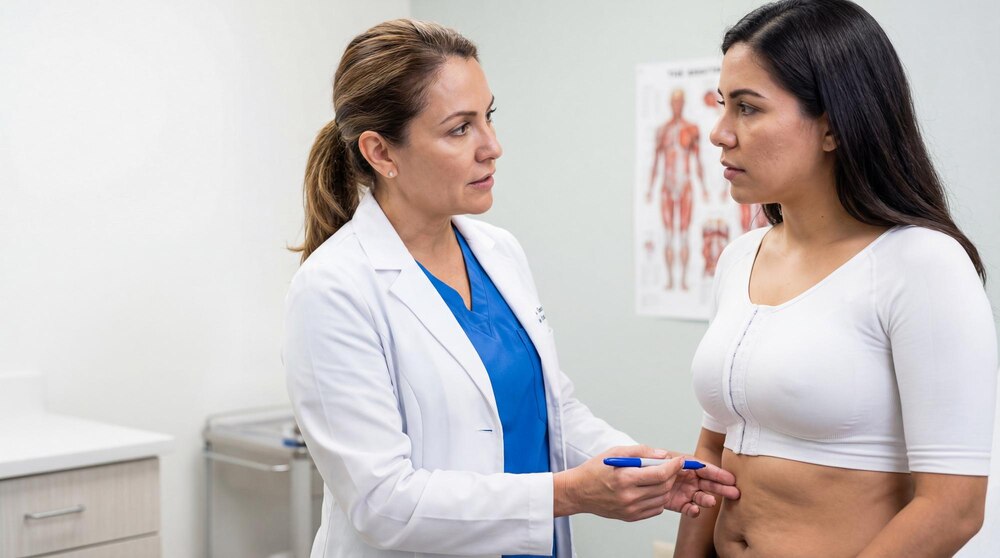
A body contouring consultation after GLP-1 weight loss includes several key components: a physical assessment of skin laxity and tissue quality across all areas of concern, a detailed review of GLP-1 medication history including dosage and duration, evaluation of weight loss timeline and current weight stability, nutritional status assessment, and medical clearance coordination.
Patients should bring a complete list of current medications, their weight loss history including starting and current weight, and any relevant lab work. The consultation is also the time to discuss realistic outcome expectations – body contouring produces significant improvement but results vary based on individual skin quality, healing capacity, and treatment scope. Having questions prepared about recovery timelines, procedure staging, and financing options helps patients make informed decisions.
Is Body Contouring After GLP-1 Weight Loss Safe?
Body contouring after GLP-1 weight loss is safe and effective when performed by a board-certified plastic surgeon with proper pre-surgical planning, including appropriate medication discontinuation timing, nutritional optimization, and medical clearance. The American Board of Cosmetic Surgery confirms that cosmetic surgery is viable after GLP-1 use with careful coordination.
Dr. Smita Ramanadham, MD, Board-Certified Plastic Surgeon and ASPS Member, frames the relationship between GLP-1 medications and surgery clearly: “If it can help that patient get within their normal healthy range for BMI so that they have better outcomes for surgery, I think it all makes sense as part of the overall services that we offer.”
Why Does Choosing a Board-Certified Surgeon Matter for Post-Weight-Loss Procedures?
Post-massive-weight-loss body contouring requires specialized skills that differ from standard cosmetic surgery. Patients who have lost significant weight on GLP-1 medications present unique tissue characteristics including compromised blood supply in skin flaps, reduced tissue elasticity, and the need for strategic scar placement across larger surface areas.
Board-certified plastic surgeons with experience in post-weight-loss body contouring understand how to manage these challenges – including advanced techniques for tissue handling, tension-free wound closure to minimize dehiscence risk, and comprehensive body assessment to prioritize and stage procedures appropriately. Verifying board certification through the American Board of Plastic Surgery is a critical first step in selecting a qualified provider.
Should You Be Concerned About FDA Warnings on GLP-1 Medications?
The FDA has issued safety communications regarding unapproved GLP-1 formulations used for weight loss, including compounded semaglutide products that have not undergone the same safety and efficacy testing as FDA-approved medications like Wegovy and Ozempic.
Patients should disclose their exact medication source – including whether they used compounded or FDA-approved formulations – to their surgical team. This distinction matters because compounded formulations may have different potency, purity, or pharmacokinetic profiles that could affect surgical timing decisions and complication risk assessment. Using only FDA-approved semaglutide products under proper medical supervision provides the most predictable safety profile for surgical planning.
Frequently Asked Questions About Body Contouring After GLP-1 Weight Loss
How Much Weight Do You Need to Lose Before Body Contouring Is Recommended?
There is no single weight loss threshold that triggers the need for body contouring. FDA clinical trial data shows semaglutide produces 10 to 20 percent total body weight loss, and skin laxity severity depends on individual factors including age, genetics, and total amount lost. Some patients experience meaningful skin laxity after losing 30 to 40 pounds, while others tolerate larger losses with less visible change. A consultation with a board-certified surgeon is the most reliable way to assess whether contouring would benefit a specific patient.
What Is the Recovery Time for Body Contouring Surgery After Weight Loss?
Recovery timelines vary by procedure type and whether multiple procedures are combined in a single session.
| Procedure | Typical Recovery Period |
|---|---|
| Tummy Tuck (Abdominoplasty) | 4 – 6 weeks |
| Arm Lift (Brachioplasty) | 2 – 4 weeks |
| Thigh Lift | 3 – 6 weeks |
| Liposuction | 1 – 3 weeks |
Combined procedures may require longer total recovery. These ranges represent general guidance – individual healing rates, overall health, and adherence to post-operative instructions all influence the actual recovery timeline.
Will Insurance Cover Body Contouring After GLP-1 Weight Loss?
Most body contouring procedures after weight loss are classified as cosmetic and are not covered by insurance. However, panniculectomy – the removal of a hanging abdominal skin apron (pannus) that causes documented medical problems such as chronic rashes, infections, or functional impairment – may qualify for insurance coverage in some cases. Patients should check with their insurance carrier and explore financing options that many practices offer to make treatment accessible.
Can You Continue Taking GLP-1 Medications After Body Contouring Surgery?
Many patients resume GLP-1 medications for weight maintenance after fully recovering from body contouring surgery. The timing of resumption should be coordinated with both the plastic surgeon and the prescribing physician. Nutritional recovery is a key consideration – patients need adequate protein, calories, and micronutrients to heal properly before reintroducing appetite-suppressing medications that may limit food intake.
What Is the Difference Between Body Contouring After GLP-1 Weight Loss and After Bariatric Surgery?
Both GLP-1 and bariatric surgery patients experience significant weight loss and resulting skin laxity, and the surgical contouring techniques used are similar. However, important differences exist in pre-surgical planning. GLP-1 patients may have different nutritional profiles than bariatric patients, different weight loss patterns (GLP-1 weight loss is typically more gradual), and unique medication timing considerations. Bariatric patients often have more severe malabsorption concerns, while GLP-1 patients face specific anesthesia-related risks tied to gastric emptying effects that require careful management.
Why Is Spring 2026 the Right Time to Start Planning Your Body Contouring Journey?
Spring 2026 is an ideal time to begin body contouring consultations because many patients who started GLP-1 medications in late 2024 or early 2025 are now reaching or approaching their goal weight. Beginning the consultation process now allows time for weight stabilization, medication discontinuation, nutritional optimization, and surgical planning – with procedures typically scheduled three to six months after the initial consultation.
This timeline means that spring consultations naturally align with late summer or early fall procedures, giving patients adequate recovery time before the holiday season. With body contouring demand at historic levels and surgical schedules filling quickly, earlier planning provides more flexibility in scheduling.
GLP-1 medications have given millions of patients a powerful tool for achieving meaningful weight loss. Body contouring represents the next step – addressing the physical changes that medication alone cannot resolve and helping patients fully realize the transformation they have worked to achieve. If you are approaching or have reached your goal weight after GLP-1 treatment, a consultation with a board-certified plastic surgeon is the best way to understand your options and develop a personalized plan for your body contouring goals.
Frequently Asked Questions
How long should you wait after stopping Ozempic to have body contouring surgery?
Patients should discontinue GLP-1 medications before body contouring surgery on a timeline determined by their surgical team and prescribing physician working together. Most plastic surgeons also recommend maintaining a stable weight for three to six months before surgery. This stabilization period allows nutritional deficiencies to be corrected and gives the surgical team time to accurately assess which procedures are needed.
What body contouring procedures are most popular after GLP-1 weight loss?
Abdominoplasty – commonly called a tummy tuck – is the most frequently requested procedure among post-GLP-1 patients. Liposuction leads overall body contouring volume at over 347,782 procedures performed in 2024. Arm lifts saw the biggest single-year growth at 8 percent. Many patients pursue a combination of surgical procedures along with non-surgical skin tightening treatments like Renuvion or radiofrequency devices for a comprehensive result.
What are the risks of having surgery while still taking semaglutide?
A 2025 study in the Aesthetic Surgery Journal found semaglutide patients had significantly higher surgical complication rates, including wound dehiscence at 5.19 percent versus 2.78 percent in controls, surgical site infections at 5.37 percent versus 2.87 percent, and delayed wound healing at 2.58 percent versus 1.21 percent. GLP-1 medications affect gastric emptying – raising aspiration risk during anesthesia – and can impair nutrient absorption needed for tissue repair.
Does insurance cover body contouring after weight loss from Ozempic or Wegovy?
Most body contouring procedures after GLP-1 weight loss are classified as cosmetic and are not covered by insurance. However, panniculectomy – the removal of a hanging abdominal skin apron that causes documented medical problems such as chronic rashes, infections, or functional impairment – may qualify for coverage in some cases. Patients should check with their insurance carrier and ask about financing options that many practices offer.
What kind of results can you expect from body contouring after GLP-1 weight loss?
Body contouring after GLP-1 weight loss produces significant improvement in skin laxity, body shape, and overall proportions, though results vary based on individual skin quality, healing capacity, and treatment scope. Surgical options like tummy tucks and arm lifts remove excess hanging skin that causes chafing and hygiene difficulties. Non-surgical options address mild to moderate laxity. A board-certified plastic surgeon can set realistic expectations during a personalized consultation.
How long is the recovery time for body contouring surgery after weight loss?
Recovery timelines vary by procedure. Tummy tucks typically require four to six weeks, arm lifts two to four weeks, thigh lifts three to six weeks, and liposuction one to three weeks. Combined procedures may require longer total recovery. Individual healing rates, overall health, and adherence to post-operative instructions all influence the actual timeline. Most comprehensive body contouring plans that involve multiple procedures unfold over several months to a year.
Can you go back on GLP-1 medications after body contouring surgery?
Many patients resume GLP-1 medications for weight maintenance after fully recovering from body contouring surgery. The timing of resumption should be coordinated with both the plastic surgeon and the prescribing physician. Nutritional recovery is a key consideration – patients need adequate protein, calories, and micronutrients to heal properly before reintroducing appetite-suppressing medications that may limit food intake.
