

Last updated: April 21, 2026
If you have lost a significant amount of weight using a GLP-1 medication such as Wegovy, Zepbound, or Ozempic, you are not alone in wondering what comes next. Millions of patients now face a new chapter in their transformation – addressing the excess skin and body shape changes that weight loss medications cannot resolve on their own. This guide covers everything you need to know about body contouring after GLP-1 weight loss in 2026, from safety and timing to procedures and planning your consultation.
Why Are So Many GLP-1 Patients Considering Body Contouring in 2026?
Body contouring after GLP-1 weight loss has become one of the fastest-growing patient pathways in plastic surgery. According to the American Society of Plastic Surgeons (ASPS) 2024 report, 20% of GLP-1 patients under the care of ASPS member surgeons have already undergone plastic surgery, and 39% are considering surgical procedures. An additional 41% are exploring nonsurgical options.
The ASPS has officially recognized “GLP-1 makeovers” as a top trend for 2026, signaling that this is no longer a niche concern but a defining shift in the field. As Dr. Franco, Board-Certified Plastic Surgeon and ASPS Member, has stated: “It will not be long before we cannot separate body contouring as a category from these other weight loss medications. The increased access to these medications is fundamentally changing who seeks plastic surgery and why.”
This surge reflects a simple reality. GLP-1 medications help patients lose significant weight, but they cannot tighten the skin left behind. For many patients, body contouring represents the final step in a transformation that began with a prescription.
What Is Driving the Surge in Demand for Post-GLP-1 Body Procedures?
Three developments have created an unprecedented pipeline of patients seeking body contouring. First, the FDA approval of Zepbound (tirzepatide) in November 2023 for chronic weight management expanded the medications available, with clinical trials demonstrating approximately 16.5% to 20% mean body weight loss. Second, Wegovy’s expanded FDA indication in March 2024 to reduce cardiovascular risk dramatically increased prescriptions among adults with both obesity and cardiovascular disease. Third, Wegovy’s original 2021 approval for chronic weight management means the earliest patients are now several years into their weight loss journeys and have reached the weight stability needed for surgical planning.
The result is a growing population of patients who have achieved life-changing weight loss – often 15% to 20% or more of their body weight – and are now confronting excess skin that diet, exercise, and the medications themselves cannot address.
How Are GLP-1 Weight Loss Patients Different from Bariatric Surgery Patients?
GLP-1 patients represent an emerging and distinct demographic within post-weight-loss body contouring. A 2026 peer-reviewed retrospective cohort study published on PubMed analyzed 1,002 patients who underwent body contouring surgery between 2019 and 2024 and found that GLP-1 pharmacotherapy patients comprised only 7.8% of the studied cohort – confirming that this is still a relatively new population in body contouring practices.
Several key differences set GLP-1 patients apart from traditional bariatric surgery patients. Weight loss on GLP-1 medications tends to be more gradual, occurring over months to years rather than the rapid loss often seen after gastric bypass or sleeve gastrectomy. The total amount of weight lost is also typically less extreme, though still sufficient to cause meaningful skin laxity, particularly in patients over 40. These differences mean GLP-1 patients require a tailored consultation approach rather than a one-size-fits-all protocol borrowed from bariatric aftercare.
What Happens to Your Skin After Losing Weight on Wegovy or Zepbound?
Significant weight loss from GLP-1 medications causes the skin to lose its ability to fully retract to a smaller body frame. Collagen and elastin fibers – the structural proteins responsible for skin elasticity – become damaged or degraded when stretched over a prolonged period, and they cannot always regenerate sufficiently after weight is lost. The severity of excess skin depends on age, genetics, total weight lost, speed of loss, and history of sun damage.
According to MedlinePlus, a resource from the U.S. National Library of Medicine, patients considering plastic surgery after large weight loss should understand that skin that has been stretched significantly may not return to its prior state regardless of how the weight was lost. This applies equally to patients who lost weight through GLP-1 medications, bariatric surgery, or lifestyle changes alone.
Which Areas of the Body Are Most Affected by Excess Skin After GLP-1 Medications?
The most commonly affected areas after GLP-1-related weight loss include the following:
- Abdomen – Often the most noticeable area, with hanging or folding skin that can cause discomfort and hygiene concerns
- Upper arms – Loose, sagging skin that is resistant to exercise and often prompts self-consciousness in warm-weather clothing
- Thighs – Inner thigh skin laxity that can cause chafing and limit clothing choices
- Breasts – Volume loss and sagging following fat reduction in the chest area
- Lower body and flanks – Excess tissue around the hips, buttocks, and lower back
- Neck and face – Jowling and neck laxity, particularly in patients over 50
The distribution of excess skin in GLP-1 patients may differ from bariatric surgery patients because the weight loss is typically less extreme. However, patients who lost weight rapidly on higher doses or who are older often experience laxity comparable to what is seen after surgical weight loss, particularly in the abdomen and upper arms.
Can Exercise or Skin Tightening Creams Fix Loose Skin After Weight Loss?
Exercise can improve muscle tone beneath loose skin, which may modestly improve overall appearance, but it cannot restore lost skin elasticity. Building muscle fills out some of the space left by fat loss, yet the overlying skin remains stretched and lax. As for topical creams marketed as skin-tightening solutions, no clinical evidence supports their ability to produce meaningful skin retraction after significant weight loss.
This is not to dismiss these efforts – maintaining muscle mass and healthy skin care are valuable. However, patients with moderate to significant skin laxity after GLP-1 weight loss should understand that surgical body contouring is currently the only evidence-based approach for removing excess skin and reshaping the body contour.
What Body Contouring Procedures Are Available After GLP-1 Weight Loss?
Body contouring after GLP-1 weight loss encompasses a range of surgical and nonsurgical procedures designed to remove excess skin, tighten underlying tissue, and restore body shape. The most common surgical procedures include abdominoplasty, brachioplasty, thigh lift, lower body lift, breast procedures, and liposuction. According to the ASPS 2024 statistics report, body contouring procedures showed steady growth across all categories.
The following table summarizes procedure volumes reported by the ASPS for 2024:
| Procedure | 2024 Volume | Year-Over-Year Change |
|---|---|---|
| Liposuction | Approximately 350,000 | #1 surgical procedure |
| Tummy Tuck (Abdominoplasty) | 171,064 | Up 1% |
| Upper Arm Lift (Brachioplasty) | 23,527 | Up 2% |
| Thigh Lift | 9,914 | Up 3% |
Is a Tummy Tuck the Most Common Procedure After GLP-1 Weight Loss?
Abdominoplasty – commonly known as a tummy tuck – is widely considered the centerpiece procedure for post-GLP-1 body contouring. It addresses excess abdominal skin, tightens separated abdominal muscles (diastasis recti), and removes stubborn fat deposits in the midsection. With 171,064 procedures performed in 2024, it remains one of the highest-volume body contouring surgeries.
For many GLP-1 patients, the abdomen is the area of greatest concern after weight loss. A tummy tuck is often the first procedure performed, or it serves as the anchor of a staged body contouring plan that addresses multiple areas over time. Patients should understand that a tummy tuck involves a hip-to-hip incision and a recovery period of several weeks, but the improvement in abdominal contour is typically dramatic and long lasting.
What Is an Arm Lift and Why Is It Growing in Popularity?
Brachioplasty, or arm lift surgery, removes excess hanging skin from the upper arms – an area that is particularly resistant to exercise. The ASPS reported 23,527 arm lift procedures in 2024, up 2% from the prior year, making it one of the faster-growing body contouring categories.
This procedure is especially relevant for GLP-1 patients who feel self-conscious about their arms in short sleeves, tank tops, and sleeveless clothing. With spring consultations underway and summer ahead, arm lifts are among the most frequently discussed procedures during this time of year. The incision is typically placed along the inner arm and fades significantly over 12 to 18 months.
What Other Surgical Options Address Excess Skin After Major Weight Loss?
Beyond tummy tucks and arm lifts, several additional procedures may be recommended depending on where excess skin is most pronounced:
- Thigh lift – Addresses inner and outer thigh skin laxity; 9,914 performed in 2024, up 3%
- Lower body lift – A circumferential procedure that addresses the abdomen, hips, buttocks, and lower back in a single operation
- Breast lift or breast augmentation with lift – Restores breast shape and volume lost during weight reduction
- Liposuction – Ranked as the number one cosmetic surgical procedure in 2024 with approximately 350,000 cases; often used as a complementary procedure to refine contour after skin removal
These procedures are frequently combined or staged depending on the extent of skin laxity, patient goals, and overall health. A board-certified plastic surgeon will recommend the safest and most effective approach for each individual.
Are There Nonsurgical Body Contouring Options for GLP-1 Patients?
Nonsurgical body contouring treatments are an option for GLP-1 patients with mild skin laxity who prefer to avoid surgery. ASPS data indicates that 41% of GLP-1 patients are considering nonsurgical procedures, reflecting significant interest in less invasive approaches.
Available options include radiofrequency skin tightening, ultrasound-based treatments, and minimally invasive body contouring devices. These treatments work by stimulating collagen production and can produce modest improvement in skin firmness. However, they have meaningful limitations: nonsurgical options are best suited for patients with mild laxity and cannot replicate the results of surgical skin removal in cases of moderate to significant excess skin.
NW Laser offers a range of nonsurgical aesthetic treatments that may complement a body contouring plan for patients with milder concerns or those preparing for future surgical procedures.
How Long Should You Wait After GLP-1 Weight Loss Before Having Body Contouring Surgery?
Patients should wait a minimum of six months after achieving their target weight before undergoing body contouring surgery, and most experts recommend six to 18 months of documented weight stability. Dr. Le, Board-Certified Plastic Surgeon at US Dermatology Partners Plastic Surgery, advises: “At bare minimum, I tell my patients they need to wait for at least six months after starting semaglutide treatment or undergoing weight loss before considering body contouring procedures.”
The reason timing matters is straightforward: if a patient continues to lose weight after surgery, the results may be compromised as additional skin laxity develops. Conversely, if a patient regains weight, the surgical contour can be distorted. Weight stability allows the surgeon to plan accurately and deliver the best possible outcome.
What Does Weight Stability Mean and How Do You Know You Have Reached It?
Weight stability means maintaining your body weight within approximately 5 to 10 pounds of your goal weight for at least three to six consecutive months. This does not require a perfectly flat line on the scale – minor daily and weekly fluctuations are normal. What matters is the absence of a continuing downward trend or significant variability.
During a body contouring consultation, surgeons typically review your weight trajectory over time, often asking for monthly weigh-in records or data from a health app. They will also discuss your ongoing medication plan, dietary habits, and exercise routine to assess whether your current weight is likely to be sustainable long term.
Should You Stop Taking GLP-1 Medication Before Surgery?
The decision to pause or continue GLP-1 medication before body contouring surgery must be made in coordination with both the prescribing physician and the plastic surgeon. Several sources indicate that GLP-1 medications may need to be temporarily paused before surgery due to anesthesia-related concerns, including the risk of gastroparesis – delayed stomach emptying – which can increase aspiration risk during general anesthesia.
This decision carries significant weight because research indicates that 50% to 75% of patients who discontinue GLP-1 medications experience weight regain. A coordinated care team approach is essential to manage the timing of medication pauses, monitor weight stability, and develop a plan for resuming medication after recovery if needed.
Why Is Spring 2026 a Good Time to Start Planning Your Body Contouring Consultation?
April 2026 is an ideal time to begin the consultation and planning process for body contouring. Patients who schedule a consultation this spring can work with their surgeon to establish a realistic timeline, complete any necessary medical clearances, and plan procedures for late summer, fall, or winter – when cooler weather and layered clothing make the recovery period more comfortable.
Body contouring rewards patients who plan ahead. From the initial consultation to surgical scheduling to recovery, the process typically spans several months. Starting now ensures you have time to reach and document weight stability, coordinate with your prescribing physician about GLP-1 medication management, and make informed decisions without feeling rushed.
Is Body Contouring After GLP-1 Medications Safe?
Body contouring surgery after GLP-1-assisted weight loss is safe based on current evidence, with complication rates comparable to those seen in patients who lost weight through bariatric surgery, lifestyle changes, or combination approaches. A 2026 peer-reviewed retrospective cohort study analyzing 1,002 patients who underwent post-weight-loss body contouring surgery between 2019 and 2024 found no significant difference in 90-day postoperative complication rates across weight loss modalities.
This finding is the strongest evidence-based data point currently available for patients concerned about the safety of body contouring after GLP-1 use. It directly addresses the anxiety many patients feel about whether their medication history introduces additional surgical risk.
What Does the Latest Research Say About Complication Rates for GLP-1 Patients?
The 2026 peer-reviewed study (PubMed ID 41742366) used a retrospective cohort design to evaluate outcomes across four weight loss categories: surgical (bariatric), lifestyle modification, GLP-1 pharmacotherapy, and combination approaches. GLP-1 patients represented 7.8% of the 1,002-patient cohort. The key finding was that 90-day postoperative complication rates were statistically comparable across all groups, with no elevated risk identified for GLP-1 patients.
This is reassuring data, though it should be interpreted with appropriate context. The GLP-1 subgroup was relatively small compared to the bariatric and lifestyle groups, reflecting the fact that GLP-1-related body contouring is still a newer phenomenon. As more patients undergo these procedures in 2026 and beyond, larger studies will further refine the understanding of outcomes in this specific population.
What Factors Affect Your Risk Level for Body Contouring Surgery?
Individual risk for body contouring surgery depends on several factors beyond the method of weight loss:
- BMI at time of surgery – Patients closer to a healthy BMI generally have lower complication rates
- Nutritional status – Adequate protein, vitamin, and mineral levels are critical for wound healing
- Smoking status – Smoking significantly increases the risk of wound healing complications and is typically a contraindication
- Diabetes management – Well-controlled blood sugar supports safer outcomes
- Overall health – Cardiovascular fitness, medication management, and absence of active infections
- Scope of planned procedures – More extensive or combined procedures carry higher cumulative risk than single, targeted operations
Based on current evidence, GLP-1 medication use alone does not appear to increase surgical risk. Board-certified plastic surgeons assess each patient individually to determine candidacy and the safest surgical plan.
How Do You Choose a Qualified Plastic Surgeon for Body Contouring After GLP-1 Weight Loss?
Selecting a plastic surgeon for body contouring after GLP-1 weight loss requires verifying board certification by the American Board of Plastic Surgery, confirming experience specifically with post-weight-loss body contouring, and ensuring the surgeon understands GLP-1 medications and their surgical implications. The ASPS provides a surgeon verification tool to confirm board certification and membership credentials.
Patients should look for several specific indicators of expertise when evaluating surgeons:
- Board certification by the American Board of Plastic Surgery (not a similarly named board)
- A portfolio of before-and-after photos from post-weight-loss body contouring patients
- Demonstrated understanding of GLP-1 medication management around surgery
- A consultation process that includes timeline planning and coordination with the prescribing physician
- Experience staging multiple procedures when needed
Why Does Experience with Post-Weight-Loss Patients Matter?
Body contouring after significant weight loss is technically distinct from standard cosmetic procedures. Surgeons working with post-weight-loss patients manage larger volumes of tissue, must plan incision placement to balance aesthetic outcomes with scar visibility, and frequently stage multiple procedures over time. The anatomy of a patient who has lost 50 or more pounds is fundamentally different from a patient seeking a cosmetic tummy tuck at a stable weight.
Surgeons who regularly treat post-weight-loss patients understand the realistic expectations, recovery patterns, and procedural sequencing that lead to the best outcomes. This experience is especially important for GLP-1 patients, who may present with different skin laxity patterns than traditional bariatric patients.
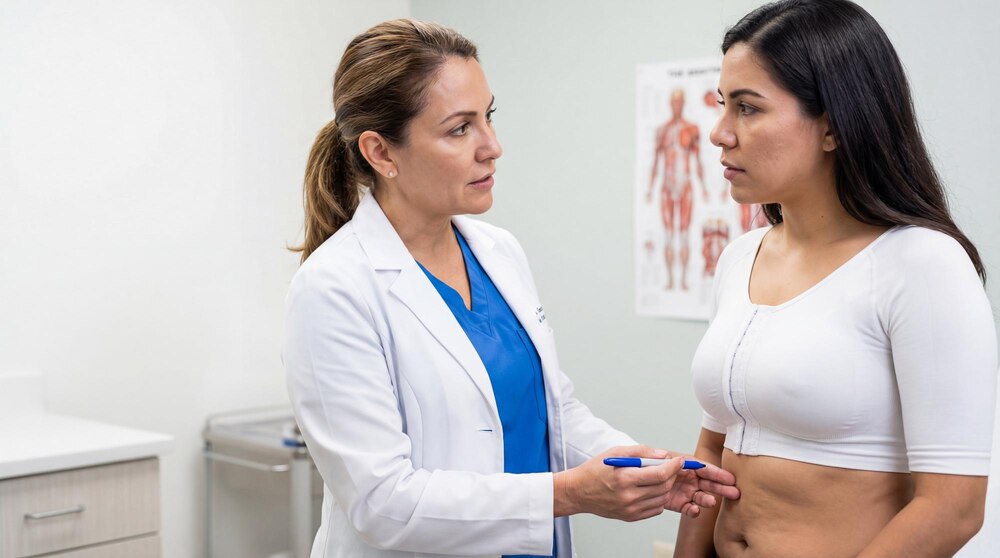
What Should You Expect During a Body Contouring Consultation?
A thorough body contouring consultation typically includes the following steps:
- Review of complete medical history, including GLP-1 medication details, dosing, duration, and prescribing physician information
- Discussion of weight loss timeline – how much weight was lost, over what period, and current stability
- Physical examination to assess skin laxity, tissue quality, and areas of concern
- Discussion of goals and realistic outcomes based on the examination findings
- Procedure recommendations, including whether a single procedure or staged approach is most appropriate
- Timeline planning for surgery, including any required medication adjustments
- Coordination plan with the patient’s prescribing physician regarding GLP-1 management
This process ensures that both surgeon and patient are aligned on expectations and that the surgical plan accounts for the unique factors associated with GLP-1 weight loss.
What Results Can You Realistically Expect from Body Contouring After GLP-1 Weight Loss?
Body contouring after GLP-1 weight loss can remove excess skin, improve body proportion, restore a more natural silhouette, and dramatically improve clothing fit and physical comfort. Patients consistently report significant improvements in quality of life, confidence, and daily comfort. However, body contouring is not a pathway to perfection – all surgical procedures involve scarring, and results depend on individual anatomy and healing.
The gradual nature of GLP-1 weight loss may actually be favorable for some body contouring outcomes. Slower weight loss allows the skin slightly more time to adapt compared to the rapid loss seen after some bariatric procedures, though the degree of benefit varies by patient age and genetics. Patients should expect a meaningful transformation in body shape while understanding that scars, minor asymmetries, and the need for ongoing weight management are part of the realistic picture.
How Long Does Recovery Take After Body Contouring Procedures?
Recovery timelines vary by procedure type and whether procedures are combined. The following table provides general recovery estimates:
| Procedure | Initial Recovery | Return to Full Activity |
|---|---|---|
| Tummy Tuck | 2 – 4 weeks | 6 – 8 weeks |
| Arm Lift | 1 – 2 weeks | 4 – 6 weeks |
| Thigh Lift | 2 – 4 weeks | 6 – 8 weeks |
| Combined Procedures | 3 – 5 weeks | 8 – 12 weeks |
Recovery varies by individual, and patients on GLP-1 medications should discuss nutritional optimization during recovery with their care team. Adequate protein intake and micronutrient levels are especially important for wound healing after body contouring surgery.
Will You Have Visible Scars After Body Contouring Surgery?
All surgical body contouring involves incisions, and therefore all patients will have scars. However, experienced surgeons place incisions strategically – within bikini lines, along natural skin creases, and in areas typically covered by clothing. The goal is to ensure that the improvement in body contour significantly outweighs the visibility of scars.
Scars typically appear red or pink initially and fade substantially over 12 to 18 months. Scar management protocols, including silicone sheeting, topical treatments, and sun protection, can further improve their appearance. During your consultation, your surgeon can show you exactly where incisions will be placed for your specific procedure plan.
Frequently Asked Questions About Body Contouring After GLP-1 Weight Loss
Can You Get Body Contouring While Still Taking Ozempic or Wegovy?
Body contouring while actively taking GLP-1 medications requires careful coordination between your prescribing physician and your plastic surgeon. Many surgeons require patients to temporarily pause GLP-1 medications before surgery due to anesthesia safety concerns, particularly the risk of delayed gastric emptying. However, because 50% to 75% of patients who stop GLP-1 medications experience weight regain, the timing and plan for resuming medication after recovery must be established before surgery.
How Much Weight Do You Need to Lose Before Body Contouring Is an Option?
There is no single weight loss threshold required for body contouring candidacy. The determining factor is weight stability – maintaining a consistent weight for at least six months – rather than a specific number of pounds lost. Even moderate weight loss on GLP-1 medications can result in skin laxity that warrants treatment, particularly in patients over 40 or those with reduced skin elasticity due to age, genetics, or sun exposure.
Does Insurance Cover Body Contouring After GLP-1 Weight Loss?
Most body contouring procedures after weight loss are classified as cosmetic and are not covered by health insurance. However, in cases where excess skin causes documented medical problems – such as chronic rashes, skin infections, or functional impairment – some procedures like panniculectomy (removal of a hanging abdominal skin apron) may qualify for partial insurance coverage. Patients should verify coverage with their insurance provider and discuss options during their surgical consultation.
What Is a GLP-1 Makeover and How Is It Different from a Mommy Makeover?
A GLP-1 makeover is a term recognized by the ASPS as a 2026 trend, referring to a customized combination of body contouring procedures tailored to the specific pattern of excess skin and body changes following GLP-1 medication-induced weight loss. While a mommy makeover typically addresses post-pregnancy changes to the breasts and abdomen, a GLP-1 makeover may address a broader set of areas – including arms, thighs, and lower body – depending on where weight loss has caused the most noticeable skin laxity.
Can You Have Multiple Body Contouring Procedures at the Same Time?
Combining multiple body contouring procedures in a single operation is possible and can reduce the total number of recovery periods. However, combining procedures increases total surgical time and anesthesia exposure, which may not be appropriate for all patients. Surgeons evaluate safety based on the extent of work needed, the patient’s overall health, and the estimated length of the operation. When the scope of contouring is extensive, a staged approach – performing procedures in two or more separate operations spaced several months apart – is often the safest plan.
What If You Regain Weight After Body Contouring Surgery?
Moderate weight fluctuations of 10 to 15 pounds are normal and generally do not significantly affect body contouring results. However, substantial weight regain can compromise surgical outcomes by stretching the skin and altering the contour that was created. Given that 50% to 75% of patients who discontinue GLP-1 medications experience weight regain, developing a long-term weight management plan is an essential part of the body contouring process. This plan may include continued GLP-1 medication use, dietary guidance, and regular follow-up with both your prescribing physician and your surgeon.
What Should Your Next Step Be If You Are Considering Body Contouring After GLP-1 Weight Loss?
If you have achieved significant weight loss on a GLP-1 medication and are bothered by excess skin, the evidence supports that body contouring is a safe and effective next step when the timing is right. The 2026 peer-reviewed data confirms comparable safety outcomes for GLP-1 patients, expert guidance recommends six to 18 months of weight stability before surgery, and board-certified plastic surgeons with post-weight-loss experience can develop a personalized plan tailored to your body and goals.
As Dr. Franco has observed, body contouring and GLP-1 medications are becoming inseparable categories. Spring 2026 is an ideal moment to begin the consultation process – giving you time to plan thoughtfully for procedures later this year or in early 2027, when recovery timing and seasonal considerations align in your favor.
The team at NW Laser is experienced in helping patients navigate the journey from weight loss to body contouring. If you are ready to explore your options, schedule a consultation to discuss your goals, review your weight loss timeline, and develop a plan designed specifically for where you are today and where you want to be.
Frequently Asked Questions
How long should you wait after GLP-1 weight loss to get body contouring surgery?
Patients should wait a minimum of six months after reaching their target weight, with most experts recommending six to 18 months of documented weight stability. Weight stability means maintaining within 5 to 10 pounds of your goal weight for at least three to six consecutive months. This ensures the surgeon can plan accurately and deliver the best possible long-term results without risk of further skin changes from ongoing weight loss.
Is body contouring safe for patients who lost weight on Ozempic or Wegovy?
Body contouring after GLP-1 weight loss is safe based on current evidence. A 2026 peer-reviewed study analyzing 1,002 patients who underwent body contouring surgery between 2019 and 2024 found no significant difference in 90-day postoperative complication rates between GLP-1 patients and those who lost weight through bariatric surgery, lifestyle changes, or combination approaches. Individual risk depends on factors like BMI, nutritional status, and smoking history.
Do you have to stop taking GLP-1 medication before body contouring surgery?
Many surgeons require patients to temporarily pause GLP-1 medications before surgery due to anesthesia safety concerns, particularly the risk of delayed stomach emptying that can increase aspiration risk. However, since 50% to 75% of patients who stop GLP-1 medications experience weight regain, the decision must be coordinated between the prescribing physician and plastic surgeon with a clear plan for resuming medication after recovery.
What body contouring procedures are most common after GLP-1 weight loss?
The most common procedures include tummy tuck (abdominoplasty) with 171,064 performed in 2024, liposuction at approximately 350,000 procedures, arm lift (brachioplasty) at 23,527, and thigh lift at 9,914. A tummy tuck is often the centerpiece procedure, while arm lifts are among the fastest-growing categories. Surgeons frequently combine or stage multiple procedures depending on the extent of excess skin.
Can exercise or creams tighten loose skin after weight loss from GLP-1 medications?
Exercise can improve muscle tone beneath loose skin but cannot restore lost skin elasticity. Building muscle may modestly improve overall appearance, yet the overlying stretched skin remains lax. No clinical evidence supports topical skin-tightening creams producing meaningful retraction after significant weight loss. Surgical body contouring is currently the only evidence-based approach for removing excess skin and reshaping body contour.
Does insurance cover body contouring after GLP-1 weight loss?
Most body contouring procedures after weight loss are classified as cosmetic and are not covered by health insurance. However, when excess skin causes documented medical problems – such as chronic rashes, skin infections, or functional impairment – some procedures like panniculectomy may qualify for partial coverage. Patients should verify coverage with their insurance provider and discuss options during their surgical consultation.
How long does recovery take after body contouring surgery?
Recovery timelines vary by procedure. A tummy tuck requires two to four weeks of initial recovery and six to eight weeks before returning to full activity. Arm lifts need one to two weeks initially and four to six weeks total. Combined procedures may require three to five weeks of initial recovery and eight to 12 weeks for full activity. Patients on GLP-1 medications should discuss nutritional optimization for wound healing with their care team.
