

Last updated: June 5, 2026
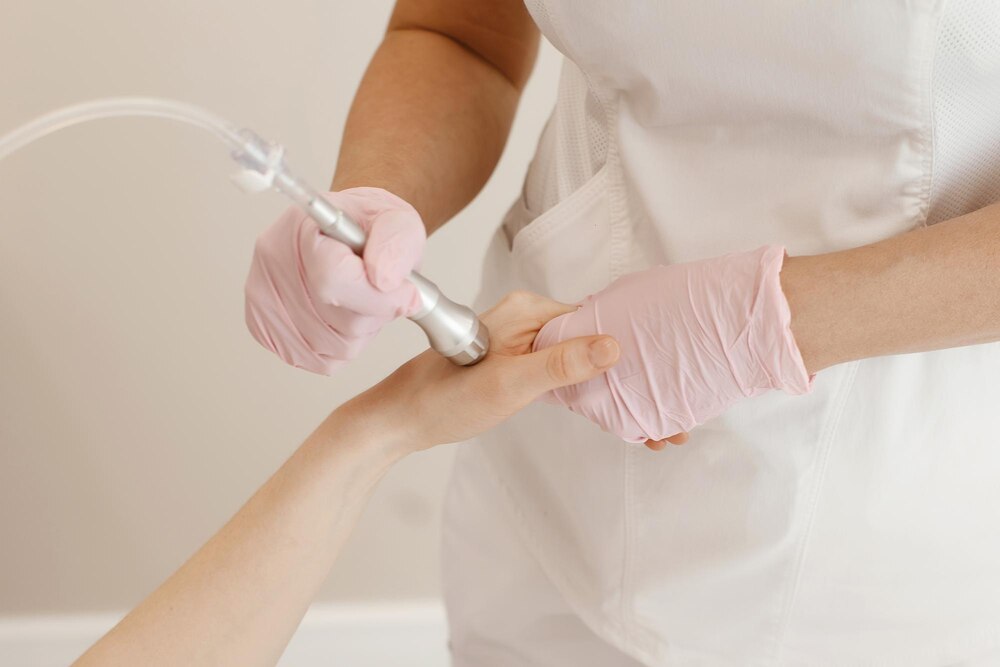
Brown spots on the backs of the hands are among the most visible signs of cumulative sun exposure, often appearing earlier than wrinkles or other aging changes. This guide explains what these spots are, why hands are so commonly affected, and which evidence-based treatments work best to fade them. The most effective in-office options for hand spot removal – intense pulsed light (IPL) and picosecond lasers – are supported by peer-reviewed clinical research and can produce clearance rates above 90% for solar lentigines.
What Are Age Spots on Hands?
Age spots are flat brown patches caused by years of ultraviolet (UV) exposure, medically known as solar lentigines and sometimes called liver spots. According to the National Institute on Aging, they are harmless and appear most often on sun-exposed areas such as the hands, face, and shoulders, becoming more common after age 40.
Unlike freckles, which often fade in winter, solar lentigines are persistent and tend to darken over time with continued sun exposure. They differ from concerning lesions in that they are uniformly colored, flat, and stable. The hands, face, and shoulders are typical sites because these areas receive the highest lifetime UV dose. You can learn more about professional options for laser treatment for liver spots and sun spots at our practice.
Why Do Spots Appear on the Backs of the Hands First?
The backs of the hands receive chronic, high-intensity sun exposure throughout daily life – while driving, gardening, or walking – yet they are rarely protected with sunscreen. Research published in the National Library of Medicine confirms that age spots are strongly related to chronic sun exposure and photodamage, with melanin clustering in the upper skin layers. The thinner skin on the back of the hand offers less natural protection, allowing pigment changes to surface earlier than in many other areas.
Are Brown Spots on Hands Ever a Sign of Something Serious?
Most age spots on the hands are completely harmless and require no treatment beyond cosmetic preference. However, any spot that changes in size, color, or shape, develops irregular borders, or begins to bleed should be evaluated promptly. The American Academy of Dermatology advises professional assessment by a board-certified dermatologist to rule out skin cancer. When in doubt, a clinical evaluation provides reassurance and ensures that any suspicious lesion is identified early rather than mistaken for a benign age spot.
What Causes Age Spots to Form on the Hands?
Cumulative sun and UV exposure is the primary cause of age spots on the hands, with the aging process accelerating their appearance. The National Institute on Aging confirms that years of sunlight trigger excess melanin production, which clusters to form visible brown patches. Repeated UV exposure – including tanning – combined with skipped sunscreen on the hands compounds the effect over time.
While genetics and natural aging play a role, UV radiation remains the dominant and most modifiable factor. The hands are particularly vulnerable because sunscreen is so frequently washed away by handwashing and rarely reapplied. This is why protecting the hands is just as important as protecting the face for preventing new spots from forming.
What Are the Most Effective Treatments for Hand Spot Removal?
The most effective treatments for hand spot removal are IPL and picosecond lasers, according to a 2025 systematic review of 41 clinical trials involving 3,234 patients. That review, published in the Journal of Cosmetic Dermatology, found IPL achieved 74.6-90% clearance and picosecond lasers 67.9-93.02%, outperforming cryotherapy and chemical peels for solar lentigines.
Each treatment works differently and carries its own efficacy and side-effect profile. The table below summarizes the comparative success rates from the 2025 systematic review.
| Treatment | Clearance Rate | Notable Trade-offs |
|---|---|---|
| IPL | 74.6-90% | Low risk of post-inflammatory hyperpigmentation |
| Picosecond laser | 67.9-93.02% | Among the highest clearance rates |
| Cryotherapy | 37-71.4% | Side effects in 40% of patients |
| 35% TCA chemical peel | 12-46% | Lower side-effect rate (13.3%) |
| Fractional CO2 laser | 8-23% | Lower clearance for solar lentigines |
How Effective Is IPL for Removing Sun Spots on Hands?
IPL is highly effective for removing sun spots on the hands, achieving 74.6-90% clearance of solar lentigines according to the 2025 Journal of Cosmetic Dermatology systematic review. A separate 2016 short-wavelength IPL study of 20 patients found significant improvement in every participant, with 90% patient satisfaction and no serious adverse events.
Beyond strong clearance rates, IPL stands out for safety. The 2025 review found that IPL and pulsed dye laser (PDL) were among the modalities least likely to cause post-inflammatory hyperpigmentation, a common concern with pigment-targeting treatments. This combination of high efficacy and favorable safety makes IPL a frequent first choice for treating photodamaged hands in clinical practice.
How Well Do Lasers Treat Age Spots on the Hands?
Lasers treat age spots on the hands very effectively, with picosecond lasers achieving 67.9-93.02% clearance for solar lentigines in the 2025 systematic review – among the highest of any modality studied. Fractional CO2 lasers, by contrast, showed lower clearance of 8-23% for solar lentigines specifically, making them less ideal for isolated pigment removal.
According to the Mayo Clinic Department of Dermatology, “Some laser and intense pulsed light therapies destroy melanin-producing cells (melanocytes) without damaging the skin’s surface. These approaches typically require two to three sessions.” This surface-sparing mechanism allows lasers to target pigment precisely while preserving surrounding skin, supporting both effectiveness and a manageable recovery.
Does Cryotherapy Work for Spots on Hands?
Cryotherapy works for spots on the hands but with a notable trade-off. The 2025 systematic review reported success rates of 37-71.4% for solar lentigines, lower than IPL and picosecond lasers. Importantly, cryotherapy caused side effects in 40% of treated patients, the highest rate among the modalities reviewed.
Cryotherapy involves applying liquid nitrogen to freeze and destroy pigmented cells. While it can be effective and convenient for individual spots, the higher likelihood of side effects – including changes in skin color at the treated site – makes it a less predictable option for the hands compared with light- and laser-based treatments.
Can Chemical Peels Fade Age Spots on Hands?
Chemical peels can fade age spots on the hands, though typically with milder results than lasers or IPL. The 2025 systematic review found that 35% trichloroacetic acid (TCA) peels achieved 12-46% clearance of solar lentigines, with a lower side-effect rate of 13.3% compared to cryotherapy’s 40%.
Chemical peels remain a widely used and accessible option. According to the International Society of Aesthetic Plastic Surgery (ISAPS), chemical peels ranked among the top five most popular nonsurgical aesthetic procedures globally in 2023. For hand spots, peels are often best positioned as a gentler standalone option or as an adjunct to other treatments.
Do Prescription Creams Remove Age Spots on Hands?
Prescription creams can gradually remove age spots on the hands over time. The Mayo Clinic Department of Dermatology notes that “Applying prescription bleaching creams (hydroquinone) alone or with retinoids (tretinoin) and a mild steroid might gradually fade the spots over several months.”
This route is slower than in-office procedures but appeals to patients who prefer an at-home approach or want to avoid downtime. As the American Academy of Dermatology advises, “A board-certified dermatologist can tell you whether a prescription-strength cream or a procedure such as a chemical peel, laser treatment, microdermabrasion, or cryotherapy would be more effective for you.” Professional guidance ensures the right choice for your skin.
How Do the Treatment Options Compare for Results and Side Effects?
For results and side effects combined, IPL and picosecond lasers offer the highest efficacy for hand spot removal, while IPL and pulsed dye laser carry the lowest risk of post-inflammatory hyperpigmentation. The 2025 systematic review found cryotherapy had the highest side-effect rate at 40%, compared with 13.3% for TCA peels.
The table below consolidates efficacy and safety considerations from the 2025 Journal of Cosmetic Dermatology systematic review to support informed decision-making.
| Modality | Efficacy Tier | Side-Effect Profile |
|---|---|---|
| Picosecond laser | Highest | Generally favorable |
| IPL | Highest | Low PIH risk |
| Cryotherapy | Moderate | Highest side-effect rate (40%) |
| 35% TCA peel | Lower | Lower side-effect rate (13.3%) |
| Fractional CO2 | Lower for lentigines | Varies |
Which Hand Spot Removal Treatment Is Right for Me?
The right hand spot removal treatment depends on your skin type, the severity and number of spots, your tolerance for downtime, and your budget. There is no single best option for everyone, which is why a personalized evaluation matters. IPL and picosecond lasers offer the strongest evidence-based results, but milder approaches may suit some patients better.
The American Academy of Dermatology emphasizes that “A board-certified dermatologist can tell you whether a prescription-strength cream or a procedure such as a chemical peel, laser treatment, microdermabrasion, or cryotherapy would be more effective for you.” A consultation at a qualified med spa or plastic surgery practice allows a provider to assess your hands directly and recommend the most appropriate modality.
How Many Sessions Will I Need to See Results?
Most laser and IPL treatments for hand spots require two to three sessions to achieve optimal results, according to the Mayo Clinic. Prescription creams, by contrast, typically take several months of consistent application to gradually fade spots. The exact number of sessions depends on the depth and density of pigmentation and your individual skin response, which a provider can estimate during consultation.
Is There Downtime After Hand Spot Treatments?
Downtime after hand spot treatments is generally minimal for surface-sparing IPL and laser approaches, which target pigment without damaging the skin’s surface. Treated spots may temporarily darken before flaking away over the following days. Recovery varies by modality and individual skin, so following provider-specific aftercare – including diligent sun protection – is essential for the best outcome and to protect newly treated skin.
How Can I Prevent New Age Spots From Forming on My Hands?
The single most effective way to prevent new age spots on the hands is daily application of broad-spectrum sunscreen, as recommended by the National Institute on Aging. Because age spots result from cumulative UV exposure, consistent sun protection both prevents new spots and helps preserve the results of any removal treatment.
Practical prevention habits for the hands include:
- Apply broad-spectrum SPF 30 or higher to the backs of the hands every morning
- Reapply after handwashing and every two hours of sun exposure
- Wear UV-protective gloves while driving or gardening
- Seek shade and avoid peak midday sun when possible
Why Is Summer the Best Time to Address Hand Spots?
Summer is an ideal time to address hand spots because increased UV exposure both worsens existing pigmentation and makes diligent sun protection critical after treatment. In June 2026, with daylight hours and outdoor activity at their peak, starting treatment now allows you to pair professional spot removal with reinforced prevention habits. Treated skin is especially sensitive to UV, so building a consistent sunscreen routine during summer protects your results and reduces the chance of recurrence.
Is Hand Rejuvenation a Growing Aesthetic Trend?
Hand rejuvenation sits within a strongly growing market for nonsurgical aesthetic care. According to ISAPS, nearly 38 million total aesthetic procedures were performed worldwide in 2024, including 20.5 million nonsurgical procedures – up from 34.9 million total procedures in 2023. The same light- and laser-based modalities driving this growth are precisely those used for hand spot removal.
Industry data consistently shows rising demand for nonsurgical, skin-quality treatments such as IPL, lasers, and chemical peels. Yet hand-specific rejuvenation receives relatively little dedicated attention compared with the face and body, despite the hands being one of the first areas to reveal photoaging. Addressing hand spots represents a meaningful and often overlooked component of comprehensive skin rejuvenation.
Frequently Asked Questions About Hand Spot Removal
Below are concise, evidence-based answers to the most common questions patients ask about removing age spots on their hands.
How Long Do Hand Spot Removal Results Last?
Hand spot removal results can be long-lasting, but new spots may form over time without consistent sun protection. Because age spots stem from cumulative UV exposure, the National Institute on Aging emphasizes daily broad-spectrum sunscreen as essential maintenance. Protecting treated skin from the sun is the key factor in preserving results and preventing recurrence.
Is IPL or Laser Treatment Painful on the Hands?
IPL and laser treatments on the hands are generally well tolerated. A 2016 short-wavelength IPL study reported 90% patient satisfaction and no serious adverse events when treating solar lentigines. Most patients describe a mild snapping sensation during treatment that is brief and manageable, making these procedures comfortable for the majority of individuals.
Can I Treat Age Spots on My Hands at Home?
You can treat age spots at home using prescription creams such as hydroquinone, sometimes combined with retinoids, which the Mayo Clinic notes may gradually fade spots over several months. However, in-office IPL and laser treatments are faster and more effective. The American Academy of Dermatology recommends professional evaluation to determine the most suitable approach for your skin.
Who Should Perform Hand Spot Removal Treatments?
Hand spot removal treatments should be performed or supervised by a board-certified dermatologist or qualified medical provider. The American Academy of Dermatology advises that a board-certified dermatologist can determine whether a cream or procedure such as laser treatment, chemical peel, or cryotherapy is most appropriate for you. Professional oversight ensures both safety and optimal, predictable results.
What Are the Key Takeaways for Removing Age Spots on Hands?
The key takeaway for removing age spots on the hands is that IPL and picosecond lasers offer the most effective, evidence-based results, with clearance rates reaching 90% or higher in peer-reviewed clinical trials. Cryotherapy and chemical peels remain options but carry lower efficacy or higher side-effect rates for solar lentigines.
Equally important is sun protection: daily broad-spectrum sunscreen on the hands prevents new spots and preserves treatment results, a priority that is especially relevant during the high-UV summer months. Because the best modality depends on your skin type, spot severity, and goals, a personalized consultation with a board-certified provider is the most reliable path forward. To explore your options, consider scheduling a consultation at our med spa to discuss an evidence-based treatment plan tailored to your hands.
Frequently Asked Questions
What is the most effective treatment for removing age spots on hands?
IPL and picosecond lasers are the most effective treatments for hand spot removal. A 2025 systematic review of 41 clinical trials found IPL achieved 74.6-90% clearance and picosecond lasers reached 67.9-93.02% clearance for solar lentigines, outperforming cryotherapy and chemical peels. These light- and laser-based options also carry lower side-effect risks, making them frequent first choices for photodamaged hands.
How many sessions does it take to remove sun spots on hands?
Most laser and IPL treatments for hand spots require two to three sessions to achieve optimal results, according to the Mayo Clinic. Prescription creams take longer, typically several months of consistent application to gradually fade spots. The exact number of sessions depends on the depth and density of pigmentation and individual skin response, which a provider can estimate during a consultation.
How long do hand spot removal results last?
Hand spot removal results can be long-lasting, but new spots may form over time without consistent sun protection. Because age spots stem from cumulative UV exposure, daily broad-spectrum sunscreen on the hands is essential maintenance per National Institute on Aging guidance. Protecting treated skin from the sun is the key factor in preserving results and preventing recurrence.
Is IPL or laser treatment painful on the hands?
IPL and laser treatments on the hands are generally well tolerated. A 2016 short-wavelength IPL study reported 90% patient satisfaction and no serious adverse events when treating solar lentigines. Most patients describe a mild snapping sensation during treatment that is brief and manageable, making these procedures comfortable for the majority of individuals.
Is there downtime after hand spot removal treatments?
Downtime after hand spot treatments is generally minimal for surface-sparing IPL and laser approaches, which target pigment without damaging the skin’s surface. Treated spots may temporarily darken before flaking away over the following days. Recovery varies by modality and individual skin, so following provider-specific aftercare, including diligent sun protection, is essential for the best outcome.
Are brown spots on hands ever a sign of something serious?
Most age spots on the hands are completely harmless and require no treatment beyond cosmetic preference. However, any spot that changes in size, color, or shape, develops irregular borders, or begins to bleed should be evaluated promptly. The American Academy of Dermatology advises professional assessment by a board-certified dermatologist to rule out skin cancer when in doubt.
Can I treat age spots on my hands at home?
You can treat age spots at home using prescription creams such as hydroquinone, sometimes combined with retinoids, which the Mayo Clinic notes may gradually fade spots over several months. However, in-office IPL and laser treatments are faster and more effective. The American Academy of Dermatology recommends professional evaluation to determine the most suitable approach for your skin.
