

Last updated: May 7, 2026
If you have noticed skin laxity from aging or recent weight loss and want a firmer, more defined appearance without going under the knife, 2026 offers more clinically proven options than ever before. This guide breaks down the most effective non-surgical and minimally invasive skin lifting treatments available today, who they work best for, and how to plan your treatment this summer.
Why Is Demand for Natural Skin Lifting Surging in 2026?
Demand for natural skin lifting is surging in 2026 because minimally invasive aesthetic procedures have increased by 45% since 2024, driven by advances in thread lift and radiofrequency technologies that deliver subtle, natural-looking results with significantly less downtime than traditional surgery, according to data from the American Society of Plastic Surgeons (ASPS).
Several forces are converging to fuel this trend. Culturally, patients increasingly prefer enhancement that looks refreshed rather than “done.” The rise of high-definition video calls and social media has made people more aware of facial laxity, yet the same visibility makes overdone results immediately obvious. The result is a growing preference for treatments that restore youthful contour without dramatically altering features.
At the same time, advances in device technology and computer-assisted treatment planning have reduced recovery times by up to 40% compared to earlier-generation procedures. That combination of better outcomes and shorter downtime has made skin lifting accessible to a much broader population, including working professionals who cannot afford extended time away from their schedules.
How Have GLP-1 Weight Loss Medications Changed the Skin Tightening Landscape?
The widespread adoption of GLP-1 receptor agonist medications such as semaglutide and tirzepatide has created an entirely new patient population seeking skin tightening. According to 2026 cosmetic surgery trend data, skin tightening after weight loss ranks as the second most sought-after aesthetic procedure this year, with approximately 20% of GLP-1 patients pursuing body contouring or skin tightening treatments.
Rapid weight loss often outpaces the skin’s ability to contract naturally. When patients lose 30, 50, or even 100 pounds over a relatively short period, the remaining skin laxity can affect the face, neck, arms, and abdomen. For many of these patients, non-surgical and minimally invasive skin lifting procedures offer meaningful improvement without the risks and recovery of excisional surgery.
What Do Patients Mean by Natural-Looking Results?
In clinical terms, natural-looking skin lifting means restoring skin firmness and facial contour to a degree that complements a patient’s existing features rather than creating an obviously altered appearance. Patients consistently describe their goal as looking “like themselves, just refreshed.”
This preference is reflected in outcomes data. Patient satisfaction rates for minimally invasive lifting procedures now exceed 80%, with the highest satisfaction scores reported among patients whose providers prioritized subtle, graduated improvement over dramatic single-session transformations. The aesthetic standard in 2026 favors treatments that enhance what is already there rather than creating a new look.
What Are the Most Effective Non-Surgical Skin Lifting Procedures Available Today?
The most effective non-surgical skin lifting procedures in 2026 include thread lifts, radiofrequency skin tightening, and ultrasound-based lifting technologies. Each approach works through a different mechanism, and the best choice depends on the treatment area, degree of skin laxity, and patient goals.
These procedures share several advantages over traditional surgical facelifts: shorter treatment times, minimal anesthesia requirements, reduced recovery periods, and lower overall cost. The following sections examine the leading options in detail.
How Do Thread Lifts Work for Natural Skin Lifting?
Thread lifts use dissolvable sutures – typically made of polydioxanone (PDO), poly-L-lactic acid (PLLA), or polycaprolactone (PCL) – inserted beneath the skin to physically reposition sagging tissue and create an immediate lifting effect. Over the following weeks and months, the threads stimulate the body’s collagen production around the insertion sites, providing additional tightening that continues even after the threads dissolve.
Thread lifts are most commonly used to address sagging along the jawline, jowls, midface, and neck. The procedure typically takes 30 to 60 minutes under local anesthesia and produces visible results immediately, with continued improvement over two to three months as collagen remodeling progresses.
Thread lifts are a significant part of the 45% surge in minimally invasive procedures documented by the ASPS. Ideal candidates typically have mild to moderate skin laxity and sufficient skin thickness to support the threads. Patients with severe laxity or very thin skin may achieve better outcomes with alternative approaches.
What Results Can You Expect from Radiofrequency Skin Tightening?
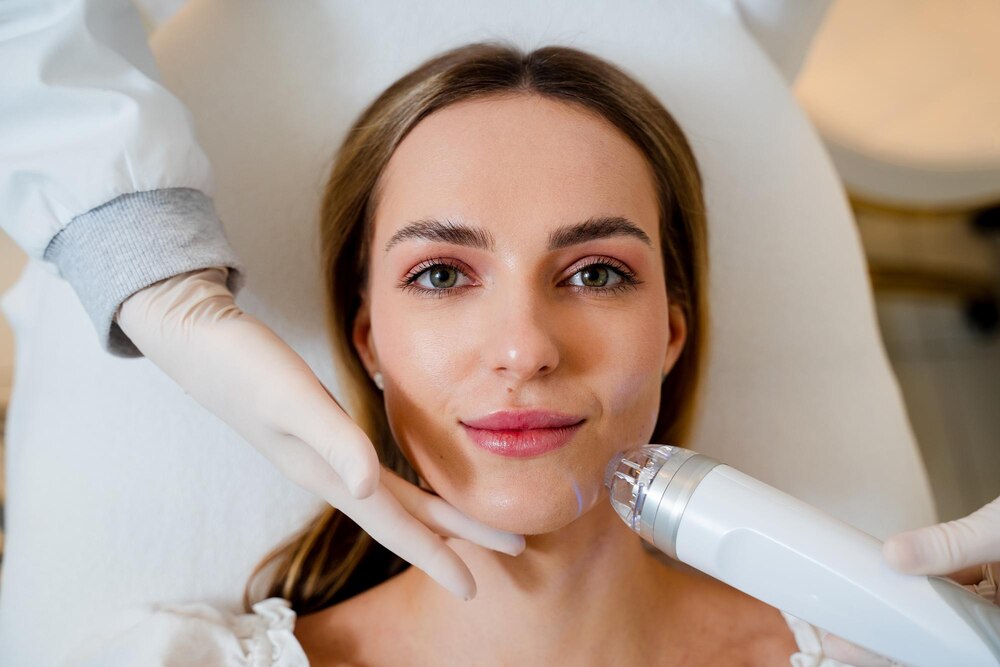
Radiofrequency (RF) skin tightening delivers controlled thermal energy into the deeper layers of the skin, heating collagen fibers and stimulating new collagen and elastin production. The heating causes immediate tissue contraction, with progressive tightening developing over several months as the remodeling process continues.
RF treatments are versatile and can be applied to the face, neck, abdomen, arms, and thighs – making them particularly relevant for patients experiencing skin laxity after weight loss. Most patients require a series of three to six sessions spaced several weeks apart, with results building incrementally after each treatment.
Microneedling combined with radiofrequency (often called RF microneedling) has become especially popular because it delivers thermal energy at precise depths while also stimulating surface-level skin renewal. This combination approach addresses both deep tissue laxity and surface texture concerns in a single treatment session.
Are There Other Minimally Invasive Skin Lifting Technologies Worth Considering?
Beyond thread lifts and radiofrequency, several complementary technologies provide non-surgical skin lifting through different mechanisms. Ultherapy uses focused ultrasound energy to stimulate collagen production in deep skin layers, providing gradual lifting on the brow, neck, and under the chin without downtime. This FDA-approved treatment takes 60 to 90 minutes and requires no special preparation or aftercare.
Laser skin tightening uses targeted light energy to heat dermal collagen, and newer fractional laser devices can treat both laxity and surface texture simultaneously. These technologies are often used as part of a comprehensive treatment plan rather than as standalone solutions, complementing thread lifts or radiofrequency treatments for enhanced overall results.
How Does Recovery Compare Between Non-Surgical Lifting and Traditional Surgery?
Recovery from non-surgical skin lifting procedures is dramatically shorter than recovery from traditional facelift surgery. Minimally invasive techniques combined with computer-assisted planning have reduced recovery times by up to 40%, with most non-surgical patients returning to normal activities within days rather than weeks.
The following table compares typical recovery expectations across the most common skin lifting approaches:
| Procedure | Typical Downtime | Return to Work | Full Results Visible |
|---|---|---|---|
| Thread Lift | 2 – 5 days | 2 – 3 days | 2 – 3 months |
| Radiofrequency Skin Tightening | 0 – 1 day | Same day or next day | 3 – 6 months (after series) |
| Ultrasound Lifting (Ultherapy) | 0 days | Same day | 2 – 3 months |
| Surgical Facelift | 2 – 4 weeks | 10 – 14 days | 3 – 6 months |
For patients weighing their options, the recovery difference is often the deciding factor. A surgical facelift delivers the most dramatic and long-lasting results, but the two-to-four-week recovery period is impractical for many working adults and parents.
Can You Get a Thread Lift or Radiofrequency Treatment and Return to Work Quickly?
Most patients who undergo a thread lift can return to work within two to three days. Common side effects during the first few days include mild swelling, bruising, and tenderness at the insertion sites. These are typically manageable with over-the-counter pain relief and resolve quickly.
Radiofrequency skin tightening involves even less downtime. Many patients schedule lunchtime appointments and return to their normal routine immediately afterward. Mild redness similar to a sunburn may last a few hours but is rarely noticeable by the following day.
For those planning around summer events, scheduling a thread lift at least two to three weeks before a vacation or major occasion allows any residual swelling to resolve completely. Radiofrequency sessions can be scheduled with less lead time, though the full benefit of a treatment series requires several months of cumulative sessions.
Who Is the Best Candidate for Natural Skin Lifting Procedures?
The best candidates for natural skin lifting procedures are adults with mild to moderate skin laxity who want visible improvement without the risks and recovery of surgery. Candidates typically range in age from 35 to 65 and may be experiencing early jowling, loss of jawline definition, neck laxity, or skin looseness following weight loss.
Good candidates should be in generally good health, have realistic expectations about the degree of improvement possible without surgery, and be willing to follow pre- and post-treatment guidelines. Patients with autoimmune conditions, active skin infections, or certain medical implants may need to explore alternative options.
Is Natural Skin Lifting a Good Option After Significant Weight Loss?
For patients who have lost weight through GLP-1 medications or other methods, minimally invasive skin lifting can address mild to moderate laxity effectively – particularly on the face, neck, and upper arms. With approximately 20% of GLP-1 patients now seeking skin tightening and body contouring procedures, providers are developing increasingly refined protocols for this specific patient population.
Thread lifts can restore jawline definition lost during facial volume changes, while radiofrequency treatments can tighten skin on both the face and body. However, the degree of improvement depends on how much excess skin is present and how much elasticity remains.
Patients who have lost more than 100 pounds or who have significant skin redundancy – where excess skin hangs or folds – may find that non-surgical approaches provide only partial improvement. In these cases, a combination of minimally invasive treatments and targeted surgical procedures often delivers the most satisfying outcome.
When Should You Consider Surgery Instead of Non-Surgical Lifting?
Non-surgical skin lifting has clear limitations. Patients with severe skin laxity, deep facial folds, or substantial excess skin on the body will typically achieve superior and longer-lasting results with a surgical facelift or body lift. A surgical approach allows the surgeon to remove excess tissue and reposition deeper structural layers in ways that energy-based devices and threads cannot replicate.
Honesty about these boundaries is essential. A responsible provider will recommend the approach most likely to meet a patient’s goals rather than defaulting to the least invasive option. During a consultation, the treating physician should clearly explain what non-surgical treatments can and cannot accomplish for your specific anatomy and degree of laxity.
How Do You Choose the Right Provider for Skin Lifting Treatments?
Choosing the right provider for skin lifting treatments requires evaluating board certification, specific device experience, aesthetic judgment, and the availability of multiple treatment modalities. A qualified provider should hold board certification in plastic surgery, dermatology, or a related specialty and have documented experience performing the specific procedure being considered.
Key questions to ask during a consultation include:
- What board certifications do you hold, and how many of these specific procedures have you performed?
- Do you use computer-assisted planning tools to customize treatment?
- Can you show before-and-after photographs of patients with similar concerns?
- What combination of treatments would you recommend for my specific goals?
- What are the realistic limitations of non-surgical approaches for my degree of laxity?
Practices that offer a range of technologies – rather than a single device – can tailor treatment plans more precisely. A provider limited to one modality may recommend that device even when a different approach would produce better results.
Why Does Provider Experience Matter for Natural-Looking Outcomes?
Technical skill and aesthetic judgment are what separate results that look natural from results that look overdone. In thread lifting, for example, the angle, depth, and number of threads placed directly determine whether the lift appears subtle and balanced or pulled and artificial. In clinical practice, the same thread lift device can produce dramatically different outcomes depending on the provider’s technique and experience.
Computer-assisted planning tools have improved consistency by allowing providers to map treatment areas and predict outcomes before the procedure begins. These tools contribute to the patient satisfaction rates exceeding 80% now reported across minimally invasive lifting procedures. However, technology supports but does not replace the experienced clinical eye needed to achieve truly natural-looking results.
What Should You Know Before Scheduling a Skin Lifting Procedure This Summer?
Before scheduling a skin lifting procedure this summer, patients should plan for sun protection during healing, allow adequate lead time before events, and complete a consultation early enough to begin treatment on an optimal timeline. Summer is peak season for scheduling minimally invasive procedures, and appointment availability fills quickly.
Sun exposure is the most important summer-specific consideration. Both radiofrequency and thread lift treatments leave the skin temporarily more sensitive to UV damage. Patients should plan to use broad-spectrum SPF 30 or higher sunscreen daily and avoid prolonged direct sun exposure for at least two weeks following treatment.
For patients who want to look their best for a specific summer event, the following general timeline is helpful:
- Schedule a consultation six to eight weeks before the target date.
- If a thread lift is recommended, plan the procedure at least three to four weeks before the event to allow for collagen remodeling and resolution of any swelling.
- If a radiofrequency series is recommended, begin sessions at least three to four months before the event, as results build cumulatively.
- For ultrasound-based lifting treatments like Ultherapy, allow two to three months for collagen production to generate visible lifting.
Frequently Asked Questions About Natural Skin Lifting
How Long Do Thread Lift Results Last?
Thread lift results typically last one to three years, depending on the type of thread material used, the treatment area, and individual factors such as skin quality and aging rate. The physical lifting effect of the threads is most pronounced in the first 12 to 18 months. However, the collagen stimulation triggered by the threads continues to provide structural support even after the threads have fully dissolved, extending the overall benefit.
Does Non-Surgical Skin Tightening Hurt?
Most patients describe radiofrequency skin tightening as a warm, deep-heating sensation that is well-tolerated without anesthesia. Thread lifts involve the use of local anesthesia at the insertion points, so patients typically feel pressure but not pain during the procedure. Mild soreness for one to three days afterward is common. Overall, comfort levels are high, and most patients report that the experience is significantly less uncomfortable than they anticipated.
How Much Does Natural Skin Lifting Cost Compared to a Facelift?
Minimally invasive skin lifting procedures generally cost a fraction of a surgical facelift. The following table provides general cost context:
| Procedure | General Cost Range |
|---|---|
| Thread Lift | $1,500 – $4,500 |
| Radiofrequency Series (3-6 sessions) | $1,000 – $4,000 |
| Ultrasound Lifting | $1,500 – $3,000 |
| Surgical Facelift | $8,000 – $15,000+ |
Exact costs vary by geographic area, provider experience, and the extent of treatment. Many practices offer financing options that allow patients to spread the cost over time. A consultation provides the most accurate cost estimate based on individual treatment needs.
Can You Combine Thread Lifts with Radiofrequency for Better Results?
Combining thread lifts with radiofrequency treatments is a well-established strategy that can produce results greater than either treatment alone. The thread lift provides immediate physical repositioning of tissue, while radiofrequency stimulates deeper collagen remodeling over time. When performed together or in sequence, these modalities address different layers and mechanisms of skin laxity, creating a more comprehensive and longer-lasting lift.
A provider experienced in combination protocols can design a phased treatment plan that maximizes results while managing recovery time. Typically, the thread lift is performed first, with radiofrequency sessions beginning several weeks later once initial healing is complete.
Are the Results of Non-Surgical Skin Lifting Really Natural-Looking?
When performed by an experienced provider, non-surgical skin lifting consistently produces natural-looking outcomes. Patient satisfaction rates exceeding 80% across minimally invasive lifting procedures reflect the fact that most patients are pleased with both the degree and the quality of their improvement. The defining aesthetic trend of 2026 is subtle enhancement – results that make people look rested and refreshed without signaling that a procedure was performed.
What Is Your Next Step Toward Natural, Refreshed Skin?
Non-surgical and minimally invasive skin lifting options have reached a level of effectiveness in 2026 that makes natural-looking rejuvenation achievable for a wide range of patients – whether addressing early signs of aging, restoring firmness after weight loss, or simply wanting a refreshed appearance without surgery. Thread lifts, radiofrequency treatments, and ultrasound-based technologies each offer distinct advantages, and the right choice depends on your anatomy, goals, and timeline.
Summer is an ideal time to begin the process, with enough lead time to see results before fall. The most important step is a personalized consultation where a board-certified provider can evaluate your skin, discuss your goals honestly, and recommend the treatment plan most likely to deliver the natural outcome you are looking for. Contact NW Laser to schedule your consultation and explore which skin lifting approach is right for you.
Frequently Asked Questions
How long do thread lift results last?
Thread lift results typically last one to three years, depending on the thread material used, the treatment area, and individual skin quality. The physical lifting effect is most noticeable during the first 12 to 18 months. Collagen stimulation triggered by the threads continues to provide structural support even after the sutures fully dissolve, extending the overall benefit beyond the thread lifespan.
Does non-surgical skin tightening hurt?
Most patients find non-surgical skin tightening well-tolerated. Radiofrequency treatments produce a warm, deep-heating sensation that typically requires no anesthesia. Thread lifts use local anesthesia at insertion points, so patients feel pressure rather than pain during the procedure. Mild soreness lasting one to three days afterward is common, and most patients report the experience is significantly less uncomfortable than expected.
How much does natural skin lifting cost compared to a surgical facelift?
Minimally invasive skin lifting costs significantly less than a surgical facelift. Thread lifts generally range from $1,500 to $4,500, radiofrequency series from $1,000 to $4,000, and ultrasound lifting from $1,500 to $3,000. A surgical facelift typically costs $8,000 to $15,000 or more. Exact pricing varies by location, provider experience, and treatment scope. Many practices offer financing options.
Can you combine thread lifts with radiofrequency for better results?
Combining thread lifts with radiofrequency treatments is a well-established strategy that often produces results greater than either treatment alone. The thread lift physically repositions sagging tissue immediately, while radiofrequency stimulates deeper collagen remodeling over time. Typically the thread lift is performed first, with radiofrequency sessions beginning several weeks later once initial healing is complete.
Is non-surgical skin lifting a good option after GLP-1 weight loss?
Non-surgical skin lifting can effectively address mild to moderate laxity after GLP-1 medication weight loss, particularly on the face, neck, and upper arms. Approximately 20% of GLP-1 patients now seek skin tightening procedures. Thread lifts restore jawline definition while radiofrequency tightens skin on the face and body. Patients with more than 100 pounds of weight loss or significant skin redundancy may need surgical options for optimal results.
How quickly can you return to work after a skin lifting procedure?
Recovery time depends on the procedure. Radiofrequency skin tightening requires zero to one day of downtime, with many patients returning to work the same day. Thread lift patients typically return to work within two to three days, with mild swelling and bruising resolving quickly. By comparison, a surgical facelift requires 10 to 14 days before most patients return to work.
Are the results of non-surgical skin lifting really natural-looking?
When performed by an experienced, board-certified provider, non-surgical skin lifting consistently produces natural-looking outcomes. Patient satisfaction rates exceed 80% across minimally invasive lifting procedures. The defining aesthetic standard in 2026 emphasizes subtle enhancement – results that make patients look rested and refreshed without signaling that a procedure was performed. Provider technique and aesthetic judgment are key factors in achieving natural results.
