

Last updated: February 12, 2026
As non-invasive aesthetic technology continues to advance, patients in Providence and beyond have more options than ever for addressing skin laxity without surgery. This guide covers the leading non-invasive skin tightening treatments available in 2026, explains how each technology works, and helps you determine which approach may be right for your goals.
Why Is Non-Invasive Skin Tightening One of the Biggest Aesthetic Trends in 2026?
Non-invasive skin tightening is one of the fastest-growing categories in aesthetic medicine in 2026, driven by patient demand for natural-looking results with minimal downtime. Industry trend reports from Marie Claire’s 2026 aesthetic outlook and Lone Star Plastic Surgery’s 2026 trend analysis both highlight ultrasound and radiofrequency-based skin tightening as leading non-surgical priorities for patients and providers alike.
A broader cultural shift toward preventative aesthetics is fueling this trend. Rather than waiting for significant sagging to develop and then pursuing surgical correction, more patients are choosing to maintain skin firmness proactively. The appeal of treatments that require no incisions, no general anesthesia, and little to no recovery time has made non-invasive skin tightening accessible to a wider range of patients than ever before.
What Is Driving Younger Patients to Start Skin Tightening Treatments Earlier?
The preventative aesthetics movement has shifted the typical patient profile for skin tightening treatments. Patients in their late 20s and 30s are now using ultrasound and radiofrequency devices to stimulate collagen before significant laxity develops. Marie Claire’s 2026 report specifically notes this trend, with younger patients viewing collagen-building treatments as maintenance rather than correction.
This approach is grounded in biology. Collagen production begins declining in the mid-20s, and starting energy-based treatments earlier helps maintain the structural protein network that keeps skin firm. The goal for these patients is not a dramatic change but rather preserving existing skin quality over time.
How Has Non-Invasive Technology Changed Compared to Previous Years?
Non-invasive skin tightening devices in 2026 offer more precise energy delivery, customizable treatment depths, and improved comfort compared to earlier generations. Providers can now adjust intensity and targeting to match individual skin thickness and laxity levels, making treatments more effective across a wider range of patients and concerns.
Combination protocols have also become more refined. Rather than relying on a single technology, experienced providers now layer different energy modalities to address multiple tissue depths in a coordinated treatment plan. These advances have narrowed the gap between non-invasive results and surgical outcomes for patients with mild to moderate skin laxity.
What Is Non-Invasive Skin Tightening and How Does It Work?
Non-invasive skin tightening uses energy-based technologies – including ultrasound, radiofrequency, and RF microneedling – to heat dermal and subdermal tissue, triggering the body’s natural collagen remodeling process. This controlled heating causes existing collagen fibers to contract and stimulates neocollagenesis, the production of new collagen, which gradually restores firmness and reduces laxity over weeks to months.
The treatments are performed without incisions or injections into structural tissue. A device is applied to the skin’s surface or uses minimally invasive microneedles to deliver energy at precise depths. The body’s wound-healing response then rebuilds the collagen matrix in the treated area, producing tightening that develops progressively as new collagen matures.
What Role Does Collagen Play in Skin Firmness and Laxity?
Collagen is the primary structural protein in skin, forming a dense network of fibers that provides firmness, elasticity, and support. Beginning in the mid-20s, the body produces roughly one percent less collagen per year. Over decades, this cumulative loss weakens the skin’s structural scaffolding, leading to visible sagging, fine lines, and a loss of definition along the jawline, neck, and other areas.
Non-invasive skin tightening treatments work by restarting collagen production in targeted areas. The controlled thermal energy denatures old, weakened collagen fibers while signaling fibroblasts to produce fresh collagen and elastin. This dual mechanism – immediate contraction of existing fibers plus gradual new fiber production – is why results develop over time and continue improving for several months after treatment.
What Is the Difference Between Ultrasound, Radiofrequency, and RF Microneedling?
Each energy modality used in non-invasive skin tightening reaches different tissue depths and produces distinct types of collagen response. Understanding these differences is essential for choosing the right treatment.
| Technology | How It Works | Depth of Treatment | Primary Strengths |
|---|---|---|---|
| Focused Ultrasound (Ultherapy) | Delivers micro-focused ultrasound energy to deep tissue layers | Deep (SMAS layer, 3-4.5mm) | Lifting and tightening at the foundational muscle layer |
| Radiofrequency (RF) | Uses RF energy to heat dermal tissue and stimulate collagen | Mid-depth (dermis, 1-4mm) | Overall skin firmness and tightening across broader areas |
| RF Microneedling (Morpheus8) | Combines microneedles with RF energy at adjustable depths | Customizable (0.5-8mm) | Skin tightening plus texture and tone improvement |
These technologies are not interchangeable. Each has specific advantages depending on the treatment area, degree of laxity, and the patient’s additional skin concerns such as texture irregularity or scarring.
What Is Ultherapy and Who Is It Best For?
Ultherapy is the only FDA-cleared non-invasive procedure that uses micro-focused ultrasound with visualization to lift skin on the brow, chin, neck, and decolletage. The technology delivers focused ultrasound energy to the deep foundational layer of tissue – the SMAS layer – that surgeons address during facelift procedures, stimulating collagen remodeling for a gradual, natural-looking lift without incisions.
During an Ultherapy session, the provider uses ultrasound imaging to visualize tissue layers in real time, ensuring energy is delivered to the optimal depth. A single treatment session typically takes 60 to 90 minutes depending on the areas treated. Marie Claire’s 2026 aesthetic trend report highlights Ultherapy specifically as a recommended option for patients seeking a natural lift through collagen remodeling.
Ideal candidates for Ultherapy are patients with mild to moderate skin laxity who notice that skin is beginning to feel less firm or look less lifted than it once did. The treatment is particularly effective for patients who are not ready for surgery or who want to extend the results of a previous surgical procedure.
What Areas of the Face and Body Can Ultherapy Treat?
Ultherapy is FDA-cleared for several specific treatment zones:
- Brow lifting to open the eye area
- Under-chin and submental tightening to reduce the appearance of a double chin
- Jawline definition and contouring
- Neck skin tightening
- Decolletage (upper chest) to reduce lines and crepiness
The ability to target the SMAS layer distinguishes Ultherapy from surface-level treatments. This deep foundational tissue provides structural support to the overlying skin, so tightening at this depth produces a lifting effect rather than just surface smoothing.
How Long Do Ultherapy Results Take to Appear and How Long Do They Last?
Some patients notice an initial tightening effect shortly after treatment, but the full results of Ultherapy develop over two to three months as new collagen matures. Peak improvement is typically visible at the three-month mark, with continued refinement possible up to six months post-treatment.
Results generally last one year or longer, though individual outcomes vary based on age, skin quality, and the natural aging process. Many patients choose an annual maintenance session to sustain the collagen-building benefits and maintain their results over time.
What Is Morpheus8 and Why Is It Trending for Skin Tightening?
Morpheus8 is an RF microneedling device that combines tiny gold-plated needles with radiofrequency energy to remodel collagen at customizable depths, tightening skin while simultaneously improving texture, tone, and fine lines. Morpheus8 skin tightening has emerged as one of the most versatile non-invasive treatments in 2026, with Lone Star Plastic Surgery’s 2026 outlook noting its growing use in personalized body treatment plans.
The microneedles create controlled micro-injuries in the skin while delivering RF energy directly into the tissue at depths ranging from 0.5mm to 8mm. This dual mechanism triggers a robust healing response that produces both surface-level improvement in skin quality and deeper structural tightening. Because the energy is delivered beneath the skin’s surface through the needles, Morpheus8 can achieve more targeted tissue remodeling than surface-only RF devices.
Can Morpheus8 Be Used on the Body as Well as the Face?
Morpheus8 is increasingly used for body skin tightening – not just facial concerns. Common body treatment areas include the abdomen, upper arms, inner thighs, knees, and areas with post-weight-loss laxity. The 2026 trend toward Morpheus8 body treatments reflects its versatility and the adjustable depth settings that allow providers to treat thicker body tissue effectively.
For patients who want to learn more about how this technology works in detail, our guide on radiofrequency treatments for skin tightening provides additional context on how energy-based devices stimulate collagen production across treatment areas.
How Many Morpheus8 Sessions Are Typically Needed for Visible Results?
Most patients achieve optimal results with a series of one to three Morpheus8 sessions spaced four to six weeks apart. This spacing allows the collagen remodeling process from each session to progress before adding another round of stimulation.
Initial improvements in skin texture and tone often become visible within two to four weeks after the first session. Tightening results continue developing over the following two to three months as new collagen fibers form and mature. The progressive, cumulative nature of the treatment means each session builds on the previous one for increasingly noticeable firmness.
How Does Radiofrequency Skin Tightening Compare to Other Non-Invasive Options?
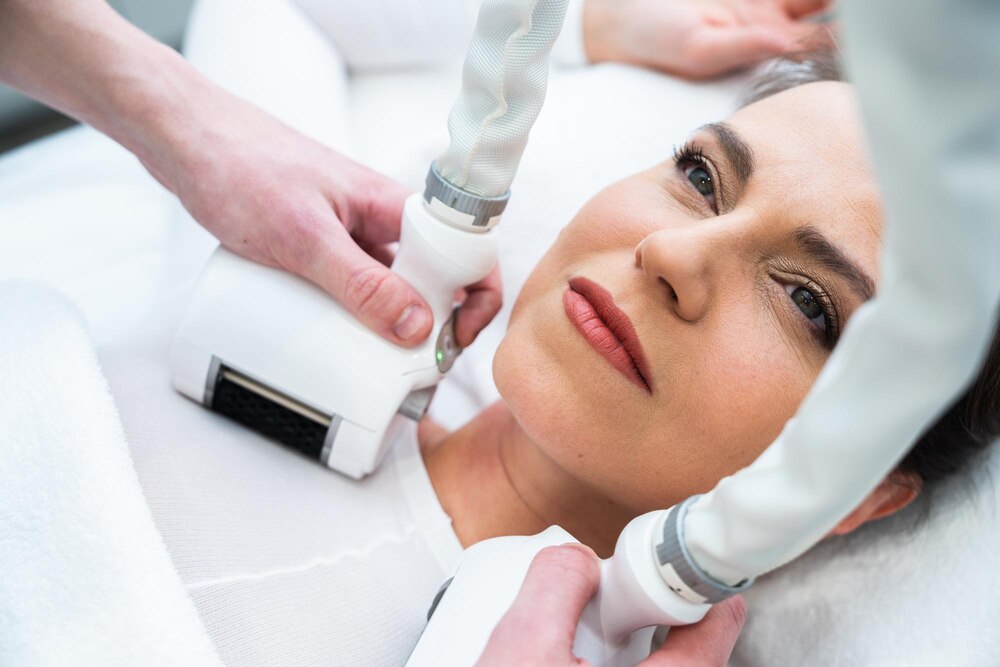
Radiofrequency skin tightening uses RF energy to heat dermal tissue to a therapeutic temperature that stimulates collagen and elastin production without breaking the skin’s surface. Standalone RF devices deliver energy through the skin to mid-depth tissue layers, making them effective for overall firmness improvement and mild to moderate tightening across the face and body with virtually no downtime.
Karma Seven’s 2026 skin and beauty trend report highlights RF-based tightening and RF microneedling as key collagen-building approaches, noting the effectiveness of series treatments for cumulative firmness results. RF tightening occupies an important middle ground – more comfortable than Ultherapy, with broader area coverage, though typically requiring multiple sessions to achieve comparable results.
What Should You Expect During and After a Radiofrequency Skin Tightening Treatment?
During an RF skin tightening session, a handheld device is moved across the treatment area while delivering controlled radiofrequency energy. Most patients describe the sensation as a warm, deep heating feeling. Sessions typically last 30 to 60 minutes depending on the area being treated.
Downtime is minimal to none. Some patients experience mild redness or warmth in the treated area for a few hours afterward, but most return to normal activities immediately. There are no incisions, no bandages, and no activity restrictions, making RF tightening one of the most convenient options for patients with busy schedules.
Are Series Treatments More Effective Than a Single Session?
Collagen-building treatments generally produce more robust and longer-lasting results when performed in a series rather than as a single session. Each treatment stimulates a new wave of collagen production, and spacing sessions appropriately allows these waves to compound for cumulative tightening.
A typical RF tightening protocol involves three to six sessions spaced two to four weeks apart, followed by periodic maintenance treatments. Providers design these plans based on the individual’s degree of laxity, treatment area, and goals. In clinical practice, patients who complete a full treatment series consistently report more significant and more durable improvement than those who undergo a single session.
Which Non-Invasive Skin Tightening Treatment Is Right for You?
The right non-invasive skin tightening treatment depends on the degree of skin laxity, the primary treatment area, additional skin concerns such as texture or scarring, and individual factors like downtime tolerance and budget. No single technology is best for every patient, which is why a personalized assessment is essential for optimal outcomes.
The following comparison summarizes how the three leading technologies differ across the factors most patients consider when making a decision:
| Factor | Ultherapy | Morpheus8 | RF Tightening |
|---|---|---|---|
| Best For | Deep lifting (brow, chin, neck) | Tightening plus texture improvement | Overall firmness, mild laxity |
| Treatment Depth | Deep (SMAS layer) | Customizable (superficial to deep) | Mid-depth (dermis) |
| Typical Sessions | 1 session | 1-3 sessions | 3-6 sessions |
| Downtime | None to minimal | 1-3 days mild redness | None to minimal |
| Results Timeline | 2-3 months for full effect | 2-3 months progressive | Cumulative over treatment series |
| Ideal Laxity Level | Mild to moderate | Mild to moderate | Mild |
What Factors Should You Consider When Choosing Between Ultherapy, Morpheus8, and RF Tightening?
Several personal factors influence which technology will deliver the best results:
- Age and degree of laxity – Patients with moderate laxity may benefit most from Ultherapy’s deep tissue targeting, while those with early laxity may respond well to RF treatments
- Treatment area – Facial lifting concerns point toward Ultherapy, while body tightening or combined texture and laxity concerns favor Morpheus8
- Skin concerns beyond tightening – Morpheus8 addresses texture, scarring, and pore size in addition to laxity
- Budget and scheduling – Single-session treatments like Ultherapy require fewer visits, while series-based RF protocols spread the investment over multiple appointments
- Downtime tolerance – All options involve minimal downtime, but Morpheus8 may produce slightly more visible redness for one to three days
Can You Combine Multiple Non-Invasive Skin Tightening Technologies?
Combination protocols are an increasingly common approach in 2026 because different technologies address different tissue depths and skin concerns. For example, a provider might recommend Ultherapy for deep foundational lifting along the jawline and neck, followed by Morpheus8 treatments to refine surface texture and further tighten the mid-depth collagen layer.
These layered treatment plans often produce more comprehensive results than any single technology alone. The key is proper sequencing and timing, which requires a provider who understands how each technology interacts with the skin’s healing and collagen production cycle.
Why Does Choosing an Experienced Provider in Providence Matter for Skin Tightening?
Non-invasive skin tightening results depend as much on the provider’s expertise as on the device itself, because proper energy settings, treatment depth selection, and patient assessment directly determine treatment outcomes. A device in the hands of an inexperienced operator can produce underwhelming results or unnecessary discomfort, while the same device used by a skilled provider delivers consistent, predictable improvement.
NW Laser in Providence combines plastic surgery credentials with advanced med spa technology expertise. This dual foundation means patients have access to both non-invasive and surgical skin tightening options under one roof, with providers who understand facial and body anatomy at a level that informs every treatment decision. Over the past decade, the evolution of energy-based devices has made provider skill the single most important variable in patient outcomes.
What Qualifications Should You Look for in a Skin Tightening Provider?
- Board certification in plastic surgery, dermatology, or a related specialty
- Documented experience and training with the specific devices being used
- A portfolio of before-and-after results demonstrating consistent outcomes
- A thorough consultation process that includes skin assessment and goal discussion
- The ability to offer multiple treatment options rather than a one-size-fits-all approach
Why Is a Personalized Consultation Important Before Starting Treatment?
A proper consultation assesses skin quality, the degree and location of laxity, underlying facial or body anatomy, and the patient’s specific goals before any treatment recommendation is made. Two patients of the same age can have very different skin tightening needs based on genetics, sun exposure history, prior treatments, and lifestyle factors.
During a consultation at NW Laser, a provider evaluates all of these factors to determine which technology – or combination of technologies – will produce the best outcome for each individual patient. This personalized approach avoids unnecessary treatments and ensures that expectations align with what the selected technology can realistically achieve.
What Are the Most Common Questions About Non-Invasive Skin Tightening?
Is Non-Invasive Skin Tightening Painful?
Most patients describe non-invasive skin tightening as uncomfortable but tolerable rather than painful. The sensation varies by technology – Ultherapy involves brief pulses of deeper heat, while RF treatments feel like sustained warmth. Morpheus8 uses topical numbing cream applied before treatment to minimize discomfort from the microneedles. Providers also adjust energy levels and use comfort protocols to keep the experience manageable.
How Much Does Non-Invasive Skin Tightening Cost?
Pricing for non-invasive skin tightening varies based on the technology used, the size and number of treatment areas, and whether a single session or a series is recommended. Ultherapy for the full face and neck is generally the highest per-session investment, while RF tightening sessions are typically lower per visit but require more appointments. A consultation provides the most accurate cost estimate based on an individual treatment plan.
Are Non-Invasive Skin Tightening Results Permanent?
Non-invasive skin tightening results are long-lasting but not permanent. The new collagen produced after treatment is real and durable, but the natural aging process continues. Most patients enjoy results for one to two years, with maintenance sessions helping to extend and sustain the benefits. Consistent treatment over time produces the best long-term outcomes.
What Is the Downtime After Non-Invasive Skin Tightening?
Downtime is minimal for most non-invasive skin tightening technologies. Ultherapy and standalone RF treatments typically require no downtime at all, though mild redness or tenderness may occur for a few hours. Morpheus8 may produce redness, pinpoint marks, and mild swelling for one to three days. Most patients return to normal daily activities immediately or within a day of treatment.
Can Non-Invasive Skin Tightening Replace a Facelift?
Non-invasive skin tightening is an excellent option for mild to moderate laxity and for maintaining skin firmness, but it does not replicate the results of a surgical facelift for patients with significant sagging or excess skin. Patients with advanced laxity may achieve better outcomes with surgical options. A practice like NW Laser, which offers both non-invasive treatments and plastic surgery, can help patients determine the most appropriate pathway based on their individual anatomy and goals.
When Is the Best Time of Year to Start Skin Tightening Treatments?
Late winter and early spring are ideal times to begin a skin tightening treatment series. Because collagen remodeling takes two to three months to reach peak results, starting in February or March means improvement matures by summer. This timing also works well for series treatments that require multiple sessions spaced weeks apart, allowing the full protocol to complete before the warmer months.
What Is Your Next Step Toward Firmer, Tighter Skin?
Non-invasive skin tightening in 2026 offers proven options for patients seeking firmer, more youthful-looking skin without surgery. Whether Ultherapy, Morpheus8, radiofrequency tightening, or a combination approach is the best fit depends on your specific concerns, anatomy, and goals. The most important step is a thorough evaluation by an experienced provider who can match the right technology to your needs.
NW Laser in Providence offers personalized consultations to assess your skin, discuss your goals, and create a customized skin tightening plan. With both advanced non-invasive technologies and plastic surgery expertise available, the practice is equipped to guide you toward the approach that will deliver the most natural, lasting results. February is an ideal time to schedule your consultation and begin a treatment series with results ready for summer.
Frequently Asked Questions
What is non-invasive skin tightening and how does it work?
Non-invasive skin tightening uses energy-based technologies – including ultrasound, radiofrequency, and RF microneedling – to heat dermal and subdermal tissue, triggering the body’s natural collagen remodeling process. Controlled heating causes existing collagen fibers to contract while stimulating new collagen production. Results develop gradually over two to three months as fresh collagen matures, progressively restoring firmness without incisions or general anesthesia.
How long do non-invasive skin tightening results last?
Non-invasive skin tightening results typically last one to two years, depending on the technology used, the patient’s age, and skin quality. The new collagen produced is real and durable, but the natural aging process continues after treatment. Most patients extend and sustain their results with periodic maintenance sessions – for example, an annual Ultherapy treatment or follow-up Morpheus8 sessions every 12 to 18 months.
What is the difference between Ultherapy, Morpheus8, and radiofrequency skin tightening?
Ultherapy uses micro-focused ultrasound to lift and tighten at the deep SMAS layer in a single session. Morpheus8 combines RF microneedling at customizable depths to tighten skin while improving texture and tone, typically in one to three sessions. Standalone radiofrequency tightening heats mid-depth dermal tissue for overall firmness improvement, usually requiring three to six sessions. Each technology targets different tissue depths and addresses different concerns.
Is non-invasive skin tightening painful?
Most patients describe non-invasive skin tightening as uncomfortable but tolerable rather than painful. Ultherapy involves brief pulses of deeper heat, while radiofrequency treatments feel like sustained warmth across the skin. Morpheus8 sessions use topical numbing cream applied before treatment to minimize discomfort from the microneedles. Providers also adjust energy levels and use comfort protocols tailored to each patient’s tolerance.
Can non-invasive skin tightening replace a facelift?
Non-invasive skin tightening is effective for mild to moderate skin laxity and for maintaining firmness, but it does not replicate the results of a surgical facelift for patients with significant sagging or excess skin. These treatments work best as prevention or early intervention. Patients with advanced laxity may achieve better outcomes with surgical options. A practice offering both pathways can help determine the most appropriate approach.
How many treatment sessions are needed for visible skin tightening results?
The number of sessions depends on the technology. Ultherapy typically requires one session, with full results visible at two to three months. Morpheus8 produces optimal results with one to three sessions spaced four to six weeks apart. Standalone radiofrequency tightening usually involves three to six sessions spaced two to four weeks apart. Series-based treatments produce cumulative collagen stimulation for more significant and longer-lasting improvement.
When is the best time to start a skin tightening treatment series?
Late winter and early spring are ideal times to begin non-invasive skin tightening treatments. Because collagen remodeling takes two to three months to reach peak results, starting in February or March allows improvement to fully mature by summer. This timing also accommodates series treatments that require multiple sessions spaced weeks apart, so the full protocol can be completed before warmer months.
